
Application scenarios
Matrix Acidizing&Acid Fracturing
Other Stimulation Measures

Matrix acidizing, acid fracturing and other stimulation measures.
Solution
Acidizing treatments are among the primary measures to enhance oil and gas well production and injection. They utilize the dissolving and etching effects of acid fluids on rock cementing materials or blockages within formation pores and fractures to restore or improve the permeability of formation pores and fractures. Adding high-performance thickeners to the acid fluid can increase its viscosity, reduce the diffusion rate of active acid, extend the effective distance of the acid fluid, prolong the acid-rock reaction time, widen fracture widths, and enhance acidizing effectiveness—ultimately achieving the goal of improving formation permeability.
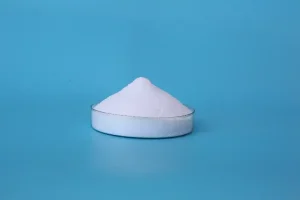
The acid fluid thickeners produced by our company are homopolymeric cationic polymers, available as white amorphous particles and uniform emulsions. They feature high polymerization conversion rates, high molecular weights, and properties such as fast dissolution, high-temperature resistance, shear resistance, and degradation resistance. These thickeners are suitable for acidizing treatments such as matrix acidizing and acid fracturing.
| Product Name | Performance Features | Application Scope |
| Regular Acid | Used for acidizing/acid fracturing; a small amount of gelling agent can be added during acid fracturing to reduce friction | — |
| VES Viscoelastic Diverting Acid | Used for acidizing; addresses axial treatment efficiency and achieves uniform etching over long open-hole sections | Up to ~150°C |
| Solid Acid / Auto-Generated Acid | Used for acidizing/acid fracturing; suitable for applications where hydrochloric acid storage and transportation are inconvenient | Up to ~200°C |
| Gelled Acid | Used for acid fracturing; controls fluid loss and forms primary etched fractures | Up to ~140°C |
| Crosslinked Acid | Used for acid fracturing; enhances fluid loss control and can be combined with sand addition to form primary etched fractures | Up to ~180/200°C |


 English
 Russian
 Arabic
 Spanish