
Application scenarios
Linerboard Production
Cultural/Printing Paper Manufacturing
Tissue Paper Strength Enhancement
Cost Reduction Through Raw Material Optimization
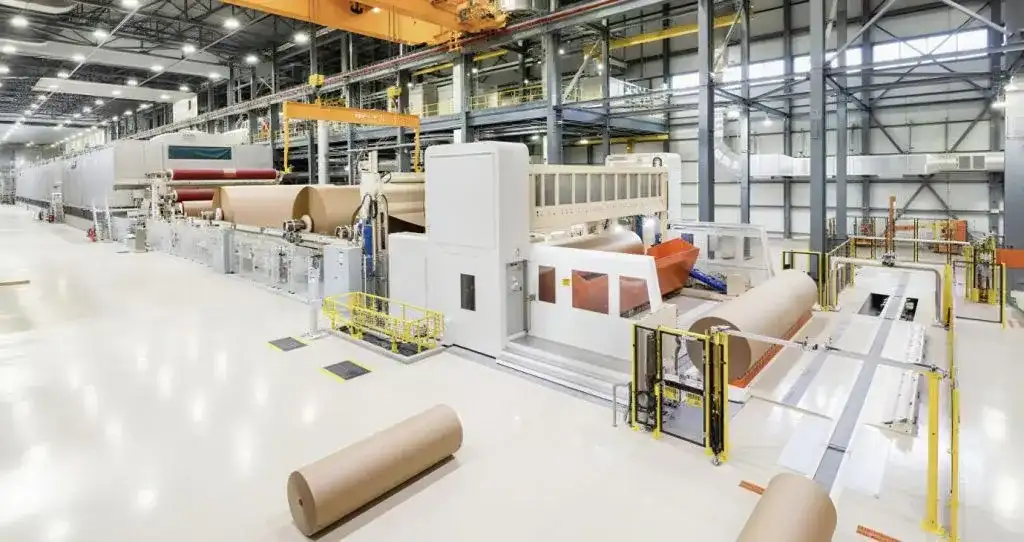
In the linerboard, cultural paper, and tissue paper industries, these products enhance the bonding ability between fibers through mechanisms such as surface adsorption and surface treatment. These improvements effectively boost the physical properties of paper, including fold endurance, burst strength, interlayer bonding, and surface strength—while reducing fuzzing and dusting issues, and delivering superior overall paper strength. In tissue paper manufacturing, the use of new active groups with high charge density significantly enhances paper strength. By optimizing raw material ratios, cost reduction and operational efficiency goals are achieved.
Solution
We enhance paper strength by increasing hydrogen bonding sites and developing macromolecules with large molecular weights and multi-branched structures to expand molecular specific surface area, thereby promoting binding with fibers in the pulp. This approach improves paper properties such as burst strength, fold endurance, retention, and interlayer bonding. Simultaneously, it enhances product extensibility, film-forming ability, and permeability while addressing surface fuzzing and dusting issues. By introducing new functional groups, we strengthen fiber-to-fiber bonding to achieve raw material optimization and cost efficiency improvements.
| Product | Ionic Nature | Application | Features | Performance Summary |
| Dry Strength Agent | Amphoteric Dry Strength Agent | Corrugated board, cardboard, tube paper, coated paper | Amphoteric-leaning cationic Amphoteric-leaning anionic | Modifies charge characteristics to enhance charge density, improving fiber binding force and elevating physical properties including burst strength, fold endurance, tensile strength, and ring crush resistance. |
| Surface Strength Enhancer | Nonionic | Corrugated board, cardboard, tube paper, coated paper | Low molecular weight Moderate charge density | Applied via coating to enhance surface strength and improve burst/fold performance metrics. |
| Anionic | Cultural paper | Low molecular weight Moderate charge density | Coating application increases surface strength while reducing surface fuzzing and dusting. | |
| In-pulp Strength Enhancer | Cationic | Premium board paper, cultural paper, tissue paper | Low molecular weight Ultra-high charge density | Utilizes reactive groups and high charge density to strengthen fiber bonding, impart temporary wet strength, improve drainage, reduce steam consumption, and enable higher paper machine speeds. |



 English
 Russian
 Arabic
 Spanish