
Application scenarios
Excess Sludge Concentration in Municipal WWTPs
Primary Sedimentation Sludge Thickening
Industrial Sludge Concentration for Dyeing and Textile Plants
Sludge Thickening in Papermaking, Chemical, and Other Industries
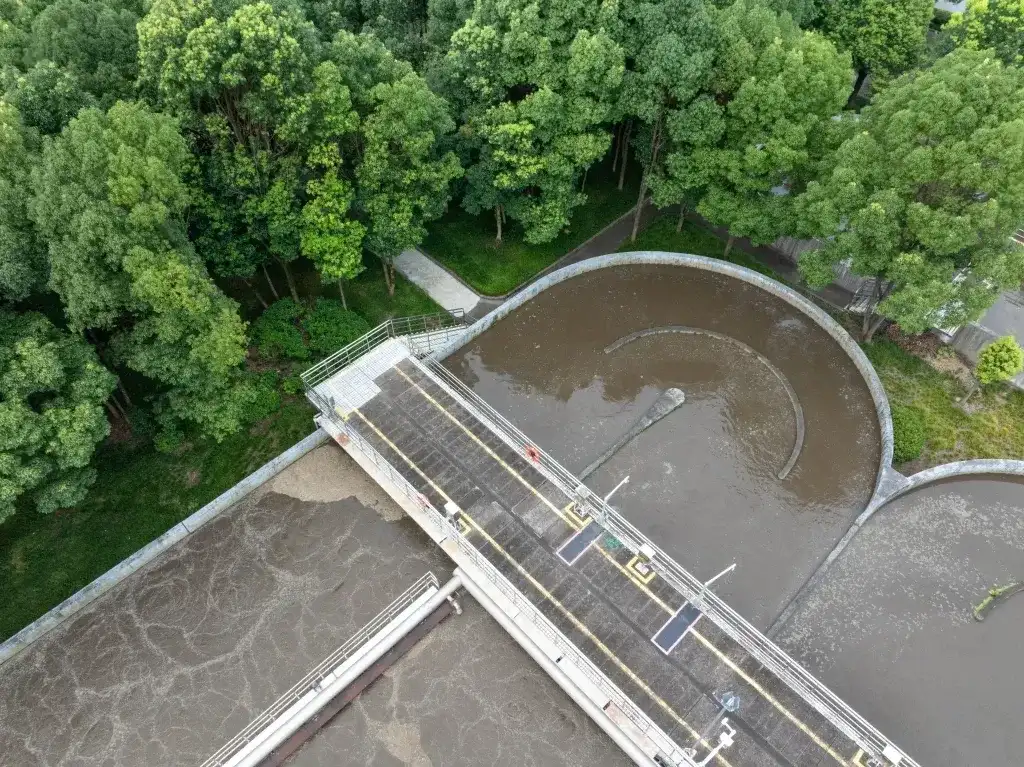
Concentration of excess sludge and primary sedimentation sludge in municipal wastewater treatment plants.
Concentration of various industrial wastewater treatment sludges (e.g., from dyeing, papermaking, chemical industries, etc.).
Concentration of various industrial wastewater treatment sludges (e.g., from dyeing, papermaking, chemical industries, etc.).
Solution
Leveraging the molecular chain structure of PAM, it adsorbs fine particles and colloids in sludge. Through the “bridging” effect, dispersed sludge particles are aggregated into larger flocs, enhancing the sedimentation performance of the sludge. The consolidated sludge flocs settle faster, enabling rapid separation from water in concentration tanks (such as gravity concentration tanks or dissolved air flotation concentration tanks). This increases the sludge solid content (concentration) (typically from 1%-3% to 3%-8%), reducing the volume of subsequent treatment.
During the sludge concentration stage, polyacrylamide primarily acts as a flocculant. By promoting the aggregation of sludge particles, it increases sludge concentration, reduces sludge volume, and creates favorable conditions for subsequent dewatering processes (such as filtration or centrifugation).




 English
 Russian
 Arabic
 Spanish