

Amphoteric polyacrylamide sits in a category of its own among industrial polymers. The molecule carries both positive and negative charges along its chain, which sounds like a contradiction until you see what it actually does in practice. Where single-charge flocculants struggle with pH swings or mixed particle types, this dual-charge structure adapts. The result is a polymer that handles conditions most conventional options cannot, from acidic mining tailings to alkaline paper mill effluent, without requiring constant chemical adjustments.
How Amphoteric Polyacrylamide Actually Works
Amphoteric polyacrylamide forms through copolymerization of cationic monomers, acrylamide, and a hydrolyzing agent. The resulting polymer chain carries an irregular distribution of positive and negative charges, which gives it behavior distinct from either cationic or anionic PAM alone. Traditional flocculants work best within narrow pH windows because their charge profile is fixed. Amphoteric PAM sidesteps this limitation by presenting whichever charge the surrounding particles need to interact with.
The flocculation process involves two simultaneous mechanisms. First, the polymer neutralizes surface charges on suspended particles, causing them to lose their repulsive forces and begin aggregating. Second, the high molecular weight of the polymer chains allows them to physically bridge multiple particles together, creating larger floc structures that settle faster. This combination of charge neutralization and bridging produces denser, more stable flocs than either mechanism achieves alone.
Molecular weight matters here because longer chains provide more bridging capacity. However, hydrolysis can shift the charge distribution over time, which means formulation and storage conditions affect real-world performance. Getting consistent results requires attention to these variables.
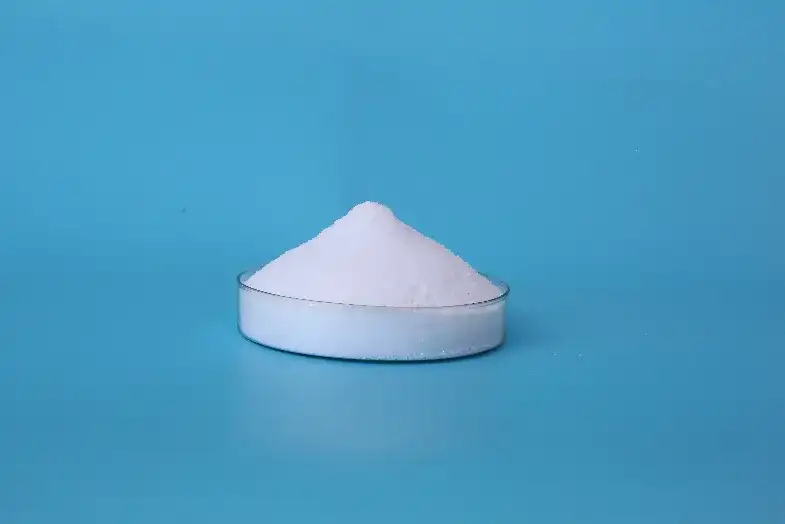
| Property | Cationic PAM | Anionic PAM | Amphoteric PAM |
|---|---|---|---|
| Charge Type | Positive | Negative | Positive & Negative |
| Primary Use | Sludge dewatering, acidic wastewater | Suspended solids removal, alkaline wastewater | Complex wastewater, variable pH, sludge dewatering |
| pH Range | Acidic to neutral | Neutral to alkaline | Wide (acidic to alkaline) |
| Charge Density | Variable, typically high | Variable, typically high | Adaptable |
| Flocculation | Charge neutralization, bridging | Bridging, charge neutralization | Charge neutralization, bridging, adaptable |
Where Amphoteric Polyacrylamide Proves Its Value
The dual-charge structure of amphoteric polyacrylamide makes it useful across industries that would otherwise require multiple polymer types. It functions as a wastewater treatment chemical, sludge dewatering polymer, mineral processing aid, paper making additive, and oilfield chemical. The common thread is that these applications involve variable conditions where single-charge polymers underperform.

Wastewater Treatment and Sludge Processing
Industrial wastewater rarely maintains stable chemistry. pH shifts between batches, particle types change with production schedules, and seasonal variations affect biological treatment systems. Amphoteric polyacrylamide handles these fluctuations because its charge profile adjusts to whatever conditions exist. This adaptability often translates to higher clarification rates and lower chemical consumption compared to switching between cationic and anionic products as conditions change.
Sludge dewatering benefits particularly from this flexibility. The polymer produces denser cake solids, which reduces disposal volumes and associated costs. Focus on Amphoteric Polyacrylamide Flocculant to improve effluent quality while achieving meaningful sludge volume reduction in biological wastewater treatment and industrial effluent management.
Mining Operations and Oilfield Applications
Mineral processing presents some of the most challenging conditions for flocculants. Tailings contain mixed particle types, pH varies with ore composition, and water recovery requirements demand efficient settling. Amphoteric polyacrylamide works as both a flocculant for tailings management and a flotation aid, improving recovery of valuable minerals while handling the variable chemistry inherent to mining operations.
Oilfield applications exploit the same adaptability. The polymer serves as a drilling fluid additive and plays a role in enhanced oil recovery techniques, including shale gas extraction. Salt tolerance and temperature resistance become relevant here because downhole conditions differ substantially from surface processing. The dual-charge structure maintains effectiveness where single-charge polymers would fail.
Selecting the Right Amphoteric Polyacrylamide
Performance advantages of amphoteric polyacrylamide include broad pH tolerance, temperature resistance, and shear stability. Flocs formed with this polymer tend to survive mechanical stress better than those formed with conventional flocculants, which matters in continuous industrial processes where pumping and mixing occur after flocculation.
Dosage optimization requires testing with actual process streams. Laboratory jar tests provide starting points, but real-world conditions introduce variables that bench-scale work cannot fully replicate. The goal is finding the minimum effective dose, since over-application wastes chemical and can actually impair settling by creating excess polymer in solution.
Environmental compliance factors into selection because regulatory standards continue tightening. Products designed to meet current requirements may not satisfy future rules, so understanding a supplier’s development pipeline matters for long-term planning.
| Industry | Key Performance Needs | Recommended Amphoteric PAM Features |
|---|---|---|
| Wastewater | High clarification, sludge dewatering | Wide pH stability, high charge density, fast dissolution |
| Mining | Tailings settling, water recovery | High molecular weight, good shear stability, pH adaptability |
| Oil & Gas | Drilling fluid control, EOR | Temperature resistance, salt tolerance, specific rheological properties |
| Paper Making | Retention aid, drainage improvement | Low dosage, high charge density, good binding properties |
| Textile | Color removal, effluent clarification | High flocculation efficiency, broad pH range |
What Separates Reliable Suppliers from the Rest
Consistent quality in amphoteric polyacrylamide depends on manufacturing controls that many suppliers cannot maintain. Production capacity matters for large-scale users because supply interruptions disrupt operations. R&D capability determines whether a supplier can develop formulations tailored to specific applications rather than offering only generic products.
Technical support proves its value when problems arise. A supplier who understands polymer chemistry can troubleshoot performance issues that would otherwise require expensive trial-and-error testing. Global distribution networks reduce lead times and provide backup supply options.
Shandong Nuoer Biological Technology Co., Ltd. maintains these capabilities across production, development, and support functions. Quality control standards ensure batch-to-batch consistency, while technical expertise helps customers optimize their applications.
Evaluating Suppliers for Industrial Scale Operations
Production capacity tops the list of evaluation criteria because running out of polymer stops operations. Quality control standards should include both raw material testing and finished product verification. R&D capabilities indicate whether the supplier can solve problems or only sell existing products. Technical support availability determines how quickly issues get resolved when they occur.
Certification standards provide baseline assurance but do not guarantee performance in specific applications. The most useful suppliers combine certified quality systems with application expertise that helps customers achieve their actual operational goals.
Where Amphoteric Polyacrylamide Technology Is Heading
Polymer chemistry research continues pushing toward sustainable alternatives. Bio-based polyacrylamide formulations are under development, though commercial availability remains limited. Smart polymers that respond to environmental conditions represent another research direction, potentially offering even more adaptive performance than current amphoteric products.
Environmental regulations drive much of this development. Stricter discharge limits and disposal requirements create demand for polymers that achieve better results with lower doses and reduced environmental persistence. Suppliers investing in research now will have products ready when regulations tighten further.
If you’re interested, check 《Nuoer at 25th China International Petroleum & Petrochemical Technology Exhibition》.
Working with Shandong Nuoer for Polyacrylamide Solutions
Shandong Nuoer Biological Technology Co., Ltd. operates as a high-tech enterprise with annual production capacity of 500,000 tons of Polyacrylamide Supplier OEM. R&D investment, global sales infrastructure, and after-sales support combine to deliver consistent performance for industrial applications. Amphoteric polyacrylamide expertise extends across wastewater treatment, mining, oilfield, and paper making applications.
Contact us to discuss specific requirements and explore formulations matched to your operational conditions.
Phone: +86-532-66712876 | Email: en*****@***er.com
Frequently Asked Questions About Amphoteric Polyacrylamide
Why does amphoteric polyacrylamide outperform single-charge flocculants in variable wastewater conditions?
The dual-charge molecular structure allows amphoteric polyacrylamide to interact with particles regardless of their surface charge. When pH shifts or particle composition changes, the polymer presents whichever charge type achieves effective flocculation. Single-charge flocculants lose effectiveness outside their optimal pH range, requiring chemical adjustments or product switching that amphoteric PAM avoids. This typically produces higher clarification rates with lower total chemical consumption.
What makes amphoteric polyacrylamide effective across such different industries?
The adaptable charge profile handles the common challenge these industries share: variable process conditions. Mining tailings, oilfield fluids, paper mill effluent, and industrial wastewater all present fluctuating pH levels and mixed particle types. Amphoteric polyacrylamide maintains performance across these variations because its molecular structure responds to whatever conditions exist rather than requiring specific chemistry to function.
How should industrial users evaluate amphoteric polyacrylamide suppliers?
Start with production capacity to ensure reliable supply at your consumption rate. Verify quality control standards through certifications and batch testing protocols. Assess R&D capabilities by asking about custom formulation development for specific applications. Evaluate technical support by understanding response times and the expertise available for troubleshooting. Finally, confirm distribution logistics to ensure acceptable lead times and backup supply options.






 English
 Russian
 Arabic
 Spanish