

Testing cationic polyacrylamide properly separates operations that run smoothly from those that constantly chase problems. I’ve watched facilities struggle with inconsistent results for months before realizing their testing protocols were the root cause, not the polymer itself. Getting this right means understanding what to measure, why it matters, and how different test methods reveal different aspects of performance.
Properties and Applications That Define Cationic Polyacrylamide
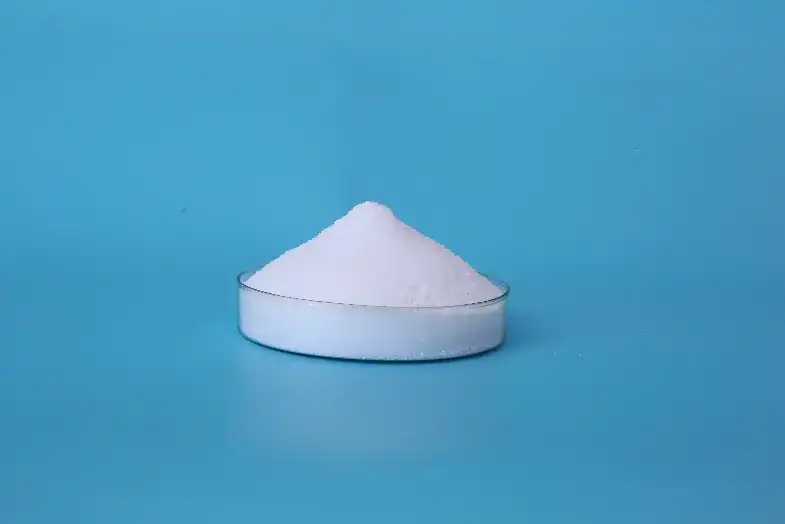
Cationic polyacrylamide is a water-soluble linear organic polymer created by copolymerizing cationic monomers with acrylamide. This polymer works as a flocculant in solid-liquid separation processes including sedimentation, clarification, thickening, and sludge dewatering.
The polymer delivers high flocculation and clarification efficiency while adapting to varied water qualities and process conditions. Dosage requirements run low, typically saving 10%-15% compared to alternatives under similar conditions. Shandong Nuoer Biological Technology maintains stable supply and reduces costs through self-production of cationic monomers. We also customize production to match specific customer requirements.
Cationic polyacrylamide shows up across many sectors. Wastewater treatment facilities use it to remove suspended solids and improve water clarity. Mining operations rely on it for mineral processing and tailings dewatering. Paper manufacturers benefit from enhanced retention and drainage. The polymer also finds use in oil recovery, sugar refining, and textile processing. Its ability to neutralize negatively charged particles and form large, rapidly settling flocs makes it essential for these applications.
Measuring Cationic Polyacrylamide Performance With Precision
Accurate measurement of cationic polyacrylamide performance requires several distinct methodologies. These tests assess flocculation efficiency, settling rate, and dewatering characteristics. Each one reveals something different about how the polymer will behave in actual applications.
Flocculation Efficiency Testing
The jar test remains the primary method for evaluating flocculation efficiency. The process works like this:
- Prepare a series of wastewater or sludge samples.
- Add varying doses of Cationic Polyacrylamide Flocculant to each sample.
- Mix rapidly to disperse the polymer throughout.
- Reduce mixing speed to allow floc formation.
- Observe and record floc size, density, and settling speed.
- Compare supernatant clarity after a defined settling period.
This test identifies the optimal dosage for maximum particle removal.
Settling Rate Analysis
Settling rate tells you how quickly solids separate from liquid.
- Transfer the flocculated sample into a graduated cylinder.
- Measure how long the floc-liquid interface takes to descend a specific distance.
- Faster settling indicates more efficient flocculation and solid-liquid separation.
Dewatering Characteristics
Dewatering performance determines how well sludge releases water.
- Capillary Suction Time (CST) Test: Measures how long water takes to travel a specific distance through filter paper via capillary action. Shorter CST means better dewatering.
- Specific Resistance to Filtration (SRF) Test: Quantifies how much a sludge cake resists filtration. Lower SRF values indicate improved dewatering.
- Filterability Index: Combines multiple parameters for comprehensive dewatering assessment.
These tests together provide actionable data for quality control and process optimization.
| Testing Method | Primary Outcome | Application Focus | Advantages | Limitations |
|---|---|---|---|---|
| Jar Test | Optimal dosage, Floc quality | Wastewater treatment, General flocculation | Simple, Cost-effective, Visual assessment | Batch process, Not always scalable to full-scale |
| Capillary Suction Time | Sludge dewaterability | Sludge conditioning, Dewatering equipment sizing | Rapid, Good correlation with dewatering | Influenced by filter paper properties |
| Specific Resistance to Filtration | Sludge filterability | Sludge dewatering, Filter press design | Quantitative, Provides design data | More complex, Time-consuming |
Key Parameters That Control Cationic Polyacrylamide Quality
Effective quality control of Cationic Polyacrylamide Flocculant depends on monitoring several intrinsic polymer properties. These parameters directly influence how the product performs across industrial applications.
Molecular Weight
Molecular weight shapes flocculation efficiency in fundamental ways. Higher molecular weight polymers create larger, stronger flocs because their longer chains bridge more particles simultaneously. This produces faster settling and improved solid-liquid separation. We control molecular weight precisely during synthesis to deliver consistent batch-to-batch performance.
Charge Density
Charge density governs how well the polymer neutralizes charged particles in suspension. The cationic groups attract and bind to negatively charged contaminants, which is why this parameter matters so much. Optimal charge density shifts depending on the specific application and the characteristics of the wastewater or sludge being treated.
Viscosity
Solution viscosity indicates molecular size and concentration. Higher viscosity typically correlates with higher molecular weight and better performance. But viscosity that runs too high creates problems with dispersion and mixing, so there’s a practical upper limit.
Residual Monomer Content
Residual monomer content represents unreacted acrylamide in the final product. Low levels are essential for environmental safety and regulatory compliance. Shandong Nuoer Biological Technology uses advanced microbial technology to achieve ultra-low impurity levels.
Hydrolysis Degree
The degree of hydrolysis affects charge characteristics. For cationic polyacrylamide, this relates to how many cationic groups get incorporated into the polymer chain. Precise control ensures the right ionic strength for specific applications.
| Parameter | Impact on Performance | Measurement Method | Importance |
|---|---|---|---|
| Molecular Weight | Floc size, settling rate, bridging capacity | Intrinsic Viscosity, GPC | Determines flocculation efficiency and strength |
| Charge Density | Charge neutralization, flocculation mechanism | Colloid Titration | Crucial for effective particle aggregation |
| Viscosity (Solution) | Polymer dispersion, handling, molecular integrity | Rotational Viscometer | Affects ease of application and mixing |
| Residual Monomer Content | Environmental safety, regulatory compliance | HPLC, GC | Ensures product safety and regulatory adherence |
| Hydrolysis Degree (Cationic) | Ionic strength, charge distribution | Titration, Elemental Analysis | Tailors polymer for specific effluent characteristics |
Determining Charge Density Effectively
Colloid titration stands out as the most effective method for determining charge density of Cationic Polyacrylamide Flocculant. The technique involves titrating the polymer solution with a known standard polyelectrolyte of opposite charge. A color indicator or turbidimeter detects the endpoint, which reveals the amount of charge present. This approach delivers accurate, reliable data for polymer characterization and quality control.
Why Comprehensive Testing Drives Industrial Success
Comprehensive performance testing of cationic polyacrylamide goes beyond routine quality control. It directly contributes to process optimization, cost reductions, consistent product quality, and environmental compliance.
Testing enables precise polymer dosage optimization. Overdosing wastes money while underdosing compromises treatment efficiency. Identifying the optimal dosage achieves desired separation results with minimal chemical consumption. This translates directly to cost-effective operations and improved budgets.
Consistent product performance depends on thorough testing. Variations in polymer properties lead to unpredictable outcomes in critical processes like sludge dewatering or water clarification. Our testing protocols ensure that every batch of Polyacrylamide Supplier OEM meets stringent specifications, giving customers reliability they can count on.
Testing also supports environmental compliance. Low residual monomer content and efficient pollutant removal matter for regulatory adherence. Regular checks confirm that products and application methods meet or exceed environmental standards. This proactive approach avoids costly penalties and demonstrates corporate responsibility.
Advanced Characterization Techniques for Deeper Insights
Standard quality control tests answer immediate questions about performance. Advanced analytical techniques reveal why the polymer behaves the way it does. These methods prove essential for product development and troubleshooting complex application issues.
Zeta Potential Analysis
Zeta potential analysis measures electrical charge at the particle-liquid interface. For cationic polyacrylamide, it quantifies how effectively the polymer neutralizes negative charges on suspended particles. This analysis helps optimize dosage and explains flocculation mechanisms, particularly in challenging water matrices where standard tests might not tell the whole story.
Rheology
Rheological studies examine flow and deformation properties of polymer solutions. Understanding viscosity and viscoelastic behavior of cationic polyacrylamide matters for handling, dissolution, and application. These properties influence mixing efficiency and pumpability in industrial systems.
Gel Permeation Chromatography
Gel Permeation Chromatography (GPC), also called Size Exclusion Chromatography (SEC), determines molecular weight distribution. This technique provides detailed information about polymer chain length and polydispersity. GPC connects molecular structure to performance characteristics in ways that simpler tests cannot.
| Feature | Standard Testing Methods (Jar Test, CST) | Advanced Testing Methods (Zeta Potential, GPC) |
|---|---|---|
| Focus | Practical performance, immediate results | Fundamental properties, structural insights |
| Complexity | Relatively simple, routine | Requires specialized equipment and expertise |
| Information | Flocculation efficiency, dewaterability | Molecular weight distribution, surface charge |
| Application | Dosage optimization, basic QC | Product development, troubleshooting, mechanistic study |
| Cost | Lower | Higher |
How Molecular Weight Affects Wastewater Treatment Performance
Molecular weight significantly impacts how Cationic Polyacrylamide Flocculant performs in wastewater treatment. Higher molecular weight polymers have longer chains that enhance bridging between particles. These longer chains form larger, stronger flocs that settle more rapidly. The result is improved flocculation efficiency, faster settling rates, and better dewatering performance.
Industry Standards and Best Practices Worth Following
Adhering to industry standards and best practices ensures reliable, comparable cationic polyacrylamide testing results. These guidelines maintain consistency, accuracy, and regulatory compliance across chemical manufacturing and user sectors.
International organizations like ISO (International Organization for Standardization) and ASTM (American Society for Testing and Materials) provide established methodologies. These standards cover sampling, polymer solution preparation, and specific test procedures. Following these protocols makes test results trustworthy and comparable across facilities.
Best practices include regular calibration of testing equipment. Robust documentation procedures for all tests and detailed record-keeping matter as well. Inter-laboratory comparisons and proficiency testing validate internal testing capabilities. These measures collectively ensure product quality and application success.
| Standard Body | Relevant Standards (Examples) | Focus Area |
|---|---|---|
| ASTM | D4020 (Polyacrylamide), D7707 (Flocculation) | Polymer characterization, Flocculation performance |
| ISO | ISO 15883 (Water Quality), ISO 17025 (Testing Labs) | Water quality analysis, Laboratory competence |
| AWWA | Various guidelines for water treatment chemicals | Application in drinking water and wastewater |
| EPA | Guidelines for chemical use in environmental applications | Environmental impact and safety |
Industry Standards for Flocculation Efficiency Testing
Industry standards for testing flocculation efficiency of Cationic Polyacrylamide Flocculant center on the jar test, guided primarily by ASTM D2035. This standard outlines procedures for coagulation-flocculation tests in water treatment. It specifies mixing speeds, settling times, and observation criteria to ensure consistent, comparable results. Following these benchmarks allows reliable assessment of polymer performance across different laboratories and facilities.
Partner with Shandong Nuoer Biological Technology
At Shandong Nuoer Biological Technology Co., Ltd., we manufacture polyacrylamide products backed by rigorous quality control and advanced testing. With annual production capacity of 500,000 tons and a global sales network spanning over 60 countries, we serve as a trusted partner for high-performance chemical solutions. Contact us at +86-532-66712876 or en*****@***er.com to discuss your specific polyacrylamide needs and discover how our expertise can support your operational success.
FAQ
What is the typical shelf life and storage stability of cationic polyacrylamide?
Cationic polyacrylamide typically lasts 12-24 months when stored properly in cool, dry conditions away from direct sunlight. Temperature, pH, and oxygen exposure can significantly affect storage stability. Regular quality checks for viscosity and solubility help confirm product integrity over time. Shandong Nuoer Biological Technology provides stringent packaging and storage recommendations to maximize product longevity.
How can I optimize the dosage of cationic polyacrylamide for my specific application?
Optimizing Cationic Polyacrylamide Flocculant dosage requires laboratory testing like jar tests or bench-scale dewatering tests combined with on-site trials. Wastewater or sludge characteristics, desired treatment efficiency, and specific polymer properties all factor into the equation. Our technical experts at Shandong Nuoer Biological Technology provide tailored guidance to help you achieve cost-effective, efficient dosage for your industrial process.
Are there environmental considerations when using cationic polyacrylamide in wastewater treatment?
Environmental considerations matter significantly. While cationic polyacrylamide effectively removes pollutants, its environmental impact requires attention. Shandong Nuoer Biological Technology ensures products meet strict environmental regulations, focusing on low residual monomer content and biodegradability where applicable. Proper dosage and application methods minimize potential environmental risks and support responsible chemical usage.




 English
 Russian
 Arabic
 Spanish