

The chemistry behind super absorbent polymers feels deceptively simple until you actually try to optimize one. Acrylic acid goes in, a three-dimensional network comes out, and somewhere in between, you’ve created a material capable of holding hundreds of times its weight in water. But the gap between understanding the reaction steps and producing a polymer that performs consistently across real-world conditions is where most of the actual work happens.
Acrylic Acid as the Starting Point
Acrylic acid serves as the primary monomer for most commercial super absorbent polymers. The molecule carries two functional groups that matter: a vinyl group that enables chain growth during polymerization, and a carboxylic acid group that ultimately drives water absorption. Neither feature works without the other.
Monomer purity turns out to be less of a theoretical concern and more of a practical bottleneck. Impurities interfere with polymerization kinetics, leading to inconsistent chain lengths and unpredictable performance in the final product. Polymerization grade acrylic acid with tight purity specifications reduces these variables. Shandong Nuoer Biological Technology Co., Ltd. produces acrylic acid under stringent quality controls, and that consistency shows up downstream in the superabsorbent resin products.
Building Polymer Chains Through Polymerization
Converting acrylic acid monomers into polyacrylic acid chains requires free radical polymerization. Initiator compounds generate reactive free radicals that break the vinyl double bond, allowing monomers to link sequentially into long chains. The process sounds straightforward, but temperature and pH swings during the reaction directly affect molecular weight distribution.
Two industrial approaches dominate production. Solution polymerization keeps the reaction in liquid phase, offering precise temperature control and producing a polymer solution ready for further processing. Suspension polymerization yields discrete polymer beads instead, which simplifies handling and drying steps. Each method has trade-offs depending on the target application. Shandong Nuoer uses advanced polymerization technologies to push conversion rates higher while maintaining the polymer characteristics that matter for end-use performance.
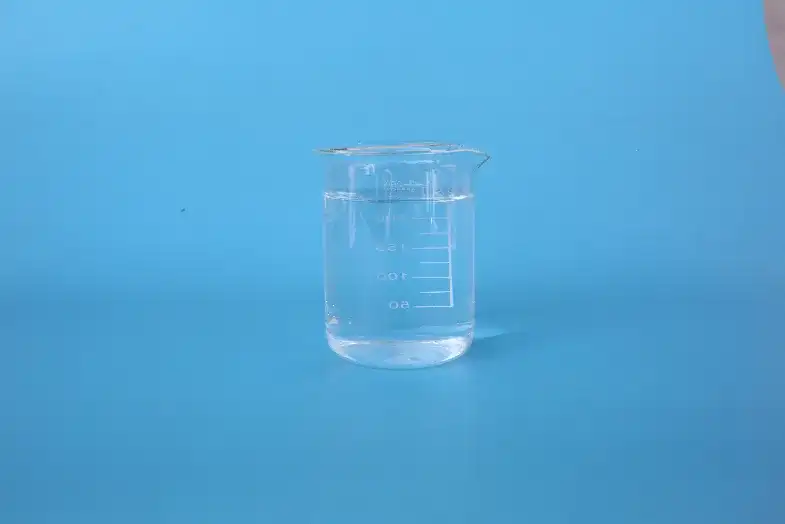
!Acrylic Acid
 ## Cross-linking Creates the Functional Network
Without cross-linking, polyacrylic acid simply dissolves in water. The cross-linking step transforms a soluble polymer into a super absorbent polymer by introducing chemical bonds between individual chains. Multi-functional monomers or polymers act as bridges, creating a three-dimensional network structure.
This network architecture is what allows the polymer to swell dramatically while staying intact. Water enters the structure, the chains stretch apart, but the cross-links prevent dissolution. Getting the cross-linker density right requires balancing competing demands. Too few cross-links and the polymer becomes water-soluble. Too many cross-links and the network becomes rigid, limiting how much water can actually fit inside. The optimal sodium polyacrylate structure depends heavily on the intended application.
How Water Actually Gets Absorbed and Held
Super absorbent polymers pull water in through osmotic pressure combined with ionic repulsion. During production, the carboxylic acid groups along the polymer backbone are typically neutralized with sodium hydroxide, creating negatively charged sodium carboxylate groups. These charges repel each other, which expands the network and creates space for water.
When the polymer contacts water, the high sodium ion concentration inside the network generates an osmotic gradient. Water molecules flow in to equalize the concentration difference. Once inside, hydrogen bonding and capillary forces hold the water in place. The cross-linked structure prevents the swollen gel from releasing water even under moderate pressure.
Liquid composition, temperature, and pH all influence how much water a given super absorbent polymer can actually hold. Products like Ultra High Absorbency SAP Ultra High Absorbency SAP and Fast Absorption Super Absorbent Polymer Fast Absorption Super Absorbent Polymer are engineered to maximize these properties for specific use cases.
Production Parameters That Actually Matter
Achieving consistent super absorbent polymer performance requires controlling several interdependent variables. Monomer concentration affects both chain length and network density. Initiator concentration determines how many chains form and how fast the reaction proceeds. Cross-linker density remains the most consequential factor since it directly controls the network structure that governs absorption capacity and gel strength.
Temperature management during the reaction prevents thermal degradation and keeps kinetics predictable. Particle size distribution matters for downstream processing and determines how quickly the final product absorbs liquid in application. Shandong Nuoer’s production scale allows fine-tuning across all these parameters to meet specific customer requirements.
| Parameter | Impact on SAP Performance |
|---|---|
| Monomer Concentration | Affects molecular weight and polymer density |
| Initiator Concentration | Controls reaction speed and chain initiation |
| Cross-linker Density | Determines gel strength and absorption capacity |
| Reaction Temperature | Influences reaction rate and polymer structure |
| Particle Size Distribution | Impacts absorption speed and processability |
Where These Polymers End Up
Acrylic acid-based super absorbent polymers show up across industries that need reliable water management. Hygiene products rely on them heavily since diapers and feminine hygiene products require high absorbency combined with leakage prevention under pressure. Agriculture uses them for soil moisture retention, which reduces irrigation frequency and improves water efficiency in dry conditions.
Cable water blocking represents a less obvious but critical application. Super absorbent polymers prevent moisture ingress in fiber optic and power cables, protecting sensitive components from corrosion. Medical applications include wound dressings that manage exudate and drug delivery systems that benefit from controlled hydrogel properties.
Shandong Nuoer offers products across this range, including General Purpose Super Absorbent Polymer General Purpose Super Absorbent Polymer and High Permeability Super Absorbent Polymer High Permeability Super Absorbent Polymer for applications requiring faster liquid distribution through the gel structure.
If you’re interested in how we contribute to environmental solutions, check out 《Nuoer Showcased at 26th China IE Expo》.
| Industry | Key Application Areas | Benefits |
|---|---|---|
| Hygiene Products | Diapers, Feminine Care, Adult Incontinence | High absorbency, dryness, comfort, leakage prevention |
| Agriculture | Soil moisture retention, Seed coating, Hydroponics | Water conservation, improved plant growth, reduced irrigation |
| Cable Water Blocking | Fiber optic and power cables | Prevents water ingress, protects sensitive components |
| Medical | Wound dressings, Drug delivery, Absorbent pads | Moisture management, enhanced healing, controlled release |
| Industrial | Absorbents for spills, Dehumidifiers, Artificial snow | Efficient liquid containment, environmental safety, novelty applications |
Partner with Shandong Nuoer for Advanced Polymer Solutions
Shandong Nuoer Biological Technology Co., Ltd. produces polyacrylamide, superabsorbent resin, and acrylic acid products at industrial scale. With annual production capacity of 560,000 tons of superabsorbent resin and distribution across more than 60 countries, we support applications ranging from hygiene products to agricultural water management. Contact our team to discuss specific requirements or explore our product range.
Phone: +86-532-66712876 | Email: en*****@***er.com
Frequently Asked Questions About Super Absorbent Polymers
What is the primary role of acrylic acid in superabsorbent polymers?
Acrylic acid provides the monomer units that polymerize into long polyacrylic acid chains. These chains are then cross-linked to form the three-dimensional network that defines a super absorbent polymer. The carboxylic acid groups on each monomer unit become the sites that attract and hold water through osmotic and ionic mechanisms. Without high-quality Glacial Acrylic Acid, the resulting polymer network lacks the consistency needed for reliable absorption performance.
How do superabsorbent polymers absorb and retain water so effectively?
The absorption mechanism combines osmotic pressure with physical network structure. Sodium carboxylate groups along the polymer chains create a high ion concentration inside the network. When water contacts the polymer, osmotic pressure drives water molecules into the structure to equalize concentrations. The cross-linked network swells to accommodate the incoming water but cannot dissolve, so the liquid stays trapped as a gel.
What are the main industrial applications for acrylic acid-based SAPs?
Hygiene products account for the largest volume, with diapers and feminine care products requiring super absorbent polymers that combine high capacity with pressure resistance. Agricultural applications use them to retain soil moisture and reduce irrigation needs. Cable manufacturers incorporate them to block water ingress in fiber optic and power cables. Medical applications include wound dressings and drug delivery systems where controlled hydration matters.


 English
 Russian
 Arabic
 Spanish