
Selecting the right Super Absorbent Polymer (SAP) can make or break performance. From experience, particle size sits at the center of that decision, shaping absorption speed, capacity, and overall efficiency. Here we map how different particle sizes behave across applications so you can match your choice to real-world needs, with practical insights on optimizing SAP performance through precise particle size selection.
Understanding Super Absorbent Polymer Particle Size
What is SAP Particle Size?
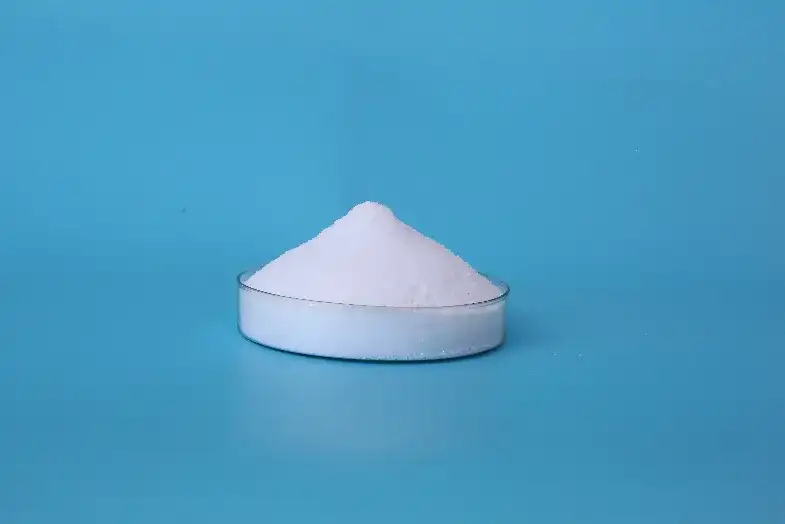
Super Absorbent Polymer (SAP) particle size refers to the physical dimensions of individual SAP granules. This is usually measured as a particle size distribution, indicating the percentage of particles falling within specific size ranges. Manufacturers use sieving methods to determine this distribution, classifying particles by passing them through a series of mesh screens. A precise particle size distribution ensures consistent performance in end-use applications.
Why Particle Size Matters in SAP Performance
Particle size significantly influences SAP performance characteristics. Smaller particles offer a larger surface area relative to their volume, leading to faster absorption rates. Larger particles generally provide higher total absorption capacity and better liquid permeability within a swollen gel. We observe a key trade-off: rapid absorption often comes with a reduced capacity under pressure, while higher capacity can slow initial absorption.
| Particle Size Category | Absorption Rate | Total Capacity (under pressure) | Gel Blocking Risk | Typical Applications |
|---|---|---|---|---|
| Fine (<200 µm) | Very Fast | Moderate | Higher | Thin hygiene layers |
| Medium (200-600 µm) | Fast | High | Moderate | Diapers, adult care |
| Coarse (>600 µm) | Moderate | Very High | Lower | Agriculture, cables |
To understand how different SAP particle sizes impact various applications, consider the insights in 《Nuoer at 25th China International Petroleum & Petrochemical Technology Exhibition》.
Key Factors Influencing Particle Size Selection
Application Requirements and End-Use Demands
Specific product requirements dictate the ideal SAP particle size. For instance, thin baby diapers demand finer particles for rapid acquisition and minimal bulk. Conversely, agricultural applications benefit from larger particles that enhance soil aeration and provide sustained water release. The chosen particle size must align with the product’s functional and aesthetic needs. We customize production to meet these specific customer requirements.
Absorption Capacity and Swelling Kinetics
The balance between absorption capacity and swelling kinetics is critical. Smaller particles absorb liquids rapidly due to increased surface area, but they can swell quickly and impede further liquid flow, a phenomenon known as gel blocking. Larger particles absorb more slowly but maintain better permeability, allowing for higher overall capacity, especially under pressure. We must optimize particle size to achieve the desired absorption profile for each application.
Permeability and Gel Blocking Considerations
Permeability, the ability of liquid to flow through the swollen SAP, is directly linked to particle size. Finer particles, when swollen, create a dense, less permeable gel layer, increasing the risk of gel blocking. This can significantly reduce the effective absorption capacity in applications requiring sustained liquid transfer. Larger, more robust particles maintain better channel integrity, enhancing liquid distribution and reducing gel blocking. This ensures efficient fluid management in demanding environments.
Mechanical Strength and Dust Formation
Particle size also affects the mechanical strength of the SAP and its propensity for dust formation. Smaller particles are generally more fragile and prone to breakage during handling and processing, leading to increased dust. This dust can pose health and safety concerns and impact manufacturing efficiency. Larger, more robust particles offer better mechanical integrity, reducing dust and improving overall product quality.
Cost-Effectiveness and Manufacturing Processes
The cost-effectiveness of SAP is influenced by both particle size and manufacturing processes. Producing very uniform, fine particles can be more energy-intensive and costly. Conversely, overly coarse particles might not meet specific performance requirements, leading to higher usage rates. We leverage advanced production capabilities to ensure a stable supply and cost reduction, offering customizable production to meet specific customer requirements. Our production capabilities are detailed in 《Nuoer Honored as Outstanding Tax Contributor in Dongying City 2024》.
Optimizing Particle Size for Diverse Applications
Hygiene Products Diapers Feminine Care
In hygiene products, SAP particle size is central to performance. For baby diapers and adult incontinence products, a medium particle size (200-600 µm) balances rapid absorption with high retention capacity. This ensures quick liquid uptake and effective anti-leakage properties. Finer particles are sometimes used in ultra-thin designs for faster absorption but require careful formulation to prevent gel blocking. Our superabsorbent polymer (SAP) products, like Ultra High Absorbency SAP and Balanced Performance Super Absorbent Polymer, are designed with optimized particle sizes for these demanding applications, ensuring user comfort and product reliability.
Agriculture and Horticulture Water Retention
For agriculture and horticulture, SAPs enhance water retention in soil, reducing irrigation frequency. Larger particle sizes (e.g., >600 µm) are preferred here. These larger particles create macropores in the soil, improving aeration and allowing for better root development. They also provide sustained water release over longer periods, which is vital for plant growth in arid conditions. Our General Purpose Super Absorbent Polymer is particularly effective in these applications, promoting healthier crops and more efficient water use.
Industrial Applications Cable Water Blocking Waste Solidification
Industrial applications demand specific SAP characteristics. For cable water blocking, SAPs with high swelling pressure and stability are required. We utilize SAPs that can rapidly absorb water and expand to fill voids, preventing moisture ingress in communication and power cables. In waste solidification, SAPs with excellent hydrolysis resistance and high absorbency are chosen to effectively bind liquids and stabilize hazardous materials. Our diverse range of Polyacrylamide Supplier OEM products, including Cationic Polyacrylamide Flocculant and Amphoteric Polyacrylamide Flocculant, are tailored for these demanding industrial uses, ensuring reliability and environmental protection.
Nuoer’s Expertise in SAP Particle Size Customization
Advanced Production Capabilities
Shandong Nuoer Biological Technology Co., Ltd. operates with an annual production capacity of 560,000 tons of superabsorbent resin. We employ advanced microbial technology for producing Acrylamide Monomer Crystal and Acrylamide Aqueous Solution, ensuring ultra-low impurities and strong polymerization performance. Our state-of-the-art facilities allow for precise control over particle size distribution, molecular weight, and ionic characteristics. This enables us to consistently deliver high-quality SAP products tailored to diverse industrial requirements.
Quality Control and Performance Testing
We maintain rigorous quality control protocols throughout our manufacturing process. Each batch of SAP undergoes thorough performance testing, including measurements for absorption capacity, absorption rate, retention under pressure, and particle size distribution. Our laboratories are equipped with advanced analytical instruments to ensure every product meets stringent international standards and specific customer specifications. This commitment to quality guarantees reliable and consistent performance for all our clients. For more details on our commitment to quality and innovation, please refer to 《Nuoer Wins Two Provincial Honors》.
Future Trends and Innovations in SAP Particle Technology
Nanoparticle SAPs
Research into nanoparticle SAPs explores new frontiers in absorption technology. These ultra-fine particles offer significantly increased surface area, potentially leading to even faster absorption rates and enhanced performance in highly specialized applications. While still in early development, nanoparticle SAPs could revolutionize fields requiring extremely thin absorbent layers or precise moisture control at a microscopic level. We are actively monitoring these advancements for future product integration.
Biodegradable SAPs
Environmental sustainability drives innovation in polymer science. The development of biodegradable SAPs addresses concerns about plastic waste and environmental impact. These novel polymers are designed to break down naturally after use, reducing their ecological footprint. Nuoer is committed to sustainable solutions, investing in research and development to offer environmentally friendly alternatives that maintain high performance standards. We aim to balance effective water management with ecological responsibility.
Optimize Your Performance with Nuoer’s SAP Solutions
Ready to enhance your product’s performance with precisely engineered Super Absorbent Polymer particle sizes? Contact Shandong Nuoer Biological Technology Co., Ltd. today for expert consultation. Our team will provide customized SAP solutions tailored to your unique application needs.
Email: en*****@***er.com
Phone: +86-532-66712876
FAQs
What is the ideal SAP particle size for hygiene products?
For hygiene products like diapers and feminine care, a balance between rapid absorption and high retention is vital. In many designs, a finer particle size (e.g., 100-800 microns) is preferred to ensure quick liquid uptake and a thin product profile, while still maintaining sufficient gel strength to prevent leakage. However, the exact ‘ideal’ size can vary based on specific product design and desired performance characteristics.
How does SAP particle size affect gel blocking?
Gel blocking occurs when swollen SAP particles form an impermeable layer, preventing further liquid penetration. Larger particle sizes generally reduce the risk of gel blocking because they create larger interstitial spaces for liquid flow. Conversely, very fine particles can swell rapidly and block these pathways, especially under pressure, leading to inefficient absorption. Nuoer’s advanced SAP formulations are designed to minimize gel blocking while maximizing absorption efficiency.
Can Shandong Nuoer Biological Technology Co., Ltd. customize SAP particle sizes?
Yes, Shandong Nuoer Biological Technology Co., Ltd. specializes in providing customized Super Absorbent Polymer solutions. With our advanced R&D capabilities and flexible manufacturing processes, we can tailor SAP particle size distribution, absorption capacity, and other properties to meet the unique requirements of your specific application. Contact our technical team to discuss your project needs.
What are the environmental considerations for SAP particle size selection?
While particle size itself doesn’t directly impact biodegradability, selecting the optimal size can improve the efficiency of SAP usage, potentially reducing overall material consumption. For environmentally conscious applications, Nuoer is also developing and offering biodegradable SAP options, which combine effective water management with a reduced environmental footprint. We are committed to sustainable practices and innovation in polymer technology.



 English
 Russian
 Arabic
 Spanish