
Selecting the optimal Super Absorbent Polymer (SAP) determines how well a product actually performs in the field. Particle size drives the mechanics we care about most, from swelling speed to liquid distribution and how much the gel holds under pressure. Matching those physical traits to the application is where results are won. What follows lays out how size affects behavior, what to weigh during selection, practical steps to choose and validate, where different cuts work best, and where the technology is headed, so decisions land on solid ground.
Understanding Super Absorbent Polymer Particle Size
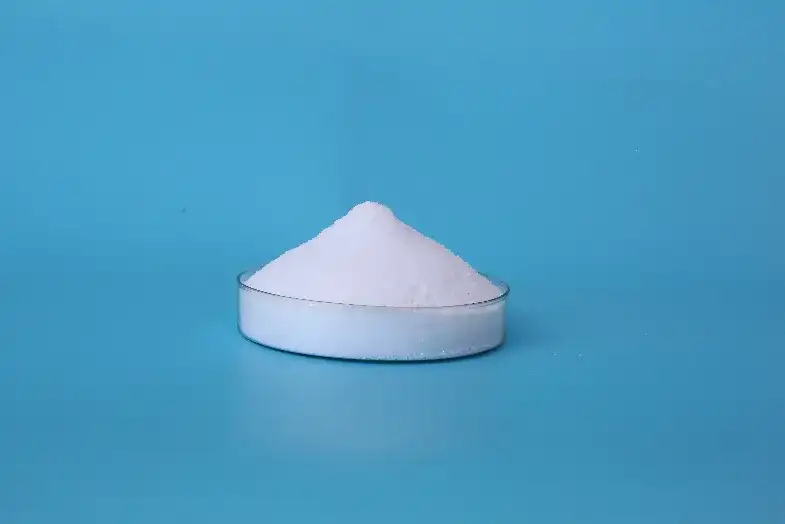
Superabsorbent polymers (SAPs) are cross-linked polymers engineered to absorb and retain large volumes of liquid. Particle size refers to the dimensions of each granule or powder fraction and determines how the polymer meets liquid at the surface. Smaller particles provide greater surface area relative to volume, which shapes the initial uptake rate. Larger particles can create more open pathways within the swollen gel, affecting permeability.
Size governs absorption mechanics from first contact through full swelling. When liquid meets SAP, the particles swell and form a hydrogel. Smaller particles often swell faster because more surface is exposed, yet extremely fine cuts can trigger gel blocking, where a quickly swollen outer shell slows penetration to the core. Particle size also influences total capacity and gel strength after swelling. Larger particles generally maintain permeability within the swollen bed, which supports efficient liquid distribution in hygiene applications. Understanding these trade-offs is central to optimizing SAP performance.
Key Factors Influencing Particle Size Selection
Selecting the right SAP particle size calls for weighing the end-use demands, the material’s intrinsic characteristics, and practical economics. Looking at all three together leads to performance that holds up and costs that make sense.
Application-Specific Requirements and Performance Goals
End-use defines the target performance profile. Hygiene products prioritize rapid absorption, high capacity, and leak prevention. Agricultural uses favor gradual water release and soil conditioning. There is a trade-off between absorption speed, capacity, and gel strength. Smaller particles often deliver higher total capacity and better retention under pressure, but can curb permeability. Larger particles typically provide faster uptake and stronger permeability, with a modest trade in total capacity. Balancing these properties against the product’s goals is the task.
Material Properties and Manufacturing Considerations
Cross-linking density and surface treatment interact with size to set overall behavior. Higher cross-linking density yields a firmer gel at the expense of capacity. Surface treatments can boost uptake speed or cut dust. Manufacturing is influenced as well. Fine powders tend to generate more dust during handling, with implications for air quality and maintenance. Larger particles usually flow better, which simplifies dosing and mixing. These considerations support safe, efficient production.
Practical Guidance for Choosing Optimal SAP Particle Size
A structured process helps narrow options and validate choices under real conditions.
- Define Performance Objectives: Specify the priority outcomes for the product, such as absorption speed, capacity, retention under pressure, and permeability.
- Consider Application Environment: Map the conditions of use, including liquid chemistry, temperature, and mechanical stress.
- Assess Manufacturing Compatibility: Check how each particle size integrates with existing equipment and process steps.
- Evaluate Cost-Benefit: Compare material cost, processing efficiency, and end-product value for each option.
- Conduct Testing: Run laboratory and pilot trials to confirm performance under realistic scenarios.
- Consult Experts: Work with SAP suppliers and technical specialists for tailored options and support.
Industry Applications and Case Studies for SAP Particle Size
SAPs serve many industries, with particle sizes chosen to meet the performance profile of each use case. Real implementations show how size optimization changes outcomes.
Hygiene Products: Diapers, Feminine Care, and Adult Incontinence
In hygiene products, particle size is central to high absorption, leak control, and comfort. For baby diapers, Ultra High Absorbency SAP (SAP NR-611) with ultra-high centrifugal retention capacity is often preferred in the core to keep surfaces dry. Smaller particles raise total absorption and retention under pressure, which supports thin designs. A blended size distribution can balance uptake speed and distribution while avoiding gel blocking. In adult incontinence products, fast initial uptake and sustained absorption both matter, often achieved with carefully chosen particle size distributions. High Permeability Super Absorbent Polymer (SAP NR-760K) is particularly useful for these applications.
Agriculture, Horticulture, and Water Retention
In agriculture, particle size shapes water release timing, soil structure, and nutrient retention. Larger particles are often selected for creating macropores that improve aeration and infiltration. They take up water and release it gradually to roots, lowering irrigation frequency, which helps in drought-prone regions. Smaller particles suit seed coatings or potting mixes where close contact with roots is needed. The aim is to keep water available to plants while limiting nutrient leaching.
Future Trends and Innovations in SAP Particle Technology
Development is moving toward higher performance, sustainability, and tighter customization. Advances in particle design are expected to deliver more tailored behavior, including improved absorption kinetics, higher gel strength, and better biodegradability. Manufacturing techniques are evolving to give finer control over particle morphology and surface characteristics. These shifts will support more efficient and environmentally considerate use across markets.
Further insights into our commitment to innovation and community can be found in 《Nuoer Biology Builds New Plastic Playground in Xianhe Town》, showcasing our dedication beyond product development.
Call to Action
Discover the perfect Super Absorbent Polymer solution for your unique needs. Contact Shandong Nuoer Biological Technology Co., Ltd. today for expert consultation, product samples, or to discuss custom particle size requirements. Our team is ready to help you achieve optimal performance and value. Email us at enquiry@nuoer.com or call +86-532-66712876.
FAQs
What is the primary impact of larger SAP particle sizes?
Larger SAP particle sizes generally provide higher permeability and faster absorption rates, with a slight trade-off in absorption capacity per unit weight compared to smaller particles. They are a strong fit where rapid uptake and good liquid distribution through the absorbent matrix are required, including certain industrial processes or specific layers within hygiene products.
How does smaller SAP particle size affect performance?
Smaller SAP particle sizes increase surface area to volume ratio, which boosts total capacity and often improves retention under pressure. They can introduce gel blocking, where swollen particles impede liquid flow, and they tend to generate more dust during processing. They are well suited to applications demanding maximum retention and compact cores, such as ultra-thin diapers.
Can SAP particle size influence dust generation during manufacturing?
Yes. Finer particle sizes produce more dust during handling and manufacturing, affecting worker safety, equipment maintenance, and product quality. Dust suppressants or specialized handling equipment are commonly used with very fine powders. Shandong Nuoer focuses on minimizing dust through optimized production and quality control.
Is there an ‘ideal’ SAP particle size for all applications?
No. The optimal size depends on the end product’s requirements, including target absorption speed, capacity, gel strength, permeability, cost, and manufacturing method. Understanding these factors in context is the path to the right choice.
How can I determine the best SAP particle size for my product?
Start with a clear definition of performance needs, the liquid characteristics, process constraints, and cost targets, then confirm with lab and pilot trials. Shandong Nuoer’s technical team can help select and validate the most suitable particle size for your application, backed by extensive R&D and a broad product portfolio.






 English
  Russian
  Arabic
  Spanish