
Getting the right emulsion polyacrylamide concentration feels like one of those things that should be straightforward but rarely is. The polymer itself does exactly what it’s supposed to do—flocculate, dewater, clarify—but only when you’ve dialed in the dosage for your specific conditions. Too little and you’re watching particles drift around refusing to settle. Too much and you’ve wasted product while potentially making things worse. The sweet spot exists, but finding it requires understanding what you’re actually working with.
How Emulsion Polyacrylamide Types Shape Concentration Decisions
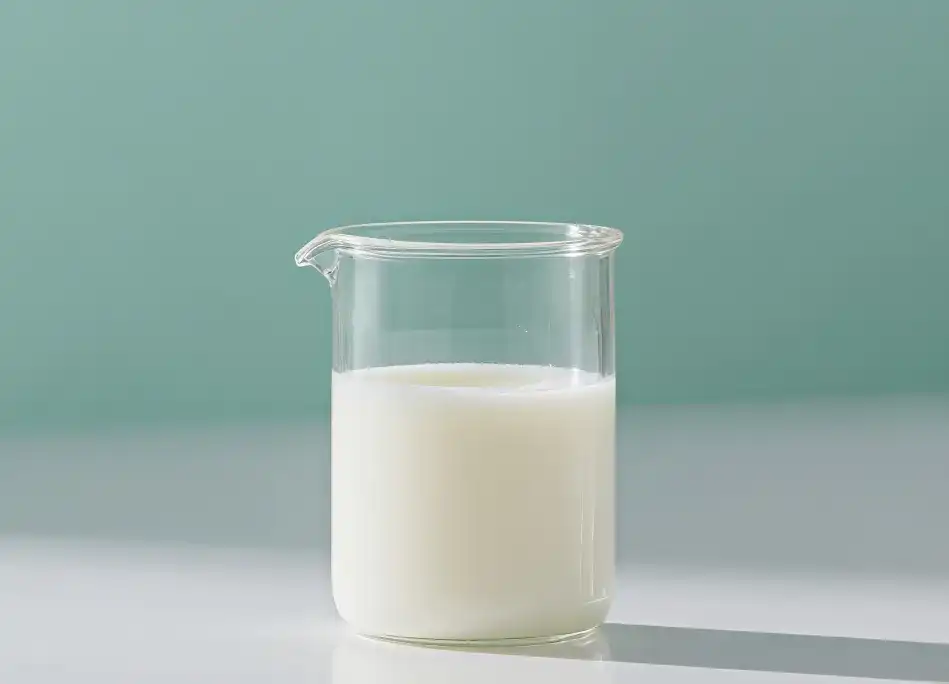
Emulsion polyacrylamide comes in several forms, each with distinct charge characteristics that determine how it interacts with suspended particles. The production process uses water-in-oil emulsion technology, creating high-concentration liquid flocculants with fast dissolution times—typically 5 to 15 minutes—and consistent molecular weight distribution.
Anionic polyacrylamide carries a negative charge and works best when you need strong adsorption and bridging effects. The ultra-high molecular weight versions excel in mining, papermaking, and industrial wastewater applications where you’re dealing with positively charged particles or mineral fines. Cationic polyacrylamide flips the charge profile, carrying positive charges that make it particularly effective for sludge dewatering and municipal wastewater treatment. The positive charge neutralizes negatively charged organic particles, which is why you can often achieve good results with lower dosages compared to other polymer types.
Non-ionic polyacrylamide sits in the middle, offering flexibility that the charged versions can’t match. Because it doesn’t rely on charge interactions, its flocculation performance stays relatively stable across different pH levels and salt concentrations. This makes it useful in acidic conditions or when you’re dealing with variable water chemistry. Amphoteric polyacrylamide combines both positive and negative charges in a single polymer chain, giving it versatility in complex wastewater streams where particle charges vary.
The molecular weight of any polyacrylamide type directly affects how well it bridges between particles. Higher molecular weight generally means stronger flocculation, but it also means the polymer needs more time and energy to fully dissolve and extend in solution. Charge density matters too—it controls how strongly the polymer attaches to particle surfaces.
| Polyacrylamide Type | Primary Charge | Typical Applications | Key Advantages |
|---|---|---|---|
| Anionic | Negative | Mining, papermaking, industrial wastewater | Strong adsorption, high flocculation |
| Cationic | Positive | Sludge dewatering, municipal wastewater | High clarification, low dosage |
| Non-ionic | Neutral | Acidic conditions, specific thickening | pH-independent flocculation |
| Amphoteric | Both | Complex wastewater, difficult sludge | Versatility, superior dewatering |
What Actually Determines Your Polymer Dosage
Selecting the right emulsion polyacrylamide polymer dosage involves balancing several factors that don’t always point in the same direction. The characteristics of what you’re treating, what you’re trying to achieve, and the equipment you’re working with all influence the final number.
Raw Material Properties Drive Initial Estimates
The material you’re treating tells you more about dosage requirements than any general guideline can. Suspended solids concentration is the obvious starting point—higher solids loads typically need more polymer to achieve adequate flocculation. But particle size distribution matters just as much. Fine particles present more surface area per unit mass, which means more polymer required to achieve coverage.
pH affects both the polymer and the particles. Anionic polyacrylamide performs best in neutral to alkaline conditions because the carboxyl groups along the polymer chain are fully ionized, maximizing charge density. Drop the pH below 6 or so and those groups start to protonate, reducing effectiveness. Cationic polyacrylamide shows the opposite pattern, working well from acidic through neutral conditions. Organic content in the water can interfere with polymer performance by competing for adsorption sites or by coating particles in ways that reduce their interaction with the polymer.
Different Goals Need Different Approaches
What you’re trying to accomplish shapes concentration decisions as much as raw material properties. Clarification applications prioritize settling velocity and supernatant clarity. You want flocs that form quickly and settle fast, leaving clean water behind. Dewatering applications care more about filter cake properties—how dry you can get the solids, how easily they release from filter media.
These objectives sometimes pull in different directions. A polymer dosage that produces excellent settling might not give you the driest cake. The flocs that settle fastest aren’t always the ones that dewater best. Finding the right balance often means accepting tradeoffs or using different polymers at different stages of the process.
Finding the Right Concentration Through Testing
Polymer dosage optimization starts in the lab and moves to the plant floor. The gap between those two environments is where many optimization efforts stumble, but systematic testing reduces the guesswork.
Running Jar Tests That Actually Predict Performance
Jar tests remain the standard method for initial concentration screening because they’re simple, reproducible, and give you visual feedback about what’s happening. The procedure matters more than most people realize.
Start by preparing a stock solution at a known concentration, typically around 0.1% active polymer. This dilution ensures the polymer is fully hydrated and extended before you add it to your test samples. Using concentrated emulsion directly leads to poor dispersion and unreliable results.
Set up identical sample volumes in multiple beakers—usually six to eight—and add different amounts of stock solution to create a dosage range. The range should bracket your expected optimal dosage, with enough points to define the curve clearly.
Mixing sequence affects results significantly. Start with rapid mixing for 30 to 60 seconds to disperse the polymer throughout the sample. Then reduce to slow mixing for several minutes to allow floc formation without breaking the flocs apart. The slow mix phase is where you see the polymer actually working.
Watch what happens during and after mixing. Note when flocs first become visible, how large they grow, how quickly they settle, and how clear the supernatant becomes. The optimal dosage usually shows up as a clear inflection point—below it, flocs are small and slow to settle; above it, you’re not getting proportional improvement and may see signs of over-dosing like cloudy supernatant or flocs that don’t settle cleanly.
Moving from Beaker to Full Scale
Lab results don’t transfer directly to plant operations. The mixing energy in a jar test differs from what happens in a pipe or mixing tank. Retention times vary. Temperature fluctuates. The polymer dilution system design affects how well the product disperses before it contacts the process stream.
Expect to adjust your dosage when you scale up. Sometimes the plant needs more polymer than the jar test suggested because mixing is less efficient. Sometimes it needs less because longer contact time allows better floc development. Pilot testing at intermediate scale helps bridge this gap, but even then, final optimization happens during actual operation.
The dilution system deserves particular attention. Emulsion polyacrylamide needs adequate mixing energy during initial dilution to break the emulsion and allow the polymer to hydrate. Insufficient mixing at this stage creates undissolved material that never performs as intended. High-shear mixing at the dilution point, followed by gentler mixing during aging, typically gives the best results.
For further insights into our commitment to community and education, you might be interested in 《Nuoer Biology Scholarship Donation Ceremony at China University of Petroleum》.
Troubleshooting Concentration Problems
Even well-designed systems encounter problems. Recognizing what’s going wrong and why helps you fix issues quickly rather than chasing symptoms.
Poor polymer dispersion shows up as visible clumps or “fish-eyes” in the diluted solution. These undissolved masses represent wasted product and inconsistent dosing. The cause is usually inadequate mixing energy during dilution or adding polymer too quickly. Slowing the addition rate and increasing mixing intensity typically resolves the problem. Water temperature matters too—cold water slows dissolution and may require longer mixing times.
Over-dosing produces distinctive symptoms. Instead of improving flocculation, excess polymer can re-stabilize particles by coating them completely and reversing their charge. You might see smaller flocs than expected, slower settling, or a hazy supernatant that doesn’t clear. The fix is straightforward—reduce dosage—but identifying over-dosing as the cause requires recognizing that more isn’t always better.
Under-dosing looks like incomplete treatment. Flocs form but stay small and fragile. Settling is slow. Supernatant clarity falls short of targets. Solids carryover increases. Increasing dosage gradually while monitoring results confirms whether under-dosing is the issue.
Storage problems develop slowly and can be hard to spot. Emulsion polyacrylamide degrades when exposed to extreme temperatures or stored too long. The product may look normal but perform poorly. If performance drops without obvious process changes, check product age and storage conditions. Fresh product from the same lot provides a quick comparison.
| Problem | Cause | Solution |
|---|---|---|
| Poor Dispersion | Insufficient mixing, incorrect dilution | Optimize mixing energy, adjust dilution ratio |
| Over-dosing | Excessive polymer addition | Calibrate dosage based on jar tests, monitor process |
| Under-dosing | Insufficient polymer addition | Adjust dosage, regular performance checks |
| Reduced Efficacy | Improper storage, degradation | Adhere to storage guidelines, check shelf life |
The Business Case for Getting Concentration Right
Precise emulsion polyacrylamide concentration control affects more than just treatment quality. The financial and regulatory implications make optimization worth the effort.
Operational efficiency improves when polymer dosage matches actual requirements. Treatment times decrease because flocs form faster and settle more completely. Throughput increases without equipment changes. Energy consumption drops because you’re not fighting poor flocculation with longer processing times or additional treatment steps.
Cost reduction follows naturally. Polymer represents a significant operating expense in many treatment processes. Using the right amount—not too much, not too little—minimizes waste while maintaining performance. The savings compound over time, especially in high-volume operations.
Environmental compliance depends on consistent treatment performance. Discharge limits for suspended solids, turbidity, and other parameters require reliable removal efficiency. Under-dosing risks permit violations. Proper concentration selection provides the margin needed to meet limits even when influent quality varies.
Product quality benefits in applications where the treated material becomes part of a final product. Papermaking relies on good flocculation for sheet formation and strength. Mineral processing depends on efficient solid-liquid separation for recovery rates. The polymer concentration that optimizes treatment also optimizes product quality.
Working with Shandong Nuoer
Shandong Nuoer Biological Technology Co., Ltd. manufactures the full range of emulsion polyacrylamide products and provides technical support for concentration optimization. As a polyacrylamide supplier OEM with global reach, we bring experience from diverse applications to help solve specific treatment challenges. Contact us at +86-532-66712876 or en*****@***er.com for consultation on your application.
Frequently Asked Questions About Emulsion Polyacrylamide Concentration
What makes polyacrylamide emulsion solutions difficult to prepare correctly?
The main challenges involve getting the polymer fully dispersed and hydrated before use. Adding emulsion too quickly or with insufficient mixing creates undissolved clumps that reduce effectiveness. Water temperature affects dissolution rate, with cold water requiring longer mixing times. The initial dilution ratio also matters because overly concentrated solutions are harder to mix uniformly. Starting with a moderate dilution and adequate high-shear mixing at the point of addition prevents most preparation problems.
How does polyacrylamide concentration change the speed of floc formation?
Polyacrylamide concentration controls how quickly polymer molecules encounter and bridge between particles. At optimal concentration, flocs form rapidly because enough polymer is present to create connections without excess material interfering. Below optimal concentration, polymer molecules are spread too thin, slowing the bridging process and producing weak flocs. Above optimal concentration, excess polymer can coat particles completely, preventing the particle-to-particle contact needed for strong floc structure. The relationship isn’t linear—there’s a range where performance is good, with diminishing returns or actual degradation outside that range.
What safety precautions apply when working with concentrated polyacrylamide emulsions?
Personal protective equipment should include chemical-resistant gloves and eye protection to prevent direct contact. The emulsions themselves have low toxicity, but skin contact can cause irritation and the slippery residue creates slip hazards on floors. Adequate ventilation prevents accumulation of any mists during handling or dilution. Storage areas should be cool and dry, away from oxidizers or strong acids. Spills should be contained with absorbent materials rather than washed away, since the polymer makes wet surfaces extremely slippery.
Should polymer concentration change with seasonal temperature variations?
Temperature affects several aspects of polymer performance. Cold water increases solution viscosity and slows dissolution, which may require longer mixing times or slightly higher concentrations to compensate for incomplete hydration. Warm water accelerates dissolution but can also reduce solution stability over time. The treated material itself may behave differently at different temperatures, changing the optimal dosage independent of polymer behavior. Seasonal adjustment is common in operations with significant temperature swings, though the magnitude of adjustment varies by application.
How long does emulsion polyacrylamide last and what degrades it?
Properly stored emulsion polyacrylamide typically maintains effectiveness for 6 to 12 months. Storage temperature is the primary factor affecting shelf life. Freezing damages the emulsion structure permanently, while prolonged exposure to temperatures above 35°C accelerates degradation. Direct sunlight and contamination also reduce effectiveness. Once diluted, solutions should be used within 24 to 48 hours because the extended polymer chains gradually break down in water. Checking product age and storage history helps explain unexpected performance drops that don’t correlate with process changes.


 English
 Russian
 Arabic
 Spanish