
Flocculation sits at the heart of nearly every industrial separation challenge I’ve encountered. When suspended solids refuse to settle on their own, this process steps in to force the issue—aggregating tiny particles into larger masses that gravity can actually pull down. Cationic Polyacrylamide has earned its place as a go-to flocculant across sectors because it tackles the root problem: those stubborn negative charges that keep particles dispersed. The efficiency gains show up in clearer effluent, faster processing, and lower disposal costs.
How Flocculation Actually Works with Cationic Polyacrylamide
Flocculation bridges the gap between chemistry and physics. Small particles suspended in liquid carry surface charges—usually negative—that create mutual repulsion. Left alone, they’ll stay dispersed indefinitely. The goal is to overcome that repulsion, get particles close enough to stick together, and form flocs heavy enough to separate from the liquid phase.
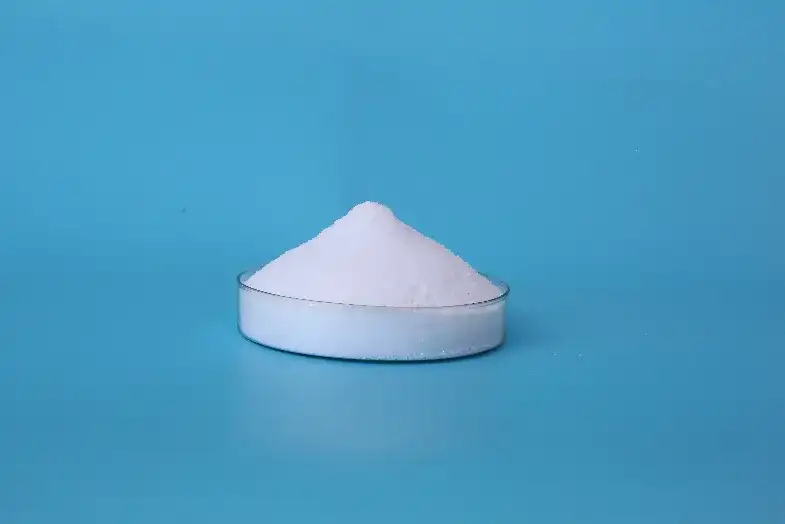
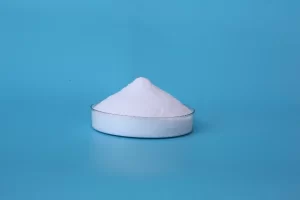
Cationic Polyacrylamide Flocculant is a water-soluble synthetic polymer built by copolymerizing cationic monomers with acrylamide. The resulting long-chain molecule carries positive charges along its backbone. When introduced to a suspension, those positive sites seek out negatively charged particles like magnets finding iron filings. Two properties matter most here: charge density determines how many positive sites are available per unit length, while molecular weight controls how far the polymer chains can reach across the solution. Both factors shape how effectively the flocculant performs its job.
The Role of Cationic Polyacrylamide in Particle Aggregation
Cationic Polyacrylamide Flocculant functions as a destabilizing agent first and an aggregating agent second. Its positive charge draws it toward negatively charged suspended particles—clays, organic matter, fine precipitates. Once adsorbed onto particle surfaces, it neutralizes their charge and allows them to approach each other without repulsion. From there, the polymer chains physically link multiple particles together, building flocs that settle or filter out efficiently.
The Two Mechanisms Behind Effective Flocculation
Cationic Polyacrylamide Flocculant achieves separation through charge neutralization and bridging. These mechanisms operate together, though their relative contributions shift depending on particle characteristics and polymer properties. Understanding both helps explain why certain formulations work better in specific applications.
Charge Neutralization: Eliminating Electrostatic Barriers
Charge neutralization addresses the fundamental reason particles stay dispersed. Colloidal particles in water typically carry negative surface charges, creating an electrostatic barrier that prevents contact. When Cationic Polyacrylamide Flocculant adsorbs onto these particles, its positive charges offset the negative surface charge. This reduces what’s called the zeta potential—essentially the electrical potential at the particle surface. Once that potential drops low enough, particles can approach each other without being pushed apart. The process resembles coagulation in principle, though the polymer’s structure allows for more controlled and efficient destabilization.
Bridging takes over once particles are destabilized. The long polymer chains of Cationic Polyacrylamide Flocculant can adsorb onto multiple particles simultaneously, physically connecting them like a net gathering fish. Higher molecular weight polymers excel at bridging because their chains extend further into solution, reaching more particles. The combination of charge neutralization and bridging produces dense, robust flocs that resist shearing during handling and settle rapidly under gravity.
Our work in advancing these chemical solutions continues to earn recognition. For insights into recent industry acknowledgments, consider reading 《Nuoer Wins Two Provincial Honors》.
What Controls Cationic Polyacrylamide Performance
Getting the most from Cationic Polyacrylamide Flocculant requires attention to operating conditions. Several variables influence how well the polymer performs, and overlooking any of them can undermine results. Process optimization starts with understanding these relationships.
pH Effects on Polymer Behavior
pH shapes performance more than many operators realize. The cationic groups on Cationic Polyacrylamide Flocculant ionize differently across the pH spectrum, which affects how strongly the polymer interacts with suspended particles. Under acidic conditions, those positive charges remain fully active. As pH rises into alkaline territory, hydrolysis can strip away cationic functionality, weakening the polymer’s ability to neutralize particle charges. Most applications find their sweet spot somewhere in the mildly acidic to neutral range, though specific systems may behave differently.
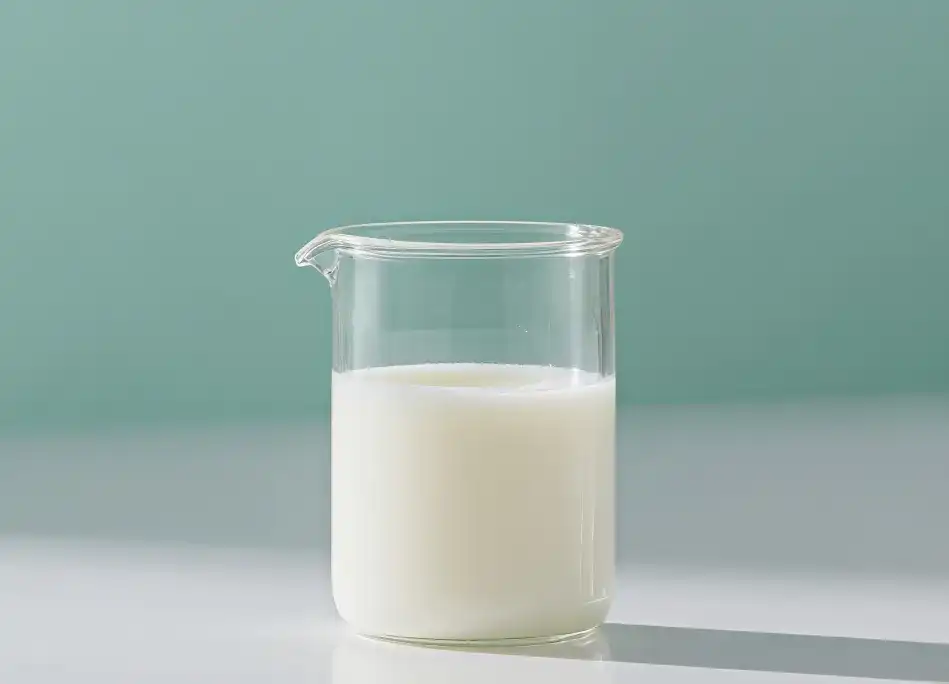
Molecular weight influences bridging effectiveness—longer chains span greater distances and capture more particles per molecule. Charge density determines how much neutralization capacity the polymer carries. Dosage requires careful calibration: too little leaves particles partially destabilized, while too much can actually restabilize the suspension by coating particles with excess positive charge. Mixing intensity matters as well. Adequate agitation ensures polymer contacts particles throughout the volume, but excessive shear breaks apart flocs before they can settle. Temperature and water chemistry round out the picture, affecting polymer solubility, viscosity, and interaction kinetics.
Industrial Applications Where Cationic Polyacrylamide Delivers Results
Cationic Polyacrylamide Flocculant shows up wherever solid-liquid separation challenges exist. Its versatility stems from the ability to tune charge density and molecular weight for specific conditions.
| Industry | Primary Application | Benefits |
|---|---|---|
| Municipal Wastewater | Sludge dewatering, effluent clarification | Reduced sludge volume, cleaner discharge |
| Mining & Metallurgy | Tailings management, mineral processing | Improved water recovery, efficient solids removal |
| Paper Making | Retention aid, wastewater treatment | Enhanced fiber retention, reduced effluent solids |
| Oil & Gas | Drilling fluid treatment, produced water clarification | Efficient solids removal, improved oil-water separation |
| Industrial Effluent | Process water purification, solids thickening | Higher water quality, reduced disposal costs |
Municipal wastewater plants rely heavily on Cationic Polyacrylamide Flocculant for sludge dewatering. By forming tight flocs, the polymer helps mechanical equipment squeeze out more water, dramatically reducing the volume that requires disposal. Mining operations face similar challenges with tailings—fine particles that resist settling without chemical assistance. The paper industry uses these polymers both as retention aids during sheet formation and for treating mill effluent. Oil and gas operations encounter produced water laden with fine solids and emulsified oil; Cationic Polyacrylamide Flocculant helps break those emulsions and clarify the water for reuse or discharge.
Our participation in industry events reflects ongoing commitment to these applications. We recently demonstrated green innovation capabilities at a major exhibition—details are available at 《Nuoer at 25th China International Petroleum & Petrochemical Technology Exhibition》.
Choosing the Right Cationic Polyacrylamide for Your Application
Selecting the appropriate Cationic Polyacrylamide Flocculant involves matching polymer characteristics to the specific separation challenge. Generic choices rarely deliver optimal results.
Why Selection Precision Matters
An ill-suited polymer wastes money twice: once on the chemical itself, and again on the inefficiency it creates. Every application presents unique conditions—particle size distribution, surface charge characteristics, ionic strength, temperature, flow rates. A flocculant that performs brilliantly in one system may disappoint in another. Charge density needs to match the particle charge load. Molecular weight should align with the desired floc characteristics. Getting these parameters right minimizes chemical consumption while maximizing separation efficiency.
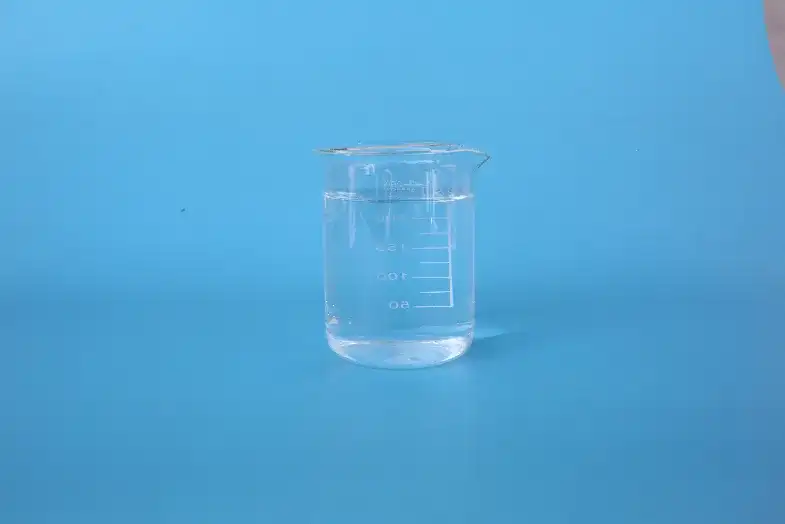
The practical approach starts with jar testing. Small-scale trials using actual process water reveal how different formulations perform under controlled conditions. Promising candidates then move to pilot-scale evaluation, where real-world factors like flow variation and equipment limitations come into play. Cost analysis, environmental considerations, and supplier support capabilities factor into the final decision. Shandong Nuoer polyacrylamide solutions span a range of charge densities and molecular weights, allowing precise matching to application requirements.
Our investment in education and community development reflects values that extend beyond product sales. Read about our scholarship initiatives at 《Nuoer Biology Scholarship Donation Ceremony at China University of Petroleum》.
Frequently Asked Questions About Cationic Polyacrylamide Flocculation
What distinguishes cationic from anionic polyacrylamide in flocculation applications?
Cationic Polyacrylamide Flocculant carries positive charges that attract negatively charged particles—clays, organic matter, certain metal hydroxides. Anionic polyacrylamide carries negative charges and works best with positively charged particles or as a bridging agent after initial coagulation has destabilized the suspension. The particle charge in your specific system determines which type applies. Testing both often reveals clear performance differences that guide the selection.
What dosing ranges apply to industrial cationic polyacrylamide applications?
Dosing for Cationic Polyacrylamide Flocculant typically falls between 1 and 50 ppm for wastewater clarification, with sludge dewatering applications sometimes requiring higher concentrations. The actual optimum depends heavily on solids loading, particle characteristics, and water chemistry. Jar testing remains the most reliable method for establishing the right dosage—theoretical calculations rarely account for all the variables present in real systems.
Is cationic polyacrylamide approved for drinking water treatment?
Cationic Polyacrylamide Flocculant can be used in potable water treatment, but only specific grades manufactured to drinking water standards qualify. Regulatory requirements vary by jurisdiction and typically specify maximum residual monomer content and application limits. Standard industrial grades do not meet these criteria. Shandong Nuoer offers products across the purity spectrum, and our technical team can identify appropriate grades for drinking water applications where regulations permit.
Partner with Shandong Nuoer for Advanced Flocculation Solutions
Leverage Shandong Nuoer Biological Technology Co.’s decade-long expertise and advanced polyacrylamide solutions for your specific solid-liquid separation challenges. Our global network and R&D capabilities ensure you receive optimal, high-performance flocculants tailored to your operational needs. Contact our technical specialists today to discuss your project and achieve superior water treatment and resource recovery outcomes. Email us at en*****@***er.com or call us at +86-532-66712876.


 English
 Russian
 Arabic
 Spanish