
Acrylamide monomer grades set the floor for how cleanly polymerization starts and how consistently the finished polyacrylamide behaves. I have reviewed certificate values that looked acceptable on paper, then traced a rough batch to conductivity or inhibitor drift that the headline purity number did not expose. After more than fifteen years in polyacrylamide and acrylic chemical production, I treat the published purity percentage as a starting point rather than a decision. The measurement that matters is how the full profile of moisture, inhibitor, pH, conductivity, and residual impurities performs under your process conditions.
What Do Different Acrylamide Monomer Grades Actually Change?
Acrylamide monomer grades differ less in what the main assay reports and more in what the assay leaves out. A typical crystal specification quotes purity at or above 98.0%, which tells a buyer that the major organic component is acrylamide. It does not tell them how much water has been absorbed, how much inhibitor remains in the material, or how many ionic or metal contaminants will travel into the polymerization reactor. Those minor components change the practical behavior of the grade even when the certificate value stays the same.
In our own production planning, we separate monomer quality into two questions. Will the monomer start polymerization predictably under the intended initiator system? Will it stay stable from receipt to the last day of the campaign? A grade that passes the first test can still fail the second if moisture drifts upward during storage or if the inhibitor concentration sits too close to the edge of the acceptable window.
That is why grade selection should rank parameters rather than treat them as equally important. The headline assay matters, but inhibitor level, moisture, conductivity, and pH do more to determine how the batch behaves hour to hour. If I had to put a priority on them, I would rank inhibitor concentration first, because it directly controls induction time and initiator demand. Moisture comes second in crystal grades, since it changes dosing weight and can promote hydrolysis. Conductivity and pH follow, with more weight for applications where charge control or metal sensitivity is tight.
Which Grade Testing Parameters Should Buyers Check First?
Five measurements give a buyer a reliable first pass on any acrylamide monomer lot. They are not the only tests a polymer laboratory can run, but they catch the failures most likely to show up later.
Purity, measured by titration or chromatographic methods, confirms the monomer content and sets the expected ceiling for molecular weight development. A lower purity lot raises the residual monomer risk in the finished polyacrylamide. Moisture, measured by Karl Fischer titration, changes the true dry-weight basis and makes dosage calculations unreliable when it climbs above the specification. Inhibitor content, often reported in parts per million, controls the induction period. If the inhibitor sits at the top end of a 3-10 ppm band, the operator must add more initiator to reach the same conversion. pH, measured on a 10 g/L solution, reflects residual acid or alkaline carryover that can shift initiation kinetics. Conductivity picks up ionic contaminants that can interfere with charge-sensitive formulations, and a value under 20 μS/cm is what we target for high purity crystal.
The failure mode behind each parameter is usually not a single catastrophic event. It is a slow drift that shows up as a broader molecular-weight distribution, a longer cycle, or a higher residual monomer result in the quality laboratory. I would rather reject a borderline lot before it enters the reactor than explain a drift afterward.
How Does AM Crystal Compare with Aqueous Solution Grades?
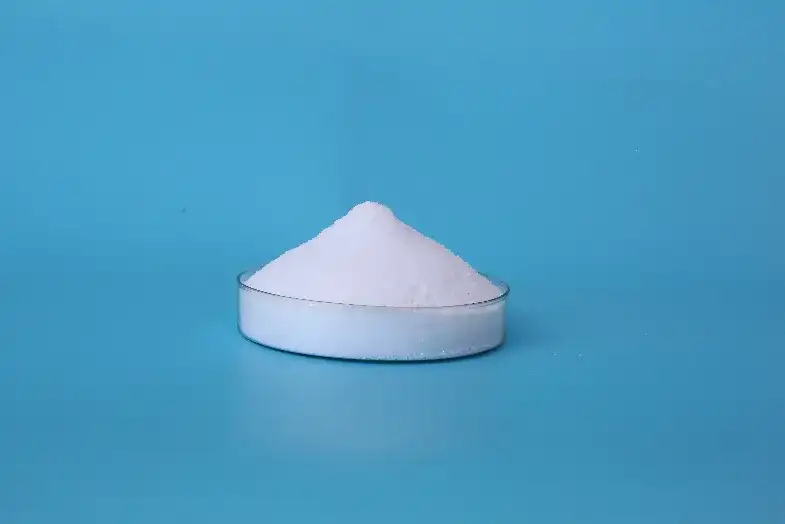
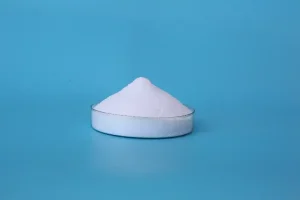
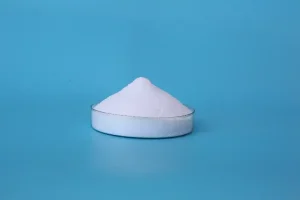
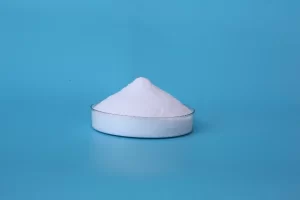
The same quality logic applies across forms, but crystal and aqueous solution create different handling risks. Our AM Crystal ships as a white crystalline solid with purity at or above 98.0%, moisture no more than 0.8%, and a pH range of 6.5 to 7.5 in a 10 g/L solution. The inhibitor is held between 3 and 10 ppm, conductivity sits at or below 20 μS/cm, and iron is controlled to 1 ppm or less. That profile suits polymer plants that want a storable solid monomer and can tolerate the dissolution step in their own process.
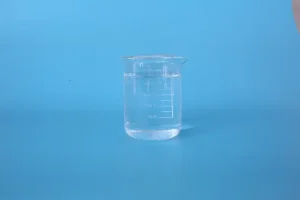
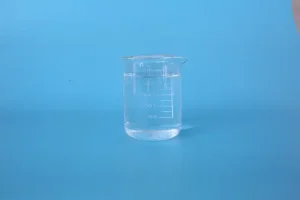
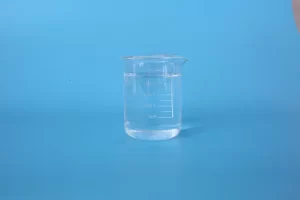
Our AM Aqueous Solution is specified at 28-30%, 38-42%, or 48-52% acrylamide content, with residual acrylonitrile no more than 0.1% and acrylic acid no more than 0.3%. Its pH runs from 7.0 to 9.0, conductivity is grade dependent between 5 and 30 μS/cm, and the inhibitor content can be customized from 0 to 100 ppm to match a customer’s polymerization setup. This form removes the dissolution stage and suits continuous or large-batch operations that value process simplicity.
The trade-off between the two is not a quality ranking; it is a process fit. Crystal grades reward plants with controlled dissolution and longer storage horizons because the dry form is stable for one to two years under cool, dark conditions. Aqueous solution grades reduce handling steps but demand more attention to heat and UV exposure during transport and storage. A buyer should ask which form their reactor flow and storage plan actually favor before comparing certificate values.
| Characteristic | AM Crystal | AM Aqueous Solution |
|---|---|---|
| Acrylamide content | 98.0% or higher | 28-52% by grade |
| Moisture | 0.8% or less | Not specified |
| pH | 6.5 to 7.5 | 7.0 to 9.0 |
| Conductivity | 20 μS/cm or less | 5 to 30 μS/cm |
| Inhibitor | 3 to 10 ppm | 0 to 100 ppm, customizable |
If your polymerization step has a narrow initiator window or a fixed dissolution sequence, confirm the actual inhibitor and moisture values for the lot before you lock the bill of materials. A short note to en*****@***er.com with your target process conditions is enough to check which crystal or solution grade fits.
What Happens When Impurity Profiles Are Ignored?
Impurity failures usually travel quietly through a plant and surface only in the quality laboratory. I treat them as process risks rather than product defects at the point of receipt, because the monomer can look clean while carrying enough inhibitor, water, or metal to disturb the reaction.
Take inhibitor drift as the clearest example. A crystal lot at the upper end of its allowed band contains more stabilizer than the initiator calculation assumes. The polymerization starts later, the exotherm shifts, and the operator compensates by raising the initiator charge. The result is not always a failed batch; it is often a higher polydispersity and more residual monomer than the plant expects. We hold a small trial when a delivered lot approaches the top of the inhibitor window, even if the certificate is signed, because the alternative is to discover the shift at full scale.
Moisture creates a different failure. In a crystal grade, absorbed water changes the real monomer concentration and makes dosing inaccurate. Over a long campaign, moisture can also promote hydrolysis and reduce storage life, which matters when the material sits in a hot or humid warehouse. Conductivity and iron tend to matter most in sensitive applications. Elevated conductivity suggests ionic contamination that can interfere with charge-sensitive polymerization or downstream flocculation, while iron can push color and side reactions.
The common thread is that each of these problems is detectable before use. The grade certificate will not always list the method, the sampling plan, or the lot-specific variation, so the buyer needs to ask for more than the summary line.
How Should Procurement Teams Run a Grade Acceptance Test?
For a polymer purchasing group, a grade decision should rest on a short test protocol, not a single data sheet. We recommend the following sequence.
- Request the full certificate of analysis for the specific lot. A typical specification is not enough; ask for the measured values and the methods used for purity, moisture, inhibitor, pH, conductivity, and iron.
- Draw a composite sample from multiple bags or tanks rather than testing a single convenience sample. For crystal, check moisture at receipt and again before first use if storage will be long. For aqueous solution, verify concentration and inhibitor content at the receiving vessel because temperature or settling can shift local readings.
- Run a small polymerization trial under your normal initiator and temperature profile. A few liters of polymer reveal whether the induction time, conversion, and final viscosity match the plant baseline. If the lot passes the COA but the trial shows a longer induction or a broader molecular-weight distribution, treat the trial as the higher authority.
- Record the lot data against your production lot number so any drift can be traced back. A supplier that will not release the full COA or method detail is a higher risk than a monomer lot with a minor parameter at the edge.
Grade testing becomes harder when the specification is tight, the campaign is long, or the process runs across multiple plants. At Shandong Nuoer Biological Technology, we produce both crystal and aqueous solution grades, so the inhibitor, conductivity, and concentration profile can be aligned with your reactor. If you want to confirm whether a specific grade fits your polymerization method, send your target specification and quantity to en*****@***er.com or call +86-532-66712876, and we will check the available lot profile against your requirements.
What Questions Do Buyers Ask About Acrylamide Monomer Grades?
Does a higher purity percentage always mean a better acrylamide monomer grade?
No. A 98% crystal with tight control of inhibitor, moisture, and conductivity can outperform a nominally higher purity lot that carries a wide impurity profile. The remaining one to two percent is where most process risk hides, because minor components control induction time, metal sensitivity, and storage stability. Buyers should weigh the full profile before favoring the higher headline number.
What inhibitor level is acceptable for solution polymerization versus inverse emulsion?
It depends on the polymerization method and the initiator system. Aqueous solution polymerization usually benefits from an inhibitor band near the lower end, because a short induction period keeps initiator demand predictable. Inverse emulsion systems can tolerate a moderately higher inhibitor load, but the target should still be declared before the lot is accepted. We customize the inhibitor content of our aqueous solution grades from 0 to 100 ppm to match these process differences.
Can a material pass a specification sheet but still cause batch problems?
Many buyers assume a passing certificate means the material will perform the same way in every reactor. It does not. A COA is only as reliable as the sampling plan and the test methods behind it. We have seen lots meet every listed value and still behave differently because the inhibitor was unevenly distributed or the moisture varied across bags. That is why a small polymerization trial should accompany the paper review for any new supplier or long campaign.
How should I store and sample different acrylamide monomer grades for testing?
The better question is what the material will experience between receipt and use. For crystal, sample from multiple bags and recheck moisture after storage in hot or humid conditions. For aqueous solution, verify concentration and inhibitor at the receiving tank, because heat and UV exposure can change local values. Store both forms cool, dark, and sealed, and retest before long campaigns. If your incoming lot falls outside the profile your process needs, send the specification to en*****@***er.com and we will confirm whether a different grade or inhibitor window is available.
If you’re interested, check out these related articles:
Acrylic Acid Polymerization Process: An Advanced Industrial Guide
Trusted Anionic Polyacrylamide Manufacturer Global Solutions


 English
 Russian
 Arabic
 Spanish