
Cationic polyacrylamide charge density decides more than just dosage. It shapes floc size, shear resistance, water release, and the point at which overdosing turns a clear filtrate into a sticky, poorly draining mass. In our work with sludge dewatering programs, we have seen plants choose a high charge product, assume stronger cationicity always means better performance, and then face brittle floc that breaks under pump shear. For variable industrial sludges, I would start with a medium charge product and move to high charge only after bench testing proves the extra cationicity improves cake solids or throughput. That position guides this comparison.
Charge Density Effects in Cationic Polyacrylamide
Charge density is set during synthesis by the proportion of cationic monomer incorporated into the acrylamide backbone. High charge products carry more positive sites per unit of polymer mass, and the effect shows up first as faster charge neutralization. That is useful when the sludge colloid carries a strong negative surface charge, because the polymer can condense fine particles quickly. The tradeoff is mechanical. Smaller, densely packed floc can lose structure when exposed to centrifugal pumps or long transfer lines, and the optimum dosage window becomes narrower. Medium charge products leave more chain segments available for bridging, which generally produces larger floc with more tolerance to mixing energy. In our production planning, we treat charge density as a dewatering variable, not a quality grade. Higher charge is not automatically better. The charge level that fits a given sludge is the one that holds particle aggregates together through the separation step.
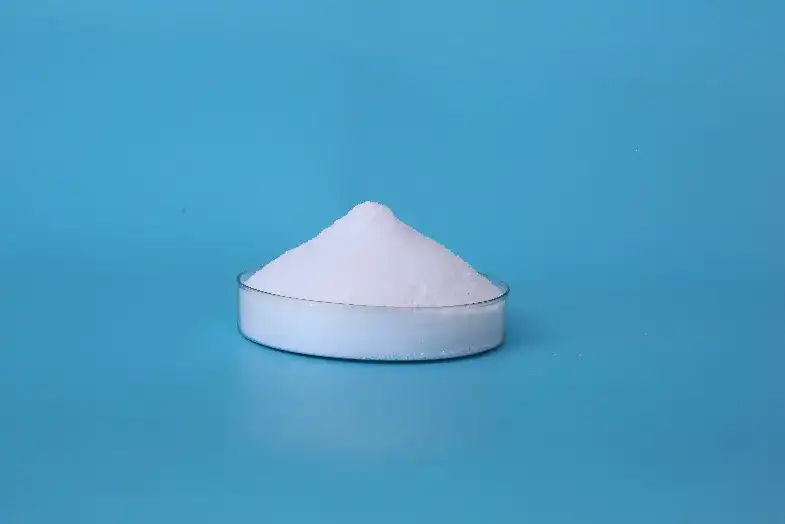
Three differences matter most in day to day operation.
| Parameter | Medium Charge | High Charge |
|---|---|---|
| Positive sites per unit mass | Lower | Higher |
| Dominant mechanism | Bridging with moderate neutralization | Strong charge neutralization |
| Floc structure | Larger and more shear tolerant | Compact and fast forming |
| Overdose sensitivity | Broader working window | Narrow optimum |
| Best starting point for variable sludge | Usually | Only after jar testing |
High Charge Cationic Polyacrylamide Performance Windows
High charge products earn their place where rapid neutralization matters more than floc size. In biological sludges with high extracellular polymer content, fine colloidal particles carry enough negative surface charge that a medium charge polymer may leave residual turbidity even at normal dosing. A high charge product can pull those fines into a compact structure quickly, which is why it often shows better filtrate clarity in jar tests. But the same reactivity raises overdose risk. When operators push the dose past the optimum, the floc surface becomes cationically saturated, dispersion returns, and belt press filtrate turns milky. I have watched plants blame the polymer when the real issue was that the high charge product had a best-performing range of only a few milligrams per liter. High charge is therefore a precision tool. If your process controls are tight enough for consistent dose adjustment and rapid mixer control, it can deliver good cake solids. If your sludge characteristics swing daily, the same product can create more compliance pressure than it removes.
Medium Charge Cationic Polyacrylamide Performance Windows
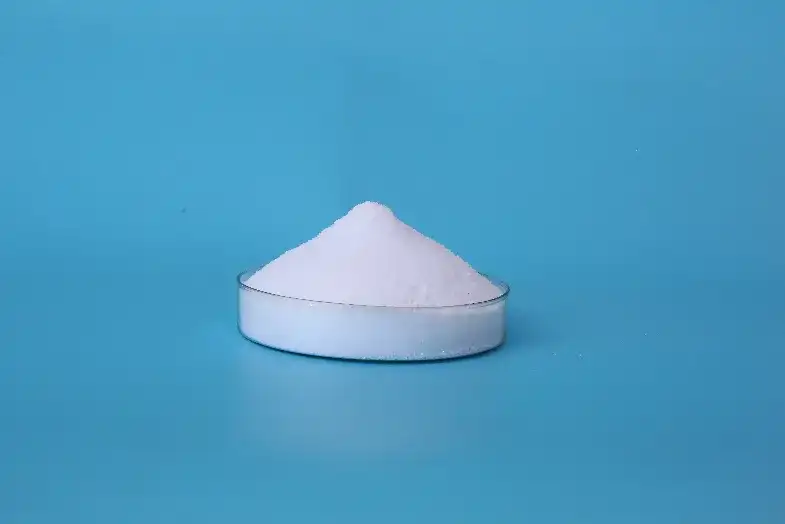
Medium charge products handle two practical problems better than high charge versions. First, their lower charge density reduces the chance of charge reversal when a dosage drifts upward, so operators get a broader working window between underdosing and overdosing. Second, floc produced by bridging tends to be larger and more resilient through transfer pumps and long piping runs. That adaptability matters in plants that receive septic sludge, industrial batch discharges, or seasonal changes in solids. We often advise customers with mixed or changing sludge sources to begin with a medium charge product because it is less likely to produce sudden performance collapse. The cost benefit is not automatic, but the product family data from our cationic polyacrylamide line indicates that low dosage requirements can save 10% to 15% under the same conditions when the charge density matches the sludge. The key is that matching, not purchasing a higher charge as a hedge.

Matching Charge Density to Sludge and Mixing Conditions
Charge selection should start with the sludge, not with the product label. Three measurements give us most of what we need: total solids, volatile solids, and zeta potential or an equivalent charge demand reading. A sludge with low total solids and high volatile content often carries more colloidal charge, which pushes the preference toward high charge. A sludge with higher fiber or grit content may respond well to medium charge bridging because the larger aggregates settle quickly without requiring complete surface neutralization. Mixing energy changes the ranking. If the dewatering line uses a centrifugal pump followed by a long feed pipe, the floc must survive shear; larger, bridging-formed floc from medium charge often retains its structure better. If the equipment is a low shear gravity belt or screw press, high charge compact floc may release water more cleanly. This is why bench testing should mimic the actual shear path, not just a beaker stir.
How Sludge Solids Concentration Changes the Charge Choice
Thickened sludge above roughly 3% to 5% solids leaves less free water between particles, so the polymer must do more bridging and less charge neutralization. Medium charge products tend to remain workable in this range because they do not require every particle surface to be neutralized before floc forms. High charge products can still work, but the dose response becomes steeper and the penalty for overshooting is immediate. We have seen this in municipal thickening operations where the same polymer performed well at 2% solids and failed at 4% solids, and the change was not the product but the separation mechanism the sludge required.
How Mixing Energy Affects Floc Retention
Floc formed by high charge neutralization is compact but can be brittle under high mixing energy. Floc formed by bridging has a looser, larger structure that can deform through a pump impeller and reassemble on the other side. Plants that dewater with long transfer lines should compare both charge levels at the same mixing intensity rather than assume the jar test result will carry into full scale. We ask customers to collect filtrate at the dewatering unit, not only from the laboratory beaker, because the difference between the two is where most charge selection mistakes show up.
If your program involves anaerobically digested sludge or changing industrial loads, it is worth confirming charge demand before finalizing your purchasing specification. Send your sludge solids data and dewatering equipment type to en*****@***er.com or call +86-532-66712876, and we will review the test parameters with you.
Buyer Checks Before Finalizing Charge Density
Before a buyer writes a purchase specification, four checks reduce the chance of specification error. First, confirm the cationic charge density reported by the supplier is measured in the same units across bids. Some manufacturers report mole percent while others use charge density in milliequivalents per gram, and the two are not interchangeable. Second, request the viscosity or molecular weight data alongside charge density, because dewatering performance depends on both. A high charge product with low molecular weight may not build the floc size the process requires. Third, compare dosage cost rather than price per kilogram; the more efficient charge density may carry a higher unit price but lower total treatment cost. Fourth, ask for a representative sample and run the jar test on the actual sludge, not a synthetic substitute.
The selection failure we see most often is not choosing high charge when medium would work, but choosing from a supplier who cannot adjust the charge within a consistent molecular weight range. At Shandong Nuoer, we view customizable production as a purchasing advantage because a plant can dial in the charge level and hold it stable over repeat orders. If your dewatering line has a narrow optimum dose, talk to us before committing to a standard grade. Tell us your sludge type, current dose, and dewatering equipment, and send the details to en*****@***er.com or call +86-532-66712876.
Common Questions About Cationic Polyacrylamide Charge Selection
Is high charge cationic polyacrylamide always stronger than medium charge?
No. Higher charge density does not mean stronger floc in every sludge. It means faster neutralization. In a sludge with enough surface area for bridging, a high charge polymer can reach the overdose point before it builds a large enough floc. The better product is the one that holds the right floc structure through the dewatering step, and in many mixed sludges that is the medium charge grade. We judge strength by filtrate clarity, cake release, and floc survival after the pump, not by the mole percent printed on the certificate.
Can I switch from high charge to medium charge without changing equipment?
It depends on the equipment and sludge stability. If the dewatering line has low shear mixing and a stable sludge, switching from high to medium charge may reduce clarity because neutralization is no longer complete. If the sludge varies daily, medium charge usually widens the dosing window and makes the process less operator sensitive. The switch should be verified with a jar test that mimics the plant mixing path. We have seen plants keep the same pump settings and improve cake solids after moving to medium charge, but we only recommend that after the sludge data confirms the change.
Which charge works better for belt press dewatering?
In programs we have worked on, medium charge products often perform well on gravity belt tables where large bridging floc has time to form and release water. High charge products can also work on belt presses, especially when the sludge contains fine biological solids and the feed is low shear, but the dose range is tighter. We ask the plant team to watch filtrate clarity and belt blinding across a full shift. That full shift behavior matters more than a single jar test result because operators do not run at one constant dose all day.
Does charge density affect polymer cost per dry ton?
Charge density affects total treatment cost more than unit price does. A product with a higher charge density may dose at a lower rate, but if its optimum window is narrow, overdosing waste can erase the saving. A medium charge product may cost less per dry ton in variable sludge because it tolerates dosing drift without sudden floc collapse. To compare bids properly, calculate cost per dry ton of sludge, not price per kilogram. If your program handles variable solids or tight discharge limits, share your sludge data and dewatering equipment details with us at en*****@***er.com and we will confirm the cost comparison parameters for your site.
If you’re interested, check out these related articles:
Emulsion PAM for Mobile Water Treatment Units: A Strategic Guide
Non-Ionic PAM Dosage in Paper Manufacturing: Mastering Retention
Non-Ionic Polyacrylamide Factory: Textile Industry Solutions
Water Flooding with Anionic Polyacrylamide: EOR Strategies







 English
 Russian
 Arabic
 Spanish