
Amphoteric polyacrylamide behaves differently from most flocculants because it carries both positive and negative charges on the same polymer chain. That dual-charge structure lets it stay effective whether the water runs acidic, neutral, or alkaline—a flexibility that single-charge polymers simply cannot match. In practice, this means fewer product switches, tighter process control, and more predictable sludge handling across a wide range of industrial conditions.
How the Dual-Charge Structure Actually Works
Amphoteric polyacrylamide is built by copolymerizing cationic monomers, acrylamide, and a hydrolyzing agent into an irregular chain that holds both cationic and anionic functional groups. That molecular architecture sets it apart from conventional flocculants, which carry only one charge type and therefore interact with only one class of particle surfaces. Because amphoteric polyacrylamide presents both positive and negative sites, it can latch onto suspended solids regardless of whether those particles carry a net positive or negative surface charge. Manufacturing precision matters here: the ratio and distribution of functional groups along the chain determine how the polymer performs under real-world pH swings. Tight control during synthesis keeps that balance consistent from batch to batch.
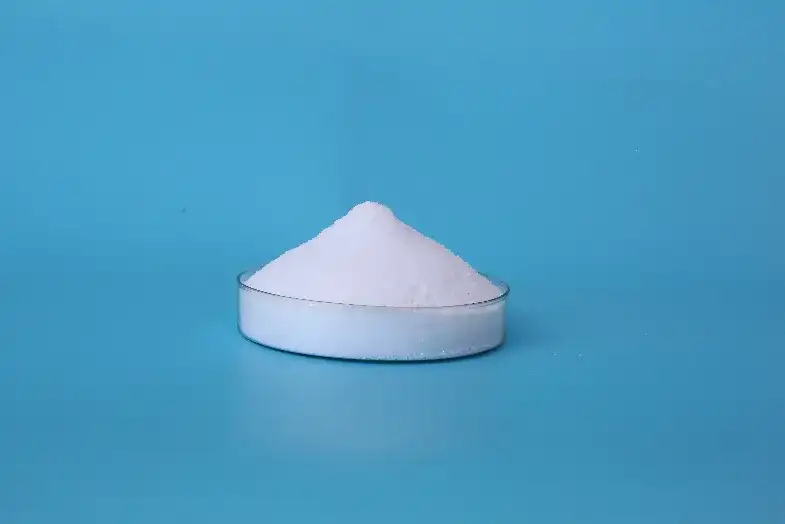
Charge Dynamics and Molecular Shape Under Shifting pH
The polymer’s pH sensitivity comes down to protonation and deprotonation. In acidic water, hydrogen ions protonate the cationic groups, pushing the chain toward a net positive charge. In alkaline water, the anionic groups lose protons and the chain swings negative. Near the isoelectric point, positive and negative charges roughly cancel out. These shifts do more than change the net charge—they also alter how the chain coils or extends in solution, which affects bridging distance and floc strength. Electrostatic attraction pulls particles toward the polymer, while the extended chain segments physically bridge particles together into larger aggregates. Both mechanisms work in tandem, and the balance between them shifts as pH moves. Controlled testing shows that well-designed amphoteric formulations hold their flocculation efficiency even when pH drifts outside the comfort zone of traditional cationic or anionic products.
How does the charge of amphoteric polyacrylamide change with pH?
The charge shifts because the functional groups respond to hydrogen-ion concentration. Acidic conditions protonate the cationic sites, adding positive charge. Alkaline conditions deprotonate the anionic sites, adding negative charge. The result is a dynamic equilibrium that lets the polymer neutralize particle surfaces across a broad pH window, maintaining the ionic balance needed for effective flocculation without constant chemical adjustment.
Flocculation and Coagulation Performance Across pH Ranges
Single-charge flocculants lose efficiency when pH moves away from their design window. Amphoteric polyacrylamide sidesteps that limitation by adjusting its charge profile to match the environment. Particle aggregation stays consistent, settling rates hold steady, and turbidity removal remains predictable even when upstream pH fluctuates. Field data from wastewater plants, mining operations, and paper mills confirm that amphoteric formulations often outperform cationic or anionic alternatives in complex or variable water chemistries. Sludge volume tends to drop as well, because tighter, denser flocs release water more readily during dewatering. Those gains translate directly into lower disposal costs and smaller chemical inventories.
For further insights into our commitment to environmental solutions, consider reading about 《Nuoer Showcased at 26th China IE Expo》.
Practical Dosage and Process Control Strategies
Getting the most out of amphoteric polyacrylamide means matching the formulation to the actual water chemistry and dialing in the dosage through bench-scale testing before full-scale application. Jar tests at representative pH levels reveal the performance curve and help identify the minimum effective dose. Overdosing wastes product and can even restabilize particles by coating them with excess polymer. Underdosing leaves solids in suspension. The sweet spot depends on suspended-solids concentration, particle size distribution, and the presence of competing ions or organics. Process control loops that track turbidity or streaming current can automate dosage adjustments in real time, keeping treatment tight even as influent quality shifts.
What is the optimal pH range for amphoteric polyacrylamide to be effective?
There is no single answer because formulations vary. Most amphoteric polyacrylamides are engineered to work from moderately acidic through moderately alkaline conditions, but the exact window depends on the ratio of cationic to anionic groups and the target application. Laboratory testing on your specific process stream is the most reliable way to define the effective range and the dosage required at each pH level.
Discover more about our contributions to sustainable industrial practices by exploring 《Nuoer at 32nd China International Paper Technology Exhibition 2025》.
Strengths and Limitations of pH-Adaptive Polymers
Amphoteric polyacrylamide simplifies chemical programs by covering a pH range that would otherwise require two or more separate products. That consolidation cuts inventory complexity and reduces the risk of dosing the wrong polymer when conditions change. Operational savings also come from reduced need for upstream pH adjustment—lime or acid additions can be scaled back when the flocculant itself tolerates a wider window. On the other hand, no polymer is infinitely tolerant. Extreme pH excursions can push the charge balance beyond the design envelope, and prolonged exposure to high temperatures or aggressive oxidizers can degrade the polymer backbone. Proper storage—cool, dry, and protected from UV—preserves molecular weight and charge density over time.
| Feature | Amphoteric Polyacrylamide | Cationic Polyacrylamide Flocculant | Anionic Polyacrylamide |
|---|---|---|---|
| pH Adaptability | Broad (Acidic to Alkaline) | Acidic to Neutral | Neutral to Alkaline |
| Charge Type | Positive & Negative | Positive | Negative |
| Flocculation Range | Excellent | Good | Good |
| Sludge Dewatering | Superior | Good | Moderate |
| Versatility | High | Moderate | Moderate |
To understand more about our innovative approaches in the petroleum industry, read 《Nuoer at 25th China International Petroleum & Petrochemical Technology Exhibition》.
Where Amphoteric Polyacrylamide Development Is Heading
Research is pushing toward polymers with sharper stimulus response and lower environmental footprint. Biodegradable backbones and bio-based monomers are active areas of investigation, driven by tightening discharge regulations and corporate sustainability targets. Molecular-architecture refinements aim to boost bridging efficiency without increasing dose, cutting both cost and residual polymer in treated effluent. Smart-polymer concepts—chains that change conformation in response to temperature, ionic strength, or specific contaminants—are moving from laboratory curiosity toward pilot-scale trials. Shandong Nuoer maintains an active R&D program focused on these next-generation formulations, with the goal of delivering products that meet evolving performance and environmental standards.
Partner with Shandong Nuoer for Advanced Polyacrylamide Solutions
Shandong Nuoer Biological Technology Co., Ltd. manufactures a full range of polyacrylamide products, including specialized Amphoteric Polyacrylamide Flocculant grades engineered for demanding pH environments. Our technical team works directly with customers to characterize process streams, recommend formulations, and optimize dosing strategies. If variable pH is complicating your water treatment or sludge handling, reach out for a consultation. Phone: +86-532-66712876 | Email: en*****@***er.com
Frequently Asked Questions About Amphoteric Polyacrylamide
What are the practical implications of pH sensitivity for polyacrylamide selection?
Selecting a polyacrylamide without accounting for pH variability often leads to inconsistent treatment results and reactive chemical switching. Amphoteric polyacrylamide reduces that risk by performing across a broader pH window than cationic or anionic alternatives. Before committing to a product, characterize the typical and peak pH excursions in your process stream, then match those conditions to the polymer’s demonstrated performance range.
How does amphoteric polyacrylamide react to varying pH levels?
The polymer adjusts its net charge and chain conformation as pH shifts. Acidic conditions favor protonation of cationic groups, giving a positive charge. Alkaline conditions favor deprotonation of anionic groups, giving a negative charge. Near the isoelectric point, the charges balance. These changes let the polymer maintain effective particle interaction across a range that would compromise single-charge flocculants.
Why is pH crucial for the performance of amphoteric polyacrylamide in industrial applications?
pH determines which functional groups are charged and how strongly. That charge state governs electrostatic attraction to suspended particles and influences how the polymer chain extends or coils in solution. In industrial settings where pH can swing with process upsets or feed variability, a polymer that adapts to those swings keeps treatment stable, reduces the need for pH correction chemicals, and lowers the risk of off-spec discharge.



 English
 Russian
 Arabic
 Spanish