
A polymer flood project can lose its economic case within weeks if the anionic PAM arrives with inconsistent molecular weight. That risk pushes many procurement teams to screen high molecular weight anionic PAM manufacturers less on quoted price and more on repeatable production data, dissolution behavior, and residual monomer control. In our production planning work, the most dependable suppliers are those that can show how each batch is made, tested, and released, not just what the data sheet claims. This article sets out the checks we use when evaluating anionic PAM supply for demanding water treatment and mineral processing systems.
Field Requirements for High Molecular Weight Anionic PAM
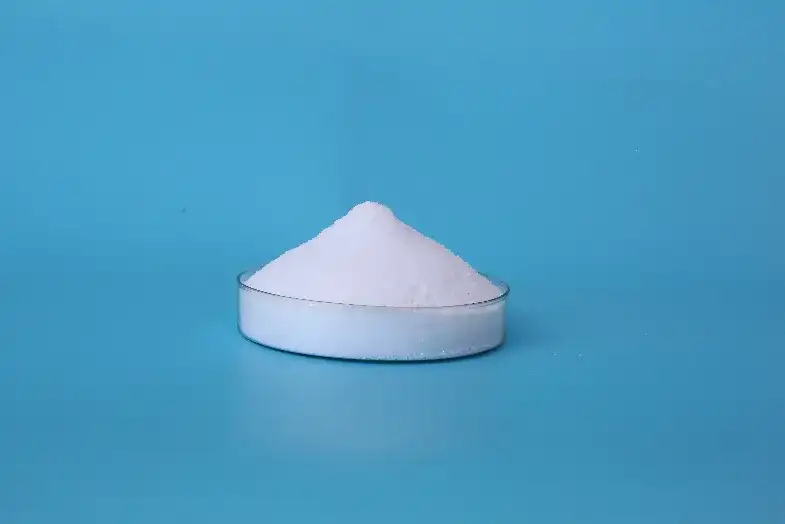
High molecular weight anionic PAM works through adsorption and bridging. A long polymer chain attaches to several suspended particles at once, pulling them into larger flocs that settle faster. When molecular weight approaches or exceeds 30 million, the bridging effect becomes strong enough to justify the product selection. Below that range, many mining and wastewater applications need higher doses to reach the same clarity. High molecular weight anionic PAM manufacturers are not interchangeable, and the difference usually shows up under mechanical shear rather than in a simple jar test.
Why Molecular Weight Changes Field Behavior
Molecular weight does not act as a single isolated parameter. It changes make-down viscosity, pump pressure, and how evenly the flocculant disperses in the process stream. In high solids water, a product with the right molecular weight forms denser flocs that hold up under mechanical shear. In low solids water, the same product can create oversized flocs that float or break apart. The buyer’s task is to match molecular weight and hydrolysis degree to the actual water chemistry before fixed dosage is set.
Specifications Buyers Should Request
The data sheet alone is not enough. We ask for the values below and the test method behind each one.
| Specification Area | What It Reveals |
|---|---|
| Molecular weight | Floc size and settling speed; anionic PAM should exceed 30 million |
| Hydrolysis degree | Charge density and response to different water chemistries |
| Dissolution time | Make-down labor and dosing reliability |
| Residual monomer content | Handling safety and environmental compliance margin |
| Export certification | Customs clearance and buyer acceptance |
Production Scale and Supply Security
A supplier’s ability to hold specification across large programs depends on continuous production rather than occasional batches. At Shandong Nuoer, the annual capacity is 500,000 tons of polyacrylamide, 200,000 tons of polyacrylamide emulsion, 300,000 tons of acrylamide, and 100,000 tons of acrylic acid. That vertical integration matters because monomer supply is a common bottleneck in polymer programs. Products ship to more than 60 countries through a global sales and after-sales service system, so the sourcing question is not whether one container can be delivered, but whether the same grade can be repeated across quarters.
Molecular Weight Verification and Batch Consistency
Batch consistency matters more than the highest available molecular weight. A supplier can submit one strong reference sample while production batches drift. We look for release values from every batch, not one certificate reproduced with changed dates. In our production reviews, we have found that even a ten percent shift in molecular weight changes flocculant demand and settling clarity in ways operators notice quickly, so we hold batch release limits tighter than the data sheet alone would suggest.
Batch Variation and How It Shows Up
Variation appears first as dosage creep. Operators add slightly more product to reach the same water clarity, then the treatment unit’s chemical cost rises without a clear failure. Tracking dose per cubic meter against inlet solids is the fastest field signal that molecular weight or hydrolysis degree has shifted.
For programs with variable water chemistry or strict discharge limits, it is worth confirming the manufacturer’s batch release data and test method before finalizing the BOM. We can share current anionic PAM specifications and typical test reports at en*****@***er.com.
Dissolution and Residual Monomer Control in Anionic PAM
Dissolution speed determines how much operator attention the product needs. Field-grade anionic PAM should dissolve quickly without forming fisheyes that block dosing lines. Fast dissolution shortens operating time and improves dosing reliability. Low residual monomer content also matters because it changes handling classifications and downstream acceptance. We keep residual monomer low as a standard production control, not an optional grade.
Certifications, Export Documentation, and the Next Sourcing Step
The sourcing risk is rarely polymer chemistry. It is documentation delay and unclear lot traceability. A manufacturer with certified quality and an established export process removes that risk before shipment. The buyer should see a certificate of analysis, safety data, origin documentation, packaging details, and clear lot codes without repeated follow-up.
Send your target molecular weight, hydrolysis degree, and monthly volume to en*****@***er.com or call +86-532-66712876, and we will confirm specifications, pack size, and lead time for your application.
Common Sourcing Questions for High Molecular Weight Anionic PAM
How do we confirm molecular weight instead of trusting a data sheet?
Request the certificate of analysis for each production lot and the molecular weight test method used. A batch release value that matches the data sheet across multiple lots is stronger evidence than one reference sample. We also recommend comparing the reported molecular weight with the expected field dose for your solids loading. If two suppliers quote similar prices but one discloses lot-by-lot test data while the other does not, the first supplier is easier to qualify.
Is higher molecular weight always better for anionic PAM?
Not always. Buyers often assume the highest molecular weight gives the strongest flocculation, but excessive chain length can raise viscosity and make dispersion harder in low-shear systems. The better question is whether molecular weight matches the solids load and mixing energy. In high-shear oilfield or mining applications, a slightly lower molecular weight with stable floc formation can outperform a very high molecular weight grade that breaks under shear.
How does hydrolysis degree affect high molecular weight anionic PAM?
It depends on water chemistry. Higher hydrolysis raises charge density and works well in alkaline process water, while lower hydrolysis often suits acidic or high-salt streams. If the water composition shifts seasonally or between process units, start with a lower charge density and adjust upward after field testing. A manufacturer that offers a complete range of hydrolysis degrees gives the buyer more room to tune performance without changing supplier.
What should we prepare before requesting a manufacturer quote?
In programs we have supported, buyers get the most accurate quote by defining five inputs: target molecular weight, hydrolysis degree, monthly volume, dissolving method, and export documentation requirements. Without these, the quote is only a price tied to a generic grade. Share these inputs and we will confirm the most workable grade and packaging arrangement for the application.
If you’re interested, check out these related articles:
Nuoer Impressively Showcased at the 32nd China International Paper Technology Exhibition 2025
Evaluating Acrylic Acid Manufacturers: Strategic Selection Criteria



 English
 Russian
 Arabic
 Spanish