
Non-ionic polyacrylamide stability determines whether your flocculant delivers consistent performance batch after batch, regardless of storage conditions or application variables. While technical data sheets list a set of specifications, real-world stability is shaped by monomer purity, molecular weight distribution, and the manufacturing process itself. Over fifteen years in polyacrylamide production and global market development, I have seen how gaps in stability become operational problems for buyers. This article compares the stability characteristics of different non-ionic polyacrylamide products and explains why a supplier’s production scale and vertical integration are the strongest predictors of reliable stability.
What Non-Ionic Polyacrylamide Stability Means in Practice
Stability in non-ionic polyacrylamide is not one single property. It spans storage durability, resistance to molecular degradation, consistency of dissolution behavior, and the polymer’s ability to retain its specified molecular weight over time. A product that flocculates effectively in a laboratory test but loses 20% of its molecular weight after six months in a warm warehouse fails the stability test where it counts.
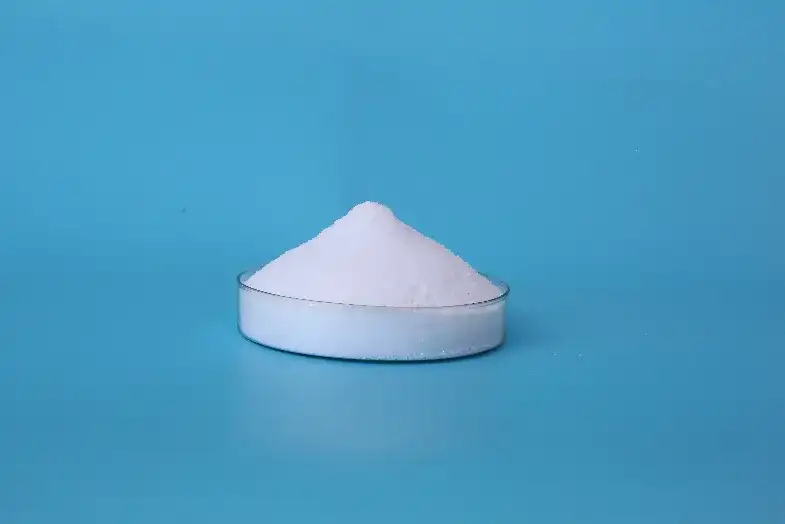
The chemical structure of non-ionic polyacrylamide gives it an inherent advantage in ionic environments. With negligible charge density on the polymer chain, it does not undergo the same salt-induced chain collapse that anionic or cationic grades experience in high-conductivity water. But this chemical stability only holds if the polymer backbone itself is free of hydrolyzable defects that accumulate during inconsistent polymerization. Buyers evaluating stability need to look at the entire chain, from monomer feedstock through to packaging and logistics.
Key Factors That Control Non-Ionic PAM Stability
Molecular weight distribution is the single largest driver of predictability. A narrow distribution means the majority of polymer chains behave similarly under shear and over time. Broad distributions, common when polymerization conditions fluctuate, produce a product that appears to change character as the lighter fractions degrade or the heavier fractions settle. Our in-house production data shows that maintaining a polydispersity index below 2.0 requires continuous control of initiator concentration, temperature ramping, and monomer feed rate, variables that small batch reactors cannot regulate with the same precision.
Residual acrylamide monomer content is an underappreciated stability indicator. Monomer left over from incomplete polymerization continues to react slowly, altering the polymer structure during storage. A specification of below 500 ppm is typical for premium grades, but achieving it consistently demands that the raw acrylamide monomer itself meets high purity standards. At Nuoer, we produce acrylamide crystal with purity above 98.0% and moisture below 0.8% using microbial technology, feeding it directly into our polyacrylamide lines. That vertical integration removes the variability that comes when a polymer producer buys monomer from multiple external suppliers.
Storage conditions amplify existing weaknesses. Non-ionic polyacrylamide powder is hygroscopic. If packaging allows moisture ingress, the powder particles swell, clump, and dissolve unevenly later. Shelf life specifications of one to two years assume cool, dry storage. A buyer who leaves pallets in an unventilated container during monsoon season will see stability disappear faster than any data sheet predicts.
Comparing Non-Ionic PAM Stability Against Ionic Alternatives
| Stability Dimension | Non-Ionic PAM | Cationic PAM | Anionic PAM |
|---|---|---|---|
| pH tolerance (effective range) | 2–11, minimal performance drop | 5–9, charge loss outside range | 6–12, hydrolysis accelerates below 5 |
| Salt / brine resistance | High, non-ionic backbone inert to ionic interference | Moderate, charge shielding reduces bridging | Low to moderate, chain collapse in high-TDS water |
| Shelf life under proper storage | 18–24 months typical | 12–18 months, faster moisture sensitivity | 18–24 months, similar to non-ionic |
| Hydrolysis tendency during storage | Very low, requires extreme pH to initiate | Low to moderate, reactive quaternary groups | Moderate to high in humidity, releases ammonia |
| Dissolution repeatability | Good, less affected by water hardness | Variable, charge density influences dissolution speed | Variable, molecular weight and hydrolysis degree matter |
The table makes clear why non-ionic polyacrylamide retains its specification envelope over a wider range of industrial conditions. Where wastewater chemistry changes frequently, as in textile finishing or construction material processing, non-ionic grades avoid the destabilization that ionic flocculants undergo when pH or conductivity shifts during production campaigns.
If your process operates at pH below 4 or above 10 while also carrying high dissolved solids, the stability gap between non-ionic and ionic PAM widens significantly. Confirming that your non-ionic supplier can demonstrate batch-to-batch molecular weight consistency over a 12-month period and provides a narrow specification range for residual monomer is a prudent step before finalizing your chemical inventory. Reach out at en*****@***er.com for specification data covering multiple production campaigns.
How Manufacturing Scale Produces Batch-to-Batch Stability
Producing stable non-ionic polyacrylamide at scale is fundamentally different from laboratory synthesis or small-batch blending. A plant with an annual capacity of 500,000 tons of polyacrylamide, supported by 300,000 tons of self-produced acrylamide monomer, operates under a regime of continuous process monitoring that smaller facilities cannot replicate. Temperature excursions during polymerization that go uncorrected for minutes in a small reactor are detected and regulated in seconds in a large, instrumented line.
We produce our own acrylamide crystal and aqueous solution because monomer quality is the foundation of polymer stability. When the monomer stream contains 98% plus purity with impurity profiles measured in single-digit parts per million, the resulting polyacrylamide chain is more uniform. Secondary processors who purchase acrylamide on the open market face batch-to-batch variations in inhibitor levels, iron content, and conductivity: all of which directly affect the polymerization kinetics. These variations are invisible to the end buyer but show up six months later as a product that no longer dissolves or flocculates as expected.
Our non-ionic polyacrylamide is a homopolymer built from that controlled monomer stream. From our perspective, stability is not a post-production test result; it is an accumulation of decisions made at every upstream stage, from microbial acrylamide production through to final granulation and packaging. Buyers evaluating long-term supply agreements should verify that their supplier owns its monomer chain and operates continuous polymerization capacity, not toll blending.
Verifying Stability for Your Specific Industrial Process
Different applications place different demands on stability. In papermaking, a non-ionic PAM that loses dissolution speed over six months will cause retention aid performance to drift. In construction materials, a flocculant that absorbs moisture during storage may not disperse uniformly in a cement admixture. In textile wastewater, a polymer that tolerates pH 3 in the lab but degrades after repeated pH cycles in the plant introduces dosing uncertainty.
A practical verification protocol before bulk purchase should include requesting batch-to-batch molecular weight data covering at least 12 months of production, residual monomer analysis from the same period, and accelerated aging test results that simulate your intended storage conditions. If your process stream contains oxidizing agents or extreme temperatures, specify these in the test protocol. Suppliers with large-scale, integrated manufacturing should be able to provide this data without hesitation because they collect it routinely as part of quality management.
The difference between a product that tests well and one that performs consistently over two years of deliveries is the manufacturing system behind the specification sheet. When we ship non-ionic polyacrylamide to more than 60 countries, the specification that matters most is the one the buyer sees on the 18th drum, not just the first sample.
Questions Buyers Ask About Non-Ionic PAM Stability
What is the real shelf life of non-ionic polyacrylamide powder?
Typical shelf life is 18 to 24 months when stored unopened in a cool, dry environment. The polymer does not undergo rapid chemical degradation; the more common failure mode is moisture absorption that leads to clumping and uneven dissolution. If the packaging integrity is compromised, shelf life shortens to a few months in humid conditions. We recommend inspecting outer bags for tears and using opened material within 60 days.
Does non-ionic PAM become unstable in acidic water?
Non-ionic polyacrylamide actually shows superior stability under acidic conditions compared to hydrolyzed anionic grades because the polymer backbone lacks carboxyl groups that protonate and collapse. At pH values as low as 2, the amide groups remain intact, and flocculation performance remains stable. The limit is typically set by the application rather than the polymer itself. In our testing, significant degradation only occurs below pH 2 at elevated temperatures over extended exposure.
How can I compare stability between different non-ionic PAM samples?
Request each supplier’s certificate of analysis for at least six consecutive batches, and look at the range of molecular weight and residual monomer values. A narrow range indicates process control. Also request dissolution time and viscosity stability data after 24 hours in solution. We find that fewer than half of the samples we review from spot-market suppliers show consistent dissolution across multiple batches. A lab-scale test under your actual process conditions remains the most reliable final verification. If your application involves fluctuating pH or temperature extremes, share those parameters and we will confirm the appropriate grade stability before sampling.
If you’re interested, check out these related articles:
Acrylamide Monomer Cost vs Purity: Strategic Trade-offs
Acrylic Acid Cost Analysis for Superabsorbent Polymer Production


 English
 Russian
 Arabic
 Spanish