
For paper mills, the retention and drainage performance of non-ionic polyacrylamide suppliers for papermaking hinges on factors that go far beyond the datasheet. After fifteen years in polymer production and global market development, I have seen how batch-to-batch variation in monomer purity can silently erode paper machine efficiency, leading to fines carryover and inconsistent sheet formation. Selecting the right non-ionic polyacrylamide supplier is not a simple price comparison; it requires evaluating the supplier’s manufacturing depth, upstream monomer source, and long-term consistency. This article explains what to look for beyond a product sample, drawing on direct experience in polymer synthesis and international supply.
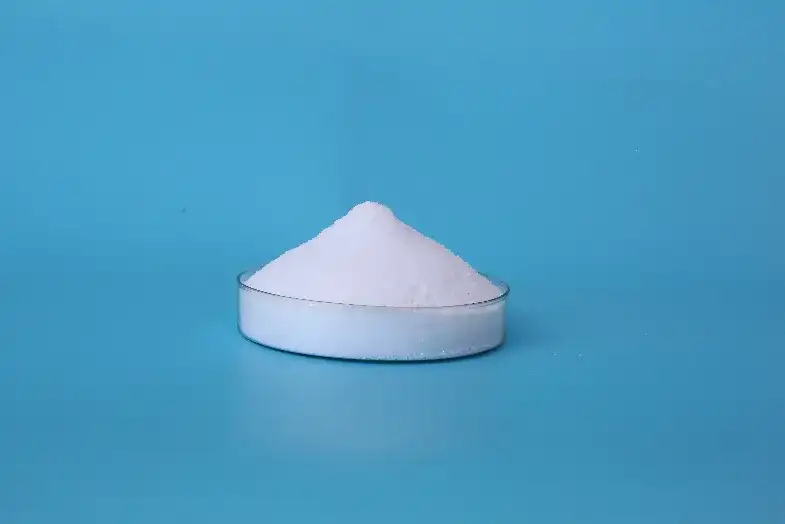
Why Non-Ionic PAM Consistency Depends on the Supplier’s Production Model
A paper machine’s wet end is unforgiving. Retention aids that vary in molecular weight or dissolution speed from batch to batch force wet end operators to constantly adjust dosage, which disrupts ash retention and drainage curves. The root cause is often upstream: a supplier that purchases acrylamide monomer on the open market has limited control over trace impurities that affect polymerization kinetics. In contrast, suppliers who manufacture their own acrylamide, such as through microbial technology with ultra-low iron and inhibitor levels, can consistently produce non-ionic polyacrylamide with predictable molecular weight distribution. This upstream integration is the first filter I use when assessing a potential supplier because it directly correlates with how steady a paper mill’s retention system will perform over months.
Technical Specifications That Matter for Paper Mill Operations
When a paper mill evaluates a non-ionic polyacrylamide supplier, the typical specification sheet often lists molecular weight in the tens of millions and residual monomer below 0.05%. These numbers are a starting point but do not tell the full story. The following table organizes the hidden technical points that separate a laboratory batch from a reliable industrial supply.
| Evaluation Point | Why It Matters for Papermaking | What to Ask the Supplier |
|---|---|---|
| Molecular weight distribution width | Narrower distribution means more uniform floc strength and fewer fines escaping the wire | Request GPC data, not just an average MW number. |
| Dissolution time and final viscosity profile | Slow or incomplete dissolving leads to “fish eyes” and uneven retention aid availability across the headbox | Ask for a dissolution curve at your mill’s process water temperature. |
| Residual acrylamide monomer history | While a single batch may pass limits, inconsistency here signals monomer handling weakness | Request the last 12 months of monomer residual data per batch. |
| pH tolerance across furnish | Non-ionic PAM should maintain flocculation from pH 4 to 10, but some grades lose efficiency at extremes | Have the supplier test their product against your highest and lowest furnish pH. |
| Fines retention with different filler types | Calcium carbonate, clay, and titanium dioxide all respond differently | Ask for retention data specific to your filler system. |
These questions go beyond the standard product brochure and demand evidence from the supplier’s quality control system. I have seen mills reject an otherwise suitable PAM grade simply because the supplier could not demonstrate long-term data on dissolution consistency.
Monomer Purity and Production Scale as Quality Assurance
The quality of the acrylamide monomer used to synthesize non-ionic polyacrylamide directly influences polymer linearity, residual impurities, and shelf stability. Our team at Shandong Nuoer produces acrylamide monomer via microbial technology, which yields an ultra-low impurity profile—iron below 1 × 10⁻⁶ and conductivity under 20 μS/cm for crystal grade. For paper mills, this translates into a non-ionic PAM that dissolves rapidly and exhibits minimal viscosity degradation in storage, which is critical when a mill runs 24/7 and needs to switch batches without noticeable shift in retention performance.
Beyond the chemistry, production scale matters because it absorbs demand peaks without cutting corners. With an annual polyacrylamide capacity of 500,000 tons and multiple production lines, a supplier can dedicate a line to a paper mill’s specific grade, avoiding cross-contamination and ensuring the same recipe is followed week after week. Smaller toll manufacturers may rebrand material from different sources, which introduces variability that no finished-product test can fully catch.
If your program involves producing multiple paper grades on the same machine, it is worth confirming whether a prospective supplier has the flexibility to adjust molecular weight or dissolution speed without reformulating from scratch. Reach out to discuss how we handle custom polymerization parameters at en*****@***er.com.
Logistics and Supply Chain Reliability for Continuous Paper Production
A technically perfect non-ionic polyacrylamide that arrives late or in damaged packaging creates the same result as an off-spec product: a paper machine running without retention aid. Our international logistics experience, spanning over 60 countries, has taught me that packaging integrity, inventory management, and regional warehousing are as important as the polymer inside the bag. For paper mills in remote or humid environments, we recommend multi-layer moisture-barrier packaging and, where possible, stocking consignment inventory to buffer against shipping delays.
Consistency in logistics also means consistent labeling and batch traceability. When a mill reports a deviation, the supplier must trace it back to a specific monomer lot, polymerization reactor, and drying batch within hours. I have found that suppliers who delay on traceability often have quality silos inside their plant. Ask directly: “If I report a performance issue, will you provide the batch genealogy within one business day?”
Beyond Price: Building a Partnership for Long-Term Paper Quality
After the initial qualification, paper mills sometimes default to annual price negotiations without revisiting the technical partnership. Yet the true cost of a non-ionic polyacrylamide supplier includes how well they respond when a new paper grade is introduced, when furnish composition changes, or when the mill pushes machine speed. We approach every customer relationship as a long-term collaboration, starting with a thorough retention audit and a tailored PAM molecular weight recommendation. This upfront work often reduces total chemical cost per ton of paper even if the per-kilo price is not the lowest, because optimized retention lowers filler and fiber loss.
The most productive relationships I have seen are those where the mill shares its long-term paper grade pipeline, and the supplier adjusts product development accordingly. This turns a simple polymer purchase into a process improvement loop.
Your Next Step: Verify Supplier Depth Before You Commit
The gap between adequate and outstanding retention aid performance often traces back to monomer quality and batch-to-batch uniformity. Before signing a supply agreement, ask your prospective supplier about their acrylamide monomer source, production volume, and data history for molecular weight distribution. A supplier who cannot show three years of consistent batch data is unlikely to deliver it over the next three.
At Shandong Nuoer, we produce non-ionic polyacrylamide with in-house monomer control on a 500,000-ton annual polyacrylamide platform, serving paper mills worldwide. To start a focused discussion on your mill’s retention system, send your typical furnish details and production speed to en*****@***er.com or call +86-532-66712876. We will review your conditions and propose a tailored molecular weight grade with supporting dissolution data.
Common Questions About Non-Ionic PAM for Paper Mills
How is non-ionic polyacrylamide different from cationic PAM in papermaking?
Non-ionic PAM works by bridging fibers and fines through physical entanglement rather than charge attraction, which makes it effective across a broad pH range and less sensitive to high conductivity or charged dissolved substances in the white water. Cationic PAM relies on electrostatic bonding to negatively charged fiber surfaces and is often used in neutral or alkaline papermaking where retention of fine filler particles is prioritized. In practice, many paper machines use a dual polymer system, but the non-ionic component provides the foundational floc strength that holds the network together even if furnish chemistry shifts.
What is the ideal molecular weight for a non-ionic retention aid?
The answer depends on machine speed, basis weight, and filler loading. In programs I have worked on, paper machines running at 1,200 m/min often benefit from a very high molecular weight non-ionic PAM, above 20 million, because the stronger flocs resist shear forces on the wire. For lower-speed fine paper grades with high filler content, a molecular weight of 10 – 15 million sometimes gives better formation because it avoids overdosing and stiff flocs that hurt optical uniformity. The only reliable way to pick the right molecular weight is a mill trial with incremental dosage adjustment and formation analysis.
Can a paper mill switch non-ionic PAM suppliers without affecting production?
If the new supplier’s product has a similar molecular weight distribution and dissolution profile, a switch can be smooth. However, I have observed instances where a low-cost replacement caused several days of retention instability because the dissolution time was longer, leading to undissolved polymer reaching the headbox. Before switching, run a comparative dissolution test and a short machine trial with close monitoring of first-pass retention and white water turbidity.
How do I ensure a supplier’s product stays consistent over multiple batches?
Ask for long-term data on key metrics: specific viscosity, dissolution time, and residual monomer. A responsible supplier will have these records for every batch shipped, not just a single certificate of analysis. We maintain statistical process control charts for every non-ionic PAM grade we produce, and we share trend data with customers during quarterly reviews. This transparency is the strongest signal that a supplier understands the criticality of consistency for continuous paper production.
What documentation should accompany a non-ionic PAM shipment?
At minimum, every shipment should include a certificate of analysis with lot-specific molecular weight, moisture content, residual monomer, and screen residues. For mills with ISO or food-contact requirements, additional documentation such as heavy metal limits, TOC, and a statement of regulatory compliance is necessary. Ask the supplier to provide a sample of their typical COA and whether they can customize it to match your quality system’s format. If your mill requires FDA or BfR clearance for food-grade paper, share your compliance needs early and we can confirm documentation availability.
If you’re interested, check out these related articles:
Nuoer Biotech Helps Ensure the Successful Convening of the 2025 Annual Meeting of the National Functional Polymer Industry Committee and the Industry Development High-Level Technology Forum
SAP Factory for Baby Diaper Production: Strategic Implementation Guide
Anionic PAM: Horizontal vs Vertical Well Performance


 English
 Russian
 Arabic
 Spanish