
A polymer plant’s non-ionic polyacrylamide specification sheet only tells part of the story. The gap between a data sheet and what arrives in a 750 kg supersack, shipment after shipment, is where most procurement headaches land. Having managed polymer production capacity planning across more than sixty export markets, I have learned that genuine quality assurance comes from integrated manufacturing control, not from a final inspection certificate added at the warehouse dock. This article lays out the technical markers and production realities that separate manufacturers who deliver consistent non-ionic PAM from those who merely promise it.
What Makes a Non-Ionic PAM Manufacturer Quality-Assured?
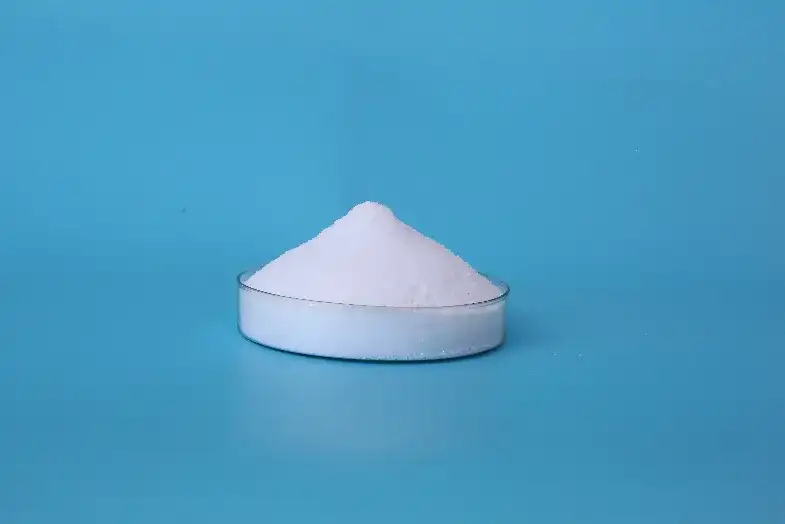
Non-ionic polyacrylamide is a homopolymer of acrylamide, characterized by low ionization and high molecular weight. Its flocculation performance holds steady across a wide pH range because the polymer chain carries minimal charge, making it less sensitive to salt content and acidic conditions than its anionic or cationic counterparts. This chemical simplicity puts unusual pressure on manufacturing precision. There are no ionic groups to mask polymerization inconsistencies.
A manufacturer running integrated acrylamide monomer production controls the critical variable most suppliers cannot. When acrylamide monomer is produced in-house using microbial technology, the impurity profile tightens dramatically. Iron content below 1×10⁻⁶ and conductivity under 20 μS/cm are not targets on a specification sheet, they are production floor constants. I have reviewed too many non-ionic PAM batches where elevated residual monomer or inconsistent molecular weight distribution traced directly back to third-party monomer sourcing. The supplier had quality assurance documentation, but the monomer came from a different plant every quarter.
Scale matters here in a specific way. A manufacturer producing over 500,000 tons of polyacrylamide annually, with dedicated non-ionic production lines, runs campaigns large enough to justify the process control investment that small batch producers skip. Continuous polymerization monitoring, automated viscosity tracking, and real-time molecular weight measurement are standard when a line runs around the clock. When a plant produces a few tons per month, those systems do not pay back, and quality assurance shifts toward post-production testing, which catches failures but does not prevent them.
How Does Production Scale Influence Non-Ionic PAM Reliability?
The most underappreciated quality variable in non-ionic PAM is batch-to-batch molecular weight distribution. A specification might read “molecular weight 15 million,” but whether every batch clusters tightly around that value or spreads from 12 to 18 million depends on polymerization control that only comes with volume.
Larger manufacturers maintain dedicated acrylamide monomer supply chains. Our plant converts acrylamide monomer directly into non-ionic polymer within a controlled timeframe, which limits monomer degradation and side reactions that produce low-molecular-weight fractions. When polymerization is triggered from monomer stored for weeks or transported across borders, the initiator efficiency shifts, and the molecular weight distribution broadens. The product still meets the specification on a certificate of analysis, but end-use performance in paper retention or textile sizing tells a different story.
There is another dimension to scale that procurement teams sometimes overlook. A manufacturer supplying sixty-plus countries maintains technical service capacity that a regional producer cannot replicate. When a paper mill in Southeast Asia adjusts its furnish and the retention performance drifts, the supplier’s ability to dispatch an applications engineer who has seen that exact problem across multiple mills matters more than the original specification. I have spent enough years in global market development to know that quality assurance is not complete until the product performs under the customer’s roof, not just the factory’s.
If your operation uses non-ionic PAM across varying water chemistries or furnish compositions, confirming batch consistency data beyond the certificate of analysis is worth a direct conversation. Share your typical operating pH range and any seasonal water quality shifts with the manufacturer’s technical team before committing to a supply agreement.
Which Technical Specifications Define High-Performance Non-Ionic PAM?
Buyers tend to fixate on molecular weight, and that focus is not wrong, but it is incomplete. For non-ionic polyacrylamide, solubility rate and dissolution behavior are equally important performance parameters that separate commodity-grade material from engineered polymer.
High-purity non-ionic PAM with low residual acrylamide monomer content dissolves faster and forms fewer fisheyes, those partially hydrated gel clumps that clog filters and reduce effective dosage. A product with residual monomer below 0.05% dissolves cleanly in cold water within 40 to 60 minutes, while material with residual monomer above 0.1% can take twice as long and still leave undissolved gel particles. This difference is not visible on a standard specification sheet unless the manufacturer chooses to report it, which conscientious producers do.
| Parameter | Standard Grade | High-Performance Grade | Why It Matters |
|---|---|---|---|
| Molecular Weight | 8-12 million | 15-20 million | Higher MW improves bridging flocculation efficiency |
| Residual Monomer | 0.05-0.1% | ≤0.05% | Lower residual means faster dissolution, fewer fisheyes |
| Dissolution Time (25°C) | 60-90 min | 40-60 min | Faster dissolution reduces make-down system sizing |
| pH Tolerance Range | 3-11 | 2-12 | Wider tolerance handles process upsets without re-optimization |
| Bulk Density (g/cm³) | 0.60-0.75 | 0.65-0.75 (tighter range) | Consistent density ensures accurate dosing from volumetric feeders |
The pH tolerance claim deserves particular scrutiny. Non-ionic PAM is marketed as pH-independent, and chemically that is true, the polymer chain does not hydrolyze appreciably across pH 2 to 12. But flocculation efficiency is not purely a polymer chemistry question. At extreme pH values, the particle surface charge of the suspended solids changes, and the bridging mechanism depends on both polymer and particle. A quality-assured manufacturer should provide flocculation performance curves across your specific pH range, not just a blanket statement of pH stability.
What Should Buyers Verify Before Selecting a Non-Ionic PAM Supplier?
Verification starts before the first sample shipment. The most revealing question a procurement manager can ask a potential non-ionic PAM manufacturer is not about price or minimum order quantity. It is about their acrylamide monomer source.
Manufacturers that produce their own acrylamide monomer, particularly those using microbial technology rather than copper-catalyzed hydration, avoid the impurity variability that copper-catalyst processes introduce. Iron, copper ions, and organic impurities from catalyst residues interfere with free-radical polymerization, reducing molecular weight and broadening distribution. When I evaluate a polymer supplier, the first thing I confirm is whether the monomer stream is captive or purchased. Captive monomer production is not a guarantee of quality, but purchased monomer is a guarantee of variables the supplier does not fully control.
Certification documentation forms the second layer of verification. ISO 9001 is baseline. For export-grade non-ionic PAM, look for REACH registration if the material enters the European supply chain, and NSF certification if it touches potable water or food-contact applications. But certifications describe a quality management system, not a quality outcome. I have tested too many certified suppliers whose batch consistency did not match their documentation.
The third verification layer is production record transparency. A manufacturer willing to share polymerization batch records, including initiator lot numbers, reaction temperature profiles, and post-reaction viscosity measurements, operates differently from one that only releases a certificate of analysis. This level of transparency is rare, but it is the most reliable signal of genuine quality assurance culture. Most polymer buyers never ask for it, so most suppliers never prepare to share it. Asking the question itself tells you something about the supplier’s reaction.
For defense, pharmaceutical, or other high-consequence applications where non-ionic PAM serves as a binder or film-former, request residual acrylamide monomer testing by HPLC rather than the standard bromination method. HPLC provides monomer-specific quantification that bromination, which measures total double bonds, cannot match. This distinction is technical but it has downstream regulatory implications that generic quality assurance documentation does not address.
What Procurement Teams Ask About Non-Ionic PAM Quality
In our experience, the shortest path to reliable supply is matching the manufacturer’s core production to your application profile. If a plant’s primary output is anionic PAM for mining and they produce non-ionic PAM as a sideline for textile customers, their process optimization prioritizes the anionic chemistry. Polymerization kinetics, initiator selection, and drying parameters differ between ionic and non-ionic systems. Seeking a manufacturer whose non-ionic production volume is substantial enough to warrant dedicated lines and dedicated technical staff reduces the risk of receiving material optimized for someone else’s process.
It depends on your water chemistry and target suspended solids. Non-ionic PAM performs best in acidic conditions where anionic PAM loses charge effectiveness and cationic PAM risks over-dosing due to charge neutralization overshoot. If your system operates consistently below pH 5, non-ionic PAM usually delivers more predictable flocculation than hydrolyzed polyacrylamide. If your system cycles between pH 4 and pH 10, the non-ionic polymer’s pH independence becomes a genuine operational advantage that reduces the need for re-optimization after process upsets.
The answer depends on what you are trying to catch. High molecular weight non-ionic PAM, above 15 million, provides stronger inter-particle bridging and forms larger, faster-settling flocs. This translates directly to higher throughput in a clarifier or faster drainage on a paper machine wire. But high molecular weight polymer is more shear-sensitive. If your process includes high-shear pumping or in-line mixing, the polymer chains degrade and the effective molecular weight at the point of use drops. In those systems, a slightly lower starting molecular weight with better shear stability may outperform an ultra-high-molecular-weight grade that degrades before it reaches the application point. Run a shear-stability test on your candidate grades, not just a beaker jar test.
The most common oversight is treating dissolution as a simple mixing step. Non-ionic PAM requires adequate aging time after initial dispersion to fully uncoil the polymer chains. A make-down system sized for 45-minute aging may deliver only 70% of the polymer’s flocculation potential if the specific grade requires 60 minutes. Check the manufacturer’s recommended aging curve, not just their dissolution time claim, and match it to your system’s actual residence time. The second oversight is water temperature compensation. Dissolution at 10°C can take 50% longer than dissolution at 25°C, and many plants in northern climates see seasonal performance swings because their make-down water temperature drops in winter and nobody adjusts the aging tank level.
The monomer supply chain is the quality control point most buyers never examine, but it explains more batch variation than any other single factor. Manufacturers running in-house acrylamide production with microbial conversion technology achieve tighter impurity control than those purchasing monomer on the open market. If your non-ionic PAM application involves food-grade or potable water standards, verify the monomer purity and residual acrylamide levels directly. Send a retain sample to an independent lab for HPLC analysis and compare it against the supplier’s certificate of analysis. If the two do not match within the method’s uncertainty, you have found a supplier whose quality assurance system deserves deeper investigation. Share your requirements and we will confirm the monomer purity documentation and batch traceability records for your application. Reach us at en*****@***er.com or call +86-532-66712876.
If you’re interested, check out these related articles:
Anionic Polyacrylamide Cost Analysis for Mining Profitability
Selecting Acrylic Acid Purity: A Technical Guide for Polymer Production


 English
 Russian
 Arabic
 Spanish