
Acrylamide crystal serves as the foundational monomer for polyacrylamide synthesis in thousands of university research programs, yet the term “research grade” carries no enforceable industry definition. After fifteen years overseeing acrylamide production and quality control at Shandong Nuoer, I have seen laboratories accept suboptimal material because they relied on marketing labels rather than asking for the measured parameters that govern polymerization behavior. Selecting acrylamide crystal for academic research labs means looking past the grade name and verifying purity, inhibitor content, moisture levels, and the supplier’s willingness to provide batch-specific documentation. These four factors determine whether your polymerization results are reproducible, and none of them require paying a premium for a label.
What Separates Research-Grade Acrylamide Crystal from Industrial Material
The distinction between research-grade and industrial acrylamide crystal is not governed by a single standard. No ISO specification, no ASTM method, and no pharmacopeia monograph defines what “research grade” means for acrylamide. In practice, the term is a supplier’s assertion about purity, documentation, and packaging, and the specific meaning varies from one manufacturer to another.
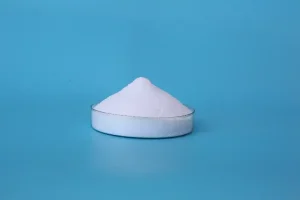
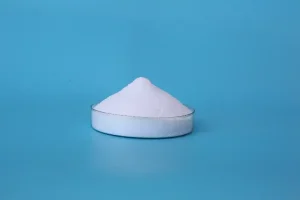
From a production perspective, the same acrylamide crystal that leaves our facility for a polymer plant can serve a university laboratory equally well if the accompanying documentation meets the researcher’s needs. The crystal itself — its purity, inhibitor level, moisture content, and metal ion profile — does not change based on the end user. What changes is the paperwork and the packaging size. I have watched academic buyers pay two to three times the industrial price for material that came from the same production batch, differentiated only by a smaller container and a different label. The smarter procurement approach is to evaluate the actual specifications rather than the grade title, and to ask suppliers whether they will provide batch-level certificates of analysis regardless of the intended application.
Acrylamide Crystal Purity Parameters That Affect Lab Results
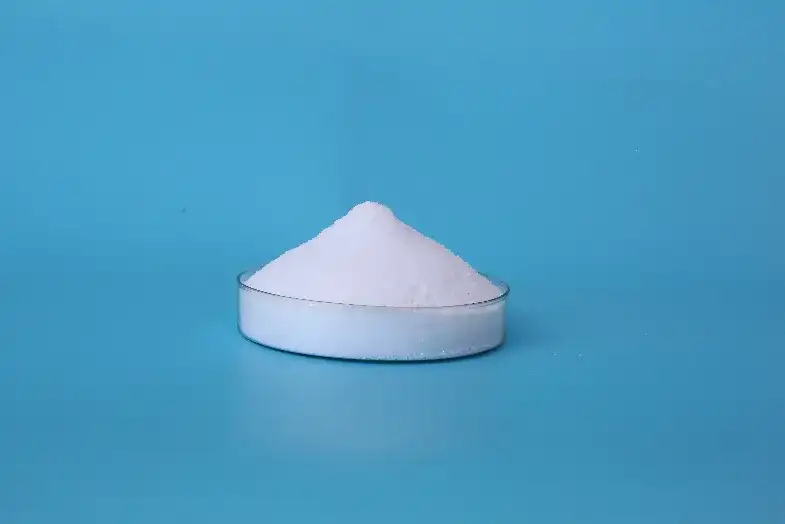
When a researcher measures out acrylamide crystal for a polymerization experiment, three specification values directly influence the outcome: purity percentage, conductivity, and iron content. Purity of 98.0% or higher is the baseline for consistent results. Below that threshold, the cumulative effect of impurities — mainly residual acrylonitrile, acrylic acid, and sulfate ions — begins to alter polymerization kinetics in ways that are difficult to trace without dedicated analytical work.
| Parameter | Specification | Impact on Research |
|---|---|---|
| Purity | ≥ 98.0% | Baseline for reproducible kinetics |
| Moisture | ≤ 0.8% | Affects gravimetric accuracy in weighing |
| Conductivity | ≤ 20 μS/cm | Ionic load can alter chain transfer reactions |
| Iron | ≤ 1 ×10⁻⁶ | Redox interference with initiator radicals |
| Inhibitor | 3–10 ×10⁻⁶ | Affects induction time and final conversion |
| pH (10 g/L) | 6.5–7.5 | Influences initiator decomposition rate |
Conductivity, measured at ≤ 20 μS/cm for a 10 g/L solution, reflects the total ionic load in the crystal. In free-radical polymerization, extraneous ions can interact with initiator radicals or participate in chain-transfer reactions that shorten the average molecular weight of the resulting polymer. A researcher who sees inconsistent molecular weights between otherwise identical reactions should check the monomer conductivity before questioning their technique.
Iron content, kept below 1 ×10⁻⁶ in properly produced material, matters for a different reason. Ferrous and ferric ions are redox-active, and they can either accelerate initiator decomposition or scavenge radicals depending on their oxidation state and the pH of the reaction medium. The effect is concentration-dependent and often subtle — a slight shift in induction period or a modest change in conversion rate — but in kinetic studies where those parameters are the data, even subtle interference is unacceptable.
Moisture content, controlled to ≤ 0.8%, is the specification most often overlooked in academic settings. Acrylamide crystal is hygroscopic. A container left open on a humid bench for even thirty minutes can absorb enough water to invalidate gravimetric measurements for the remainder of the experiment. Weighing out monomer for a precisely calculated monomer-to-initiator ratio becomes meaningless if the actual acrylamide mass is several percent lower than the balance reads.
Inhibitor Levels and Their Impact on Research Polymerization
Acrylamide monomer spontaneously polymerizes during storage unless a small amount of inhibitor is present. The standard inhibitor is typically a copper salt or an organic radical scavenger, maintained at 3–10 ×10⁻⁶ in the crystal. This concentration range is set to prevent autopolymerization during shipping and warehousing while being low enough that standard initiator levels in a research polymerization overwhelm it without adjustment.
The practical concern for academic researchers is inhibitor variability between suppliers or between batches from the same supplier. If one batch carries 3 ppm inhibitor and the next carries 10 ppm, a fixed initiator recipe will produce different induction periods and potentially different final conversions. In industrial production, we control inhibitor within a narrow window because our customers run continuous processes where induction time variation translates directly to throughput. Academic labs running batch reactions can compensate by adding a small inhibitor-removal step — passing the monomer solution through an inhibitor-remover column, or sparging with inert gas — but most do not, because the inhibitor level is not printed on the bottle in an obvious place and the researcher assumes it is negligible. It is not negligible at the high end of the specification range.
I recommend that researchers ask for the actual inhibitor concentration on the certificate of analysis for each batch they receive, and log it alongside their polymerization data. If induction time or conversion varies between experiments that are otherwise identical, the inhibitor concentration is the first variable to check after initiator quality.
How to Store and Handle Acrylamide Crystal in a Lab Setting
Acrylamide crystal has a practical shelf life of one to two years when stored cool, dry, and protected from light, but that shelf life assumes the container remains sealed and the storage temperature does not cycle. In a shared cold room where the door opens dozens of times per day, a container that sits on the shelf for eighteen months may have degraded more than one stored in a dedicated refrigerator with stable temperature control.
The crystal should be kept in its original opaque packaging or transferred to an amber glass container with a tight-sealing lid. Desiccant packs are worth adding if the container will be opened frequently. Every time the lid comes off in a humid environment, the crystal gains moisture; over weeks, that incremental uptake shifts the effective mass of every subsequent weighing.
Handling safety is a well-documented topic, so I will not repeat the standard guidance except to emphasize one point: acrylamide in crystalline form presents a lower inhalation risk than the powdered form, but once dissolved, standard glove and fume hood protocols apply without exception. The neurotoxicity concern is primarily associated with the monomer in solution, where skin absorption becomes the dominant exposure route.
Evaluating Acrylamide Crystal Suppliers for Academic and Long-Term Research
Choosing an acrylamide crystal supplier for a research program comes down to three questions that have little to do with price per gram. First, does the supplier provide a batch-specific certificate of analysis that includes all the parameters discussed above — purity, moisture, conductivity, iron, inhibitor concentration, and pH? A certificate that only lists purity and nothing else tells you the supplier either does not measure the other parameters or does not want you to see them.
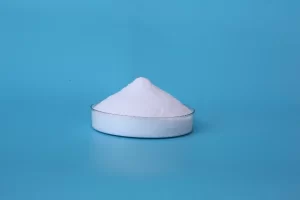
Second, what production method does the manufacturer use? Acrylamide produced via microbial technology — biocatalytic hydration of acrylonitrile — yields a cleaner monomer profile with lower residual acrylonitrile and fewer organic byproducts than traditional copper-catalyzed methods. Our AM Crystal product, manufactured with microbial technology at an annual capacity of 300,000 tons, consistently meets the specification ranges listed in this article. The production method matters because it sets the baseline impurity profile before any purification steps are applied. A supplier who starts with a cleaner crude product has less work to do in finishing, and the specifications on the certificate reflect that advantage.
Third, can the supplier provide stability data or guidance on expected shelf life under typical lab storage conditions? A manufacturer with substantial research-institution sales experience should be able to answer this question from accumulated batch-retention data, not from a generic statement in a brochure.
An academic laboratory planning multi-year research faces a different procurement calculation than a lab buying for a single experiment. Batch-to-batch consistency becomes more important than the absolute specification values, because a research program that spans several years and multiple graduate students will accumulate data across many monomer lots. If each lot introduces a small shift in impurity profile, those shifts add noise to the entire dataset.
The most effective approach I have observed among our research-institution customers is to qualify a single supplier, request retention samples from each batch received, and build a small internal database linking the certificate of analysis data to key experimental outcomes. This sounds burdensome but requires minimal effort once established — a spreadsheet with batch number, date received, purity, inhibitor level, and a note on any observed anomalies in polymerization behavior. Over two or three years, this record becomes one of the lab’s most valuable assets for troubleshooting unexpected results and for training new students on what “normal” looks like for their specific monomer source.
If your program involves synthesizing polyacrylamide with targeted molecular weights or specific copolymer compositions, it is worth confirming the complete impurity profile with your supplier before standardizing on a particular grade. Share your requirements and we can provide the batch documentation and stability data to support your research planning. Reach our technical team at en*****@***er.com or call +86-532-66712876.
Common Questions About Acrylamide Crystal in Research
Does “research grade” acrylamide have a recognized industry standard?
No. Unlike pharmaceutical-grade or food-grade designations, “research grade” for acrylamide is a marketing term with no regulatory definition. Different suppliers apply the label to material with purity ranging from 97% to over 99%, with varying levels of documentation. Researchers should evaluate the numerical specifications on the certificate of analysis rather than relying on the grade name when selecting acrylamide crystal for academic research labs.
What acrylamide purity do I need for gel electrophoresis versus polymer synthesis?
It depends on the application. For polyacrylamide gel electrophoresis, the monomer purity requirement is less demanding than for kinetic studies or controlled polymer synthesis. Gels formed with 98% purity acrylamide perform indistinguishably from those made with 99.5% material in typical protein or nucleic acid separations, because the crosslinking reaction is relatively forgiving of trace impurities. For polymer synthesis where molecular weight, polydispersity, or copolymer composition is the research endpoint, purity above 98% and documented inhibitor and metal ion levels become important for data reproducibility.
How long can acrylamide crystal be stored after opening?
Under cool, dry, dark conditions with the container tightly sealed between uses, opened acrylamide crystal remains usable for six to twelve months. The limiting factor is typically moisture absorption, not chemical degradation. A container that develops visible clumping or a sticky residue on the inner lid has absorbed enough water to compromise gravimetric accuracy and should be replaced. Adding a desiccant pack and storing at a stable refrigeration temperature extends the usable window toward the upper end of that range.
Can I use the same acrylamide crystal across different research projects?
In a multi-project laboratory, it is common and practical to use a single acrylamide source across projects, provided the monomer quality is adequate for the most demanding application. If one project requires kinetic-level purity control and another is making qualitative gels, both can use the higher-spec material without issue. The reverse — using lower-spec monomer for a kinetics study — introduces avoidable variables. If you are setting up a new research program and want batch documentation and technical guidance matched to your specific polymerization application, share your experimental requirements with us and we will confirm the appropriate monomer specifications and supporting data.
If you’re interested, check out these related articles:
Acrylamide Monomer: Tailoring Polymers Through Diverse Methods
26th China International Petroleum & Petrochemical Equipment Exhibition Kicks Off: Nuoer Group Makes High-Profile Debut at CIPPE 2026
50% vs 40% Acrylamide Solution Industrial Selection Guide
Acrylamide Solution Concentration: Optimizing Plant Performance
Nuoer Group donated 300,000 RMB to Rongzhuang Village to support hometown development.


 English
 Russian
 Arabic
 Spanish