
In enhanced oil recovery, the choice between anionic PAM vs xanthan gum for oil recovery defines both operational cost and ultimate recovery factor. Having managed polyacrylamide production and supply for over fifteen years, I have seen operators default to xanthan gum based on laboratory data alone, only to encounter field-level reliability issues that synthetic polymers handle predictably. This article evaluates the two polymers not just by viscosity curves, but through the lens of manufacturing consistency, long-term reservoir performance, and total cost of ownership—the factors that determine whether a flooding program reaches its target incremental oil.
Polymer Selection Determines EOR Viability and Cost
EOR polymer flooding is a material-intensive operation. An offshore field injecting 100,000 barrels of water per day at 1,000 ppm polymer concentration consumes roughly 16 tonnes of active polymer daily. Over a five-year project, that translates to nearly 30,000 tonnes of product. At that scale, even small differences in polymer quality, dissolution behavior, and supply reliability create multimillion-dollar variances in project economics.
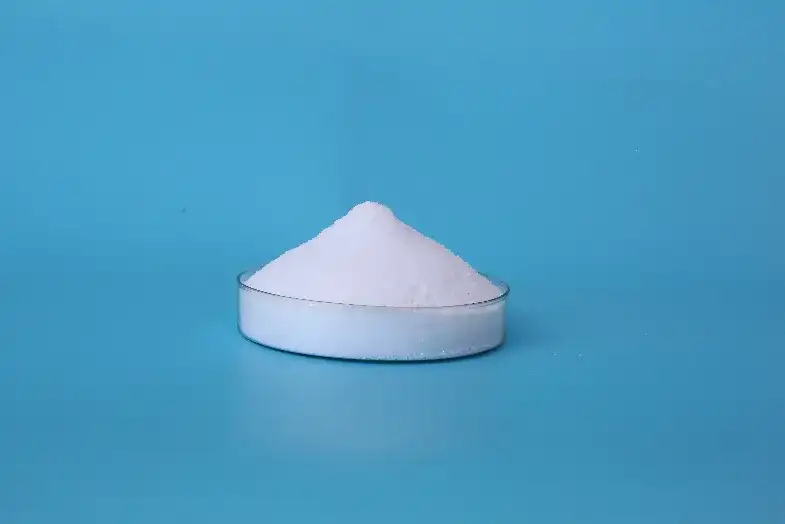
Anionic polyacrylamide is a synthetic polymer produced through controlled copolymerization of acrylamide and acrylate salts. Our facility in Shandong manufactures anionic PAM with molecular weights exceeding 30 million, and a total polyacrylamide capacity of 500,000 tonnes per year. This scale enables us to serve EOR projects that require consistent lot-to-lot quality and just-in-time delivery—a logistical dimension that biopolymer suppliers often struggle to match. Xanthan gum, a polysaccharide produced by bacterial fermentation, varies in quality depending on strain, nutrient source, and downstream processing. While laboratory-grade xanthan delivers impressive viscosity, the commercial-grade product supplied in bulk for oil fields frequently exhibits wider viscosity scatter and higher insolubles content.
Shear Stability and Thermal Endurance in Downhole Conditions
The first performance filter for any EOR polymer is mechanical shear tolerance. A polymer solution travels from the surface mixing plant through chokes, wellbore constrictions, and perforations before entering the formation. During this journey, it experiences shear rates that can exceed 10,000 s⁻¹. High-molecular-weight anionic PAM, despite its chain length, retains much of its viscosity-building capability after moderate shear because it re-coils through elastomeric relaxation. In our internal testing, a 30-million-molecular-weight anionic PAM retained over 85 percent of its initial solution viscosity after passing through a capillary shear simulator at a shear rate representing typical near-wellbore conditions.
Xanthan gum, by contrast, exhibits a rigid helical structure in solution that resists shear thinning but undergoes irreversible mechanical scission under extreme turbulence. Once the backbone breaks, the viscosity loss is permanent. Field reports from polymer floods in Daqing confirm that injected xanthan solutions show sharper viscosity decline across the perforation zone than anionic PAM solutions at equivalent concentrations. If your injection scheme involves high-shear chokes or near-wellbore turbulence, confirm the mechanical stability margin of your candidate polymer with a shear test protocol—contact us to discuss how our high-molecular-weight anionic PAM performs under your expected shear rates.
Temperature stability further separates the two polymers. Anionic PAM degrades primarily through hydrolysis of amide groups at temperatures above 75°C, a process that actually increases solution viscosity initially before precipitation becomes a risk in hard brines. Our anionic grades with controlled hydrolysis degrees are routinely deployed in reservoirs up to 85°C when properly matched to formation water chemistry. Xanthan gum begins losing viscosity above 60°C due to conformational changes in its polysaccharide structure, and thermal degradation accelerates sharply above 80°C. In a high-temperature Middle Eastern carbonate field, operators evaluate both polymers and ultimately selected a customized anionic PAM formulation to maintain target mobility ratio over the projected injection lifetime.
Salinity Tolerance and Adsorption Behavior in Real Reservoirs
Reservoir brine composition is the make-or-break variable for polymer flooding. Anionic PAM carboxylate groups screen divalent cations, causing chain coiling and viscosity loss in high-hardness brines. This sensitivity is well documented, and the solution lies in selecting the appropriate hydrolysis degree—the lower the hydrolysis, the better the calcium tolerance, but at the cost of some thickening efficiency. For a formation brine containing 20,000 mg/L total dissolved solids with significant calcium and magnesium, a 20-25 mole percent hydrolyzed anionic PAM often provides the best compromise between viscosity yield and brine stability.
Xanthan gum is frequently promoted as salt-tolerant because its viscosity remains relatively constant across a wide salinity range. That is true for monovalent brines. In divalent-rich brines, however, xanthan’s ordered conformation can collapse, and the polymer forms insoluble aggregates that plug pore throats. We have received technical inquiries from operators in South America who observed injectivity loss after switching to xanthan in a formation with high calcium levels; the culprit was not polymer degradation but microgel formation invisible to routine filtration ratio tests.
Adsorption is another cost factor. Anionic PAM adsorbs onto reservoir rock through electrostatic attraction between carboxylate groups and positively charged mineral surfaces. Typical adsorption levels range from 50 to 150 μg/g of rock in sandstone, representing a non-recoverable polymer loss that must be priced into the chemical budget. Xanthan gum adsorbs less on average—often in the 30–80 μg/g range—but its adsorption behavior is less predictable, varying with fermentation residues and residual protein content. When scale-up calculations assume optimistic adsorption numbers that the actual commercial product cannot meet, the budgeting gap appears months into the flood, after procurement decisions are locked in.
Field Operations, Supply Logistics, and Lifecycle Economics
Switching perspective from lab to lease, the polymers differ in how they reach the site and how they behave in the mixing plant. Anionic PAM is supplied as a dry powder or mineral-oil-based emulsion. Dry powder, properly packaged, stores for two years with minimal quality drift and hydraulically transports efficiently to remote locations. Our emulsion-type anionic polyacrylamide dissolves within 5 to 15 minutes in standard field mixing units, enabling rapid response to changing injection demands without additional blending equipment.
Xanthan gum arrives as a dry powder that hydrates slowly, especially in cold or saline make-up water. Achieving full viscosity development can require extended hydration tanks and heating systems, adding capital expenditure and footprint to the surface facility. In offshore operations where deck space is at a premium, the extra equipment needed for xanthan hydration can be a decisive factor. Furthermore, xanthan solutions are biologically degradable: without biocide treatment, bacteria consume the polymer within days, collapsing injectivity. Anionic PAM is inherently resistant to biological attack, reducing the operational complexity of biofouling control.
The total chemical cost per incremental barrel of oil depends on polymer price, dosage, adsorption, and make-up rate from mechanical loss. Table 1 below illustrates a representative economic comparison for a 50,000 bbl/day waterflood in a 60°C sandstone reservoir with moderate salinity.
| Cost Factor | Anionic PAM (HPAM) | Xanthan Gum |
|---|---|---|
| Typical dosage, ppm | 800–1,200 | 1,200–1,800 |
| Polymer unit price, USD/kg | 2.5–3.5 | 4.0–6.5 |
| Adsorption loss, μg/g rock | 50–150 | 30–80 |
| Biocide requirement | None | Required (continuous) |
| Hydration equipment | Standard mixer | Extended tanks/heating |
| Shelf life (dry) | 2 years | 1 year (hygroscopic) |
The polymer unit cost alone does not capture the full economics. Lower adsorption and elimination of biocide offset much of anionic PAM’s cost advantage at the scale of a multi-year flood.
Decision Framework for Selecting Anionic PAM or Xanthan Gum
No single polymer is universally superior. The decision must answer three questions: What are the reservoir conditions? What is the operational environment? What supply reliability does the project require?
For low-temperature, low-salinity, and biologically controlled environments where the operator already has hydration infrastructure in place, xanthan gum can be a workable option. The polymer’s strong viscosity yield in fresh water means lower concentrations, and its salt tolerance simplifies make-up with produced water. However, the operator must verify the lot consistency of the commercial xanthan supply—a step often skipped in pilot evaluations that later causes performance drift during full-field expansion.
For the larger population of EOR projects operating in moderate- to high-temperature reservoirs with variable brine hardness and limited surface facility footprint, anionic PAM presents a more robust baseline. Its mechanical stability during injection, proven field track record, and supply-chain predictability from large-scale manufacturers reduce the variables that can derail a flood. Our production planning at Shandong Nuoer includes dedicated capacity for long-term EOR polymer contracts, ensuring that polymer specification remains locked over multiple production campaigns—something biopolymer suppliers with seasonal fermentation cycles find difficult to guarantee.
A field trial always precedes full-field commitment. When designing that trial, measure more than coreflood incremental recovery. Test the actual commercial product you will buy in bulk, not the vendor’s lab sample. Run mechanical shear degradation tests at your expected injection rates. Perform long-term thermal aging in authentic formation brine. And evaluate the supplier’s logistics capability, including shipping lane reliability, customs documentation readiness, and warehousing support near the field. In mature oil regions, the polymer supply chain proves as critical as the polymer chemistry.
Sourcing Anionic PAM with Long-Term Field Reliability
EOR polymer selection is a systems decision, not a chemistry quiz. The anionic polyacrylamide grades manufactured at Shandong Nuoer are designed for consistent injection performance across the range of reservoir conditions encountered in global oil fields. With dedicated polyacrylamide capacity exceeding half a million tonnes per year and a logistics network covering over 60 countries, we supply EOR projects with the volume and specification stability that field operators require across contract terms lasting years. If your flooding program is evaluating polymer candidates, share your formation temperature, brine analysis, and target injection rate. Our technical team can recommend the appropriate anionic PAM hydrolysis degree and molecular weight and provide shear stability data specific to your well configuration. Contact us at en*****@***er.com or call +86-532-66712876.
Common Questions About Anionic PAM and Xanthan Gum for EOR
Under what conditions does xanthan gum outperform anionic PAM?
In low-temperature reservoirs below 50°C with fresh or low-salinity make-up water and available hydration infrastructure, xanthan gum can generate higher viscosity per unit concentration. Its near-Newtonian rheology also provides uniform propagation through homogeneous formations. These advantages disappear quickly outside those narrow conditions, which is why the majority of large-scale polymer floods globally now use anionic PAM.
Does anionic PAM always lose viscosity in saline brine?
Anionic PAM viscosity decreases in the presence of salt, but this sensitivity is manageable through hydrolysis degree selection and polymer concentration adjustment. A lower hydrolysis grade retains more chain extension in hard brine, while moderate over-dosing compensates for the viscosity deficit. Operators routinely achieve target mobility ratios in brines exceeding 50,000 mg/L TDS by matching polymer chemistry to water analysis—a standard service our technical team performs for every EOR client.
How significant is the biocide requirement for xanthan gum?
Biocide demand is continuous and non-negotiable. Xanthan solutions provide a growth medium for sulfate-reducing and acid-producing bacteria, which not only degrade the polymer but also generate H₂S and cause reservoir souring. Biocide treatment adds 0.15–0.30 USD per barrel to operating costs and requires chemical storage and injection systems on site. Anionic PAM eliminates this entire cost category.
Can anionic PAM and xanthan gum be used together in the same flood?
Sequential injection has been field-tested in Chinese oil fields, where an anionic PAM mobility control bank is followed by a xanthan diversion slug to redistribute flow into lower-permeability zones. While technically feasible, the two-stage approach compounds logistics and complicates injection schedule coordination. Most operators find better value in optimizing a single-polymer program rather than managing two supply chains and quality-control regimes.
What quality specifications should I look for in anionic PAM for EOR?
The critical specifications are molecular weight, hydrolysis degree, insoluble content, dissolution time, and residual monomer. Filter ratio and screen factor tests provide field-relevant indicators of injectivity. Work with a manufacturer that can supply these parameters lot by lot and that maintains consistent production over the multi-year contract period. If your project involves high-salinity brine or deep high-temperature zones, share your water analysis and we can provide a targeted recommendation for the optimal anionic PAM charge density and molecular weight.
If you’re interested, check out these related articles:
Amphoteric Polyacrylamide: Powder vs Emulsion Performance
Amphoteric Polyacrylamide: pH Adaptation for Optimal Performance
Selecting Super Absorbent Polymer for Optimal Sanitary Napkin Performance
Amphoteric PAM: Cost-Performance Balance for Industrial Flocculation
Nuoer Awarded the Honor of “2024 Dongying City Enterprise with Outstanding Tax Contribution”


 English
 Russian
 Arabic
 Spanish