
When procurement teams source anionic polyacrylamide (PAM) for mining, oil recovery, or industrial water treatment, the quoted per-ton price dominates the conversation. But the true cost of an anionic PAM supplier extends well beyond the invoice figure. Low-price product from an unverified source can carry hidden costs: inconsistent flocculation, higher dosage requirements, production downtime, and repeated quality testing. After fifteen years in polyacrylamide manufacturing and global supply, I have seen operations lose far more to unreliable material than they saved on purchase price. Evaluating suppliers on their manufacturing scale, raw material control, and quality consistency—not price alone—is the only way to secure long-term cost efficiency.
Understanding Anionic PAM Pricing Drivers
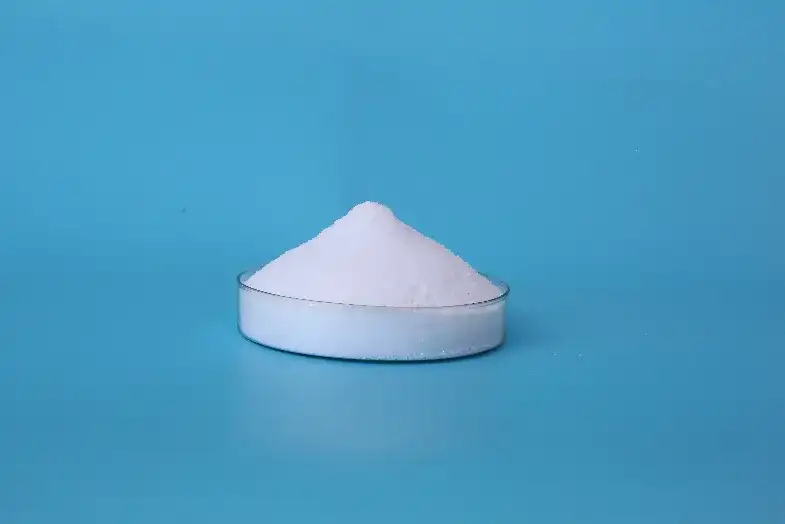
The price of anionic polyacrylamide is shaped by a small set of technical and commercial factors. Molecular weight is the most visible driver. Our standard anionic PAM product line starts above 30 million molecular weight, a level that delivers the strong bridging and flocculation performance required in mining, polymer flooding, and tailings thickening. Higher molecular weight grades command a premium because they demand more refined polymerization control and yield fewer tons per reactor batch.
Hydrolysis degree—the proportion of carboxylate groups on the polymer chain—introduces another cost dimension. A partially hydrolyzed PAM with 25–30% hydrolysis offers good solubility and charge density for general mineral processing. Increasing the hydrolysis degree above 30% can improve performance in high-hardness water or specific ore types, but it raises production complexity and cost. We guide clients toward the lowest effective hydrolysis grade for their conditions because an over-specified product provides no operating benefit, only unnecessary expense.
| Factor | Impact on Price | Notes |
|---|---|---|
| Molecular weight | Higher MW increases cost | Above 30 million for strong flocculation; ultra-high MW adds 10–20% premium |
| Hydrolysis degree | Charge density adjustment adds cost | Each 5% increase typically raises ex-factory price by 3–8% |
| Raw material integration | In-house monomer supply lowers price | Integrated production eliminates intermediate markups and stabilizes raw material cost |
| Ionic type and customization | Tailored grades cost more | Standard high-MW anionic is most cost-effective; customer-specific formulations add R&D and scheduling burden |
Raw material sourcing is the factor most purchasing teams overlook. The vast majority of anionic PAM cost is acrylamide monomer and acrylic acid. A manufacturer who buys these monomers on the spot market passes raw material volatility on to the buyer. A manufacturer who produces acrylamide and acrylic acid in-house can absorb market swings and offer stable pricing across quarters. This distinction does not appear on a price list, but it shows up in the consistency of the numbers you receive over a twelve-month period.
Calculating the Hidden Cost of Unreliable Anionic PAM Supply
A cheap batch of anionic flocculant can trigger costs that multiply the initial saving. I have walked through a copper concentrator site where a single container of under-performing PAM forced the thickener into turbid overflow for an entire shift. The mill lost six hours of production because the recycled process water was too dirty to reuse, and every downstream pump required cleaning. The lost metal output that day was worth more than the annual flocculant budget. Those incidents are not rare; they are the predictable result of buying on price alone.
Even routine inconsistency imposes a steady drain. When anionic PAM varies in dissolution rate or molecular weight from batch to batch, operators compensate by increasing the dosage. A 5% dosage increase on a moderate-size tailings thickener consuming 200 kg per day translates into 3.6 extra tons of polymer per year. At a market price of $2,500 per ton, that is $9,000 in avoidable cost, not counting the additional sludge handling or the wear on dosing equipment. Testing each shipment for quality deviation adds thousands of dollars in laboratory time and delays stock into the process. These costs accrue silently inside the maintenance and operations budgets, making the “savings” from a low-price supplier purely illusory.
Supplier reliability also determines how much buffer stock you must hold. When delivery schedules are unpredictable, your site carries extra inventory, tying up working capital and risking degradation if the polymer absorbs moisture. A supplier with sufficient production capacity and logistics reach removes that burden.
Leveraging Manufacturing Scale for Anionic PAM Price Stability
Scale is not an abstract advantage; it directly affects the price stability and supply security a polymer manufacturer can offer. At Shandong Nuoer, our integrated production chain begins with 300,000 tons annual acrylamide capacity and 100,000 tons acrylic acid capacity, feeding a polyacrylamide plant that produces 500,000 tons per year across anionic, cationic, non-ionic, and emulsion types. Self-produced monomers mean that raw material cost does not swing with every pause in the petrochemical market. The polymer reactors run continuously, which flattens unit costs and makes multi-container pricing predictable.
For large mining or oil field operations, this translates into quarterly or annual price agreements that reflect production cost, not speculation. Our microbial technology for acrylamide production, for example, delivers consistent monomer purity above 98% without the price instability associated with copper-catalyst processes that depend on external supply chains. When a buyer signs a long-term contract with a vertically integrated manufacturer, they are effectively locking in a raw material hedge without paying a financial intermediary.
If your program involves variable ore grades or produced water chemistry that challenge flocculant performance, it is worth confirming how a supplier adjusts molecular weight and hydrolysis degree before finalizing your BOM—reach out at en*****@***er.com for a technical review.
Global distribution capacity matters too. A manufacturer that ships to over 60 countries maintains logistics relationships, customs expertise, and regional stockpiles that a small blender cannot replicate. That infrastructure keeps lead times short and prevents demurrage charges on containers that arrive after the vessel window.
Assessing Anionic PAM Supplier Reliability Beyond Price
Price reveals almost nothing about whether a supplier can perform under industrial conditions. The evaluation needs to start with documentation, not marketing claims.
| Documentation | Why It Matters |
|---|---|
| Certificate of Analysis per batch | Confirms actual molecular weight, hydrolysis degree, dissolution time, and residual monomer |
| ISO 9001 / ISO 14001 certifications | Demonstrate consistent quality management and environmental compliance |
| Third-party testing reports (SGS, Bureau Veritas) | Independent verification of purity, particle size, and performance |
| SDS and regulatory compliance documents | Required for safe transport, customs clearance, and site handling |
| Technical reference letters from similar applications | Real-world evidence that the product works under conditions like yours |
A supplier who cannot produce a COA for the last three batches shipped to customers operating in your industry is trading commodities, not delivering engineered polymer solutions.
Beyond paper, reliability shows up in technical engagement. When we ship anionic PAM to a new mining client, our technical staff typically reviews the site water chemistry, ore mineralogy, and existing thickener performance data before recommending a grade. That pre-sale work eliminates expensive trial-and-error on the client’s side. A supplier who asks only for a purchase order number and a delivery address is not a partner; they are a pass-through.
Low residual monomer content is another marker of manufacturing competence. Our anionic PAM products carry residual acrylamide below internationally accepted limits, which matters for environmental discharge permits and worker safety. That level of control comes from deep polymerization expertise, not from blending bought-in powders.
Asking the Right Questions Before Your Anionic PAM Purchase
Before committing to a multi-container order, a few direct questions separate manufacturers from intermediaries. Ask what the supplier’s annual production capacity is for anionic PAM specifically, not total polymer output. Request dated COAs for the last three batches sent to customers with similar usage to yours. Ask who supplies their acrylamide and acrylic acid, and whether those monomers are produced on-site or purchased. Probe how they control particle size distribution, because granule size directly affects dissolution speed and dusting in the handling area.
How quickly the supplier can deliver to your port matters operationally, but how they respond to a technical problem matters more. A manufacturer who can dispatch an applications engineer to troubleshoot a dosage issue within days is structurally different from a trading company that forwards an email to an upstream factory. These questions cost nothing to ask, and the answers tell you whether the price quoted is backed by industrial substance or only by a warehouse address.
The operations that achieve the lowest total flocculant cost over years are not those that pick the cheapest quote each quarter; they are the ones that lock in a capable supplier and then work with that supplier to optimize the process. That relationship delivers continuous improvement that no spot market can replicate.
Frequently Asked Questions About Anionic PAM Pricing and Supplier Selection
What price range should I expect for industrial-grade anionic PAM?
Most bulk shipments of high-molecular-weight anionic PAM with molecular weight above 30 million trade between $1,500 and $3,000 per metric ton FOB China. Ultra-high molecular weight grades above 35 million, specialty hydrolysis profiles, and small-quantity orders push toward the upper end. Always clarify whether the quoted price includes standard export packaging, palletizing, and fumigation; these items can add $80–$150 per ton when billed separately.
Can a supplier with a low price still be reliable?
It can happen, but the mechanism that produces a low price matters. If the supplier has integrated monomer production and high capacity utilization, low cost reflects genuine efficiency. If the low price comes from a trader blending material from multiple unknown sources, reliability is a gamble. Ask for a factory tour or an independent audit. Manufacturers with nothing to hide welcome those requests.
What documentation should I get before paying a deposit?
At minimum, request a proforma invoice with full product specifications, a recent batch COA showing molecular weight, hydrolysis degree, and residual monomer, plus a copy of the supplier’s ISO certificate and a packing list template. If the supplier operates under a recognized quality management system, these documents will be available without delay.
How do long-term supply agreements affect anionic PAM pricing?
Volume commitments typically reduce the per-ton price by 5–15% compared to spot purchases, depending on total quantity and delivery frequency. More important, a long-term agreement with an integrated manufacturer stabilizes pricing against raw material fluctuations, because the supplier’s own monomer cost does not swing with every crude oil price move.
Is it better to buy anionic PAM from a manufacturer rather than a trader?
For any operation consuming more than 20–30 tons per year, buying directly from the manufacturer eliminates intermediary margins and gives you direct access to applications support, consistent product quality, and the ability to audit the production environment. A trader serves a function when volumes are very small or when immediate local stock is required, but for sustained industrial use, the direct relationship reduces both price and risk. To confirm you are dealing with a true manufacturer, ask for a facility tour or a third-party audit—our team schedules these regularly and welcomes the opportunity to demonstrate our production capability. Reach out at en*****@***er.com or call +86-532-66712876 to begin that conversation.
If you’re interested, check out these related articles:
Cationic Polyacrylamide Flocculation: Mechanism Explained
26th China International Petroleum & Petrochemical Equipment Exhibition Kicks Off: Nuoer Group Makes High-Profile Debut at CIPPE 2026
Leading Acrylamide Aqueous Solution Manufacturers: Global Supply & Quality


 English
 Russian
 Arabic
 Spanish