
Emulsion PAM price comparison for field use often starts with a unit cost per ton, but experienced procurement managers know that delivered cost is shaped by transport distance, on-site preparation requirements, and product stability under field conditions. Choosing the right emulsion polyacrylamide means evaluating not just the invoice price but also how quickly the polymer dissolves in remote mixing systems and whether it will remain effective after weeks in storage. Drawing on fifteen years of manufacturing and global supply experience, I see that the most reliable field programs prioritize total cost of ownership—factoring in logistics, shelf life, and technical support—over the raw chemical cost alone.
What Drives the Base Price of Emulsion PAM
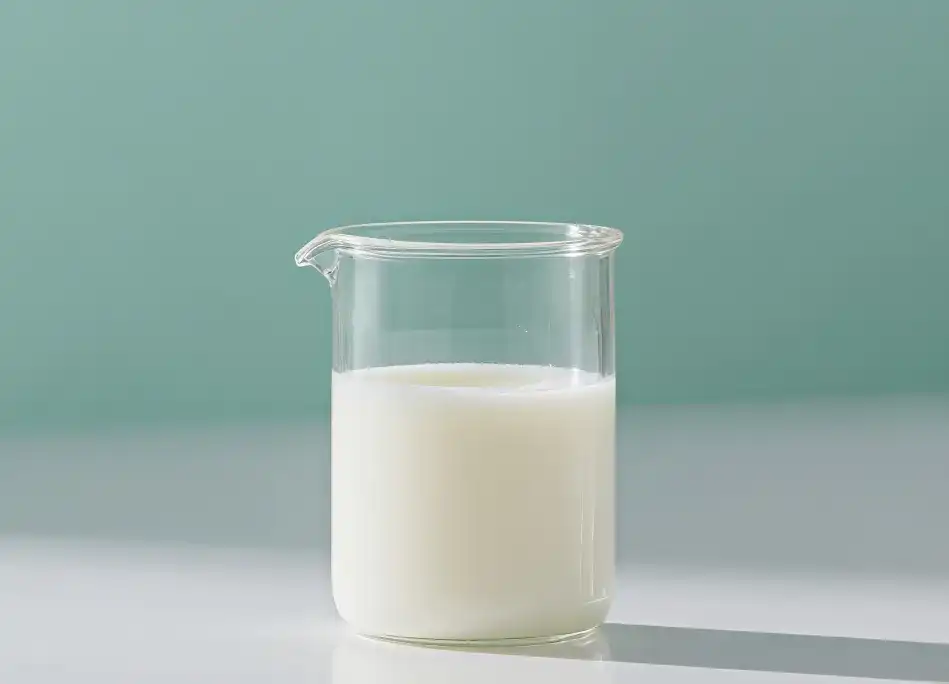
The base price of emulsion polyacrylamide is set by several manufacturing inputs that buyers can verify directly. Monomer quality and purity are the starting point. Acrylamide monomer produced via microbial technology, as at our own facilities, yields a polymer with fewer residual impurities and more predictable polymerization behavior. This upstream investment reduces post-treatment steps and raises base cost but strengthens lot-to-lot consistency.
Concentration and molecular weight are the other two levers. A 30% active content emulsion will price differently from a 50% concentrate, and not always proportionally. Higher active content reduces shipping weight and tank space per unit of polymer delivered, so the per-ton price may mask the delivered value. Molecular weight distribution matters as well. Uniform high molecular weight chains produce stronger flocculation at lower dosage rates, which translates into real field savings even when the invoice price is modestly higher.
Manufacturing scale and backward integration also compress cost. Our production capacity of 200,000 tons of emulsion polyacrylamide per year, supported by in-house acrylamide and acrylic acid production, means the base price is not inflated by intermediate supplier margins. For a buyer comparing field-use proposals, asking a supplier about monomer sourcing and annual output can reveal whether the base price includes avoidable middle-tier costs.
Comparing Anionic, Cationic, and Non-Ionic Emulsion PAM for Field Use
The ionic type determines not only flocculation mechanism but also the usable concentration range and field handling characteristics. I have observed that field operators who choose the cheapest per-ton PAM without matching ionic type end up adjusting dosage upward and extending settling time, erasing any upfront price advantage.
Anionic emulsion PAM is the workhorse for mining tailings, coal washing, and enhanced oil recovery operations with positive charge surfaces. It generally carries a competitive base price because the anionic synthesis route is mature and monomer costs are moderate. Field operators benefit from its high bridging efficiency across wide solid loading ranges. In remote copper mine tailings projects we have supported, anionic emulsion PAM at 35% active content provided stable flocculation with minimal mixing energy, keeping diesel generator runtime low.
Cationic emulsion PAM commands a higher base price because the cationic monomer is more expensive to produce and requires tighter process control to maintain charge density consistency. It is essential for municipal and industrial sludge dewatering where organic content is high. The field cost tradeoff is clear: a well-formulated cationic emulsion works at 20–30% lower dosage than a generic product, which offsets the higher unit price when shipping containers to distant wastewater plants.
Non-ionic emulsion PAM occupies a narrow but important niche. Its price sits between anionic and cationic grades. It is preferred in highly acidic process waters and paper retention systems where ionic interference would destabilize floc formation. Because non-ionic PAM is less sensitive to pH and salt loads, the field advantage is predictability—no need to reformulate when process water composition shifts seasonally.
| Ionic Type | Typical Active Content Range | Relative Base Price | Best Field Application | Key Price Driver |
|---|---|---|---|---|
| Anionic | 25–50% | Lower | Mining tailings, EOR water flooding | High-volume monomer cost advantage |
| Cationic | 20–50% | Higher | Sludge dewatering, organic-rich waste | Cationic monomer production cost |
| Non-ionic | 25–40% | Moderate | Acidic water, paper retention | Specialized but lower-volume demand |
Logistics and Shelf Life: The Real Field Cost Drivers
The distance from the manufacturer’s loading dock to the field injection point is the single largest cost amplifier I see in global supply. A 20-ton ISO tank container of anionic emulsion PAM priced at a competitive EXW rate can gain 25–35% in landed cost when shipped from East Asia to a West African gold mine or a South American copper operation. Ocean freight, inland trucking, customs clearance, and demurrage at the port each add layers that procurement teams should model before comparing base prices.
Shelf life and storage conditions compound logistics costs. Water-in-oil emulsion PAM is stable under sealed, temperate warehouse conditions for 6–12 months, but field storage rarely resembles a warehouse. Containers parked under direct sun in desert operations or exposed to sub-zero nights in high-altitude sites degrade product stability. I have analyzed cases where a lower-priced emulsion that arrived intact lost 15% of its flocculation efficiency within eight weeks due to temperature cycling in black-painted tanks. The corrective measure—insulated storage and FIFO rotation—adds an indirect cost of $3–5 per ton that belongs in any accurate price comparison.
The pour point and pumpability of the emulsion also determine whether the product can be handled with existing field equipment. A high-viscosity concentrate that requires heating in cold weather may save on per-ton price but consumes labor time, fuel, and specialized gear that erode cost advantages. Field programs in northern Kazakhstan and Canadian oil sands, for example, benefit from emulsions formulated with lower-temperature rheology, even at a slightly higher unit price, because the alternative is a heated storage module costing tens of thousands of dollars.
Field Performance: Dissolution Speed and Dosing Efficiency
The true value of an emulsion PAM product emerges at the mixing skid. Emulsion polymers are chosen over dry powder specifically because they dissolve in 5–15 minutes with minimal mechanical input, making them suitable for temporary treatment units, mobile dewatering trailers, and emergency spill response. A price comparison that overlooks dissolution speed under field water temperatures is incomplete.
When a field team uses river water at 4°C to make a 0.5% polymer solution, a standard emulsion may require 25 minutes to fully hydrate, while a cold-water-optimized emulsion hydrates in under 12 minutes. The faster product may cost 8–10% more per ton, but the operational gain is twofold: mixing tank capacity can be smaller, and batch cycle time drops, allowing higher throughput without additional capital. For a mobile mine water treatment unit processing 500 m³ per hour, a 10-minute difference in polymer maturation directly determines whether one or two mixing tanks are needed.
Dosing efficiency also links back to price. An emulsion PAM with a narrow molecular weight distribution produces stronger flocs at lower dosage rates than a broad-distribution product. In trials we have conducted with mining clients, switching from a generic anionic emulsion to a tightly controlled 30-million molecular weight grade reduced effective dosage from 12 ppm to 8 ppm while maintaining supernatant clarity. A buyer evaluating two quoted prices must convert those price-per-ton figures into a cost-per-treated-cubic-meter metric.
Evaluating an Emulsion PAM Supplier for Field Programs
Supplier selection for field-use emulsion PAM should shift weight from lowest-quoted price toward manufacturing reliability and logistics capability. A specialist manufacturer with in-house monomer production, multiple production lines, and a documented export track record to 60-plus countries can absorb demand fluctuations that would delay shipments from smaller compounders. For mine sites where a week of polymer shortage halts production, this stability has a concrete dollar value.
Certification and quality documentation are practical filters. The manufacturer should provide batch-specific certificates of analysis covering active content, molecular weight, dissolution time, and residual monomer. Field programs operating under ISO 14001 or regulatory discharge permits need this traceability without asking. I have seen too many projects where a low-cost supplier failed to supply consistent documentation, creating compliance headaches that no price discount could justify.
Technical support during start-up reduces total commissioning cost. An emulsion PAM that dissolves instantly in a lab beaker may behave differently when injected into a high-shear centrifugal pump recirculation loop at 35°C. Suppliers who offer remote or on-site mixing trials help field teams select the right concentration, injection point, and aging tank volume before full-scale deployment. That engineering time is built into the product margin of a serious manufacturer, and it is absent from a transaction-based supplier who can undercut on price because they underinvest in service.
If your field program involves cold-weather operations or extended supply chains, it is worth confirming the emulsion’s pour point and shelf-life specifications before finalizing a BOM. Reach out at en*****@***er.com with your site conditions for a technical consultation.
Total Cost of Ownership: Calculating Your True Price
A field-ready total cost of ownership model for emulsion PAM includes at least five line items beyond the per-ton chemical price: inbound freight to the site, any demurrage or port storage fees, on-site storage infrastructure amortization, mixing and dosing labor and energy, and waste handling for empty containers. I have advised procurement teams to treat the per-ton figure as 50–65% of the real delivered cost when the site is more than 1,500 kilometers from the discharge port.
A practical comparison begins with a side-by-side table for the three shortlisted products, listing active content, delivered price per active kilogram, recommended dosage for the target suspended solids, dissolution time at site water temperature, required mixing tank volume, and estimated shelf life under site storage conditions. Transforming price-per-ton into price-per-effective-kilogram flocculant delivered to the injection point reveals ranking reversals that unit-price comparison alone misses.
The final consideration is supply resilience. A product priced $50 per ton lower but sourced from a single production line 12 weeks away by sea freight creates a different risk profile than a product from a manufacturer running parallel lines with a regional stock point. For field operations that cannot pause, the cost of a polymer shortage equals the daily penalty of non-compliance, lost mineral recovery, or process shutdown. In our global supply network, we maintain buffer stocks at key transshipment hubs specifically for field programs that require uninterrupted delivery schedules. This logistics buffer is a cost we absorb because we understand that the cheapest emulsion PAM on paper becomes the most expensive one when it arrives late.
Field-Use Emulsion PAM Cost Questions Answered
An emulsion PAM with higher active content looks more expensive per ton. Is it worth it?
The answer depends almost entirely on transport distance and mixing system capacity. A 50% active content emulsion contains 66% more polymer per ton than a 30% grade. If the site is 2,000 kilometers from the port, the per-active-kilogram landed cost of the concentrate is typically 10–15% lower than the dilute alternative after factoring in freight and handling. However, if the field mixing system is sized for lower-viscosity fluids, the concentrate may require dilution hardware that cancels the saving. I recommend modeling freight and equipment costs together.
Does emulsion PAM cost more than dry powder PAM?
Per ton of active polymer, yes, because emulsion manufacturing is more complex and includes oil-phase components. But the operational cost picture flips when field preparation enters the equation. Dry powder requires an aging tank, dust control, and 45–90 minutes of maturation time, plus the labor to handle 25-kilogram bags. Emulsion PAM dispenses from a tote or bulk tank and hydrates in minutes with a simple static mixer. For temporary or mobile field units, the emulsion route eliminates a six-figure powder make-down system, making it the lower total investment.
How much should transportation cost factor into my price comparison?
For international field programs, transportation and logistics can add 25–40% to the EXW price depending on destination and urgency. I have tracked shipments where ocean freight alone accounted for 18% of the CIF cost and inland trucking to a remote mine added another 12%. Procurement teams should request a CIF or DAP quote, calculate the cost per active kilogram to the point of use, and use that as their comparison benchmark rather than the factory-gate price.
Is cold weather storage a hidden cost?
Yes, and it is one of the most overlooked cost items in emulsion PAM procurement. Standard water-in-oil emulsions thicken and can phase-separate after repeated freeze-thaw cycles. Sites that experience ambient temperatures below -5°C need either an insulated and heated storage module or a cold-weather-optimized emulsion with a lower pour point. The storage module may cost $15,000–$40,000 in capital and add ongoing energy and maintenance expense. A cold-weather emulsion may carry a 5–8% unit price premium, but it eliminates the storage infrastructure burden and the risk of product failure in winter months. For projects where winter operation is critical, I recommend factoring the cold-weather product premium against the storage investment, and choosing the lower total number.
Can I run a field trial before committing to a large order?
Yes, and I strongly recommend it. A proper field trial should include dissolution time measurement at the actual site water temperature, dosage optimization across the expected solids loading range, and a 30-day storage stability check under the site’s ambient conditions. We routinely support field trials for mining and oil field clients, shipping 1–2 totes of the candidate emulsion and providing remote mixing guidance. The data from these trials replace assumptions in the total cost of ownership model and often justify a product choice that a unit-price comparison alone would not support. If your team is preparing for a field trial, share your site conditions and water quality data; we can confirm the right emulsion grade and ship testing materials within two weeks.
If you’re interested, check out these related articles:
Selecting Anionic PAM Molecular Weight for Mining Efficiency
Industrial Acrylamide Aqueous Solution: Applications & Purity


 English
 Russian
 Arabic
 Spanish