
Sourcing a consistent, high-quality acrylamide solution is a foundational decision for any polymer production plant, water treatment chemical manufacturer, or oil recovery operation. The right supplier ensures uninterrupted production and predictable polymerization behavior, while the wrong choice introduces batch variability, storage risks, and costly downtime. I have spent fifteen years managing large-scale acrylamide and polyacrylamide manufacturing, and in that time I have seen procurement teams repeatedly overlook the single factor that most determines long-term supply reliability: the manufacturer’s actual production scale and vertical integration. This article explains what to verify before committing to a supplier, drawing from real production experience at Shandong Nuoer Biological Technology Co., Ltd.
Why an Acrylamide Solution Manufacturer’s Scale Determines Your Supply Stability
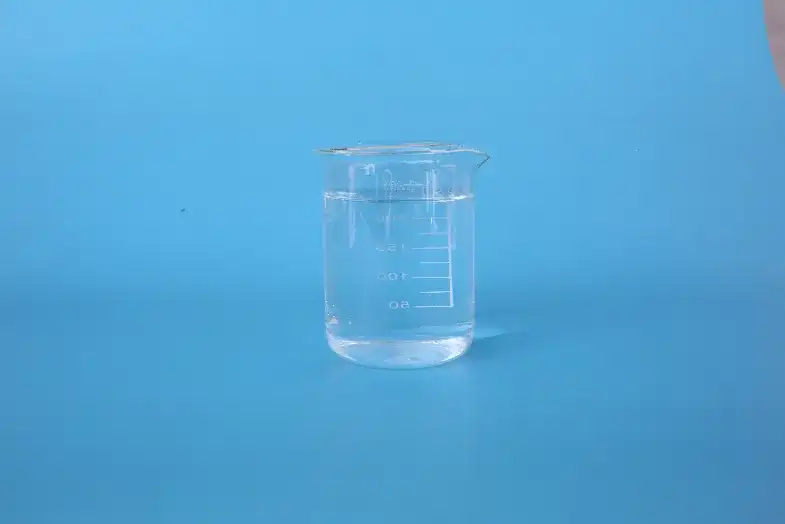
A manufacturer that runs a 300,000-ton annual acrylamide capacity behaves differently than a smaller compounder. Scale creates supply redundancy: when one line undergoes maintenance, another continues delivering. This is not theoretical. Our production scheduling is designed so that no single point of failure can halt output. For a buyer, that means your monthly order is not hostage to a single reactor.
Large-scale producers also manage raw material procurement differently. Acrylamide production requires a steady flow of acrylonitrile, and large-volume purchasing secures priority allocation during tight market cycles. I have seen smaller operators scramble when feedstock prices spike or availability tightens; we maintain buffer stocks and multi-source agreements that keep output steady. This insulation translates directly into more predictable lead times for your plant.
Verify a manufacturer’s scale by asking for total annual capacity, not just marketing numbers but the actual operating throughput. A credible supplier will share production records, line counts, and capacity utilization data. If those numbers cannot be provided with specificity, their “reliable supply” claim is built on hope rather than infrastructure.
Quality Parameters That Reflect Real Production Control
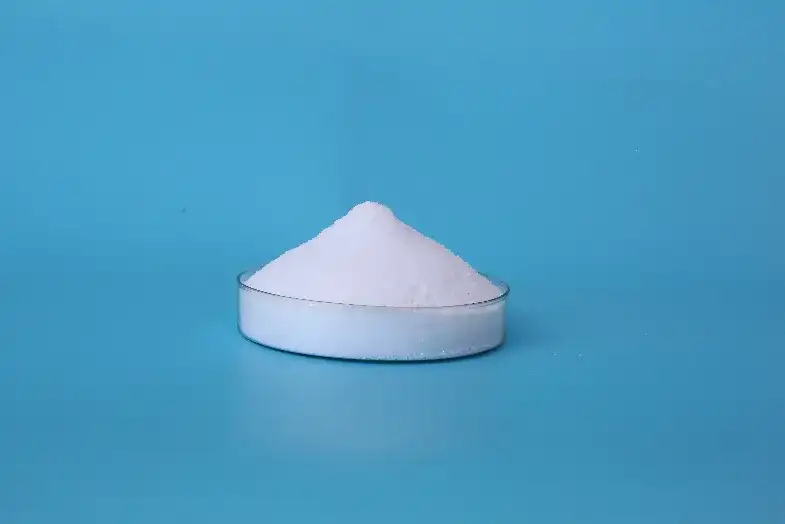
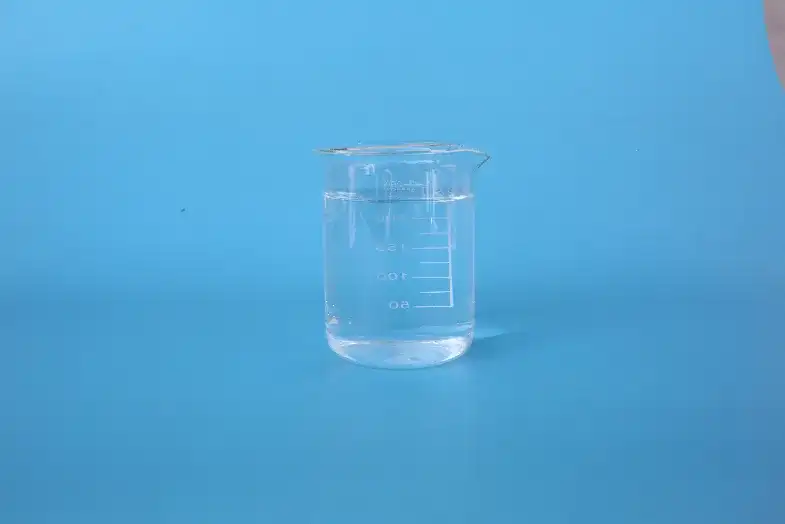
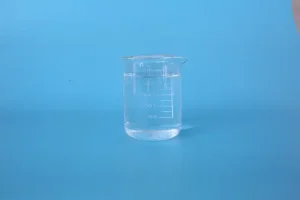
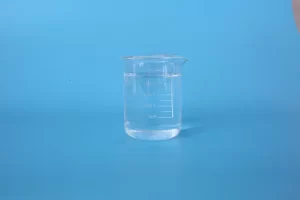
Bulk acrylamide solution is not a single-grade commodity. Different polymerization processes require different impurity profiles. The key parameters that affect your downstream product are acrylamide concentration, pH, conductivity, residual acrylonitrile, and inhibitor level. Our standard aqueous solution is offered at 28–30%, 38–42%, and 48–52% concentrations, each with tight conductivity ceilings (5–30 μS/cm depending on grade) and acrylonitrile below 0.1%. These numbers are not arbitrary; they are the result of continuous process optimization across hundreds of thousands of tons produced.
Conductivity is particularly revealing. High conductivity signals ionic contaminants that can interfere with initiator efficiency or final polymer molecular weight. A manufacturer with good internal control maintains conductivity in the single digits for premium grades. During a plant trial a few years ago, a customer using a lower-purity source saw a 12% drop in molecular weight consistency in their anionic polyacrylamide line. The issue disappeared when they switched to our ultra-low conductivity grade. That case taught me that the difference between “within spec” and “optimized for your process” can be invisible until production yields tell you.
When evaluating a supplier, request not just a certificate of analysis but a trend chart of the last twenty batches for acrylonitrile, pH, and conductivity. A manufacturer confident in its process will provide this without hesitation. If they only send the current batch COA, treat it as a red flag: single-point quality is easy to fake; consistent narrow-band quality requires genuine production discipline.
Vertical Integration and What It Means for Your Monomer Supply
The phrase “vertically integrated” is overused in chemical marketing, but with acrylamide it has a specific, verifiable meaning. A true integrated producer manufactures its own acrylamide monomer from acrylonitrile and then converts a portion into aqueous solution under one quality management system. We operate this way at Nuoer. Our 300,000-ton acrylamide capacity feeds internal polyacrylamide and superabsorbent polymer lines, meaning the solution you receive comes from a pool that also supplies our own downstream production. A manufacturer that consumes its own monomer internally has no incentive to cut corners at the monomer stage—because those corners would show up in its own finished products months later.
This integration eliminates one hidden risk in the supply chain: monomer storage degradation. Acrylamide monomer degrades over time, especially if storage temperatures fluctuate. A stand-alone solution supplier that purchases monomer on the open market inherits whatever age and storage history the monomer carries. An integrated producer with continuous monomer-to-solution flow keeps inventory turnover high and storage conditions controlled, because the monomer is not sitting in a tank waiting for a buyer. The monomer polymerized yesterday may be in your solution shipment this week. For sensitive applications such as high-molecular-weight flocculant production or specialty copolymers, that freshness matters.
If your program requires consistent molecular weight and low gel content, confirm that your supplier produces its own monomer. Ask to see the acrylonitrile-to-acrylamide process flow and monomer age tracking records. It is worth confirming this before finalizing your BOM, because downstream troubleshooting is far more expensive than upfront supplier qualification.
Logistics and Handling: What a Well-Organized Manufacturer Does Differently
Acrylamide solution is temperature-sensitive and has a limited shelf life under suboptimal conditions. A manufacturer serious about reliability designs its logistics around these constraints. We ship solution in dedicated, insulated tank containers or IBC totes with temperature tracking, and we advise customers on on-site storage tank specifications before the first order. This is not an add-on service; it is part of the technical support that comes with purchasing from a producer that understands the complete product lifecycle.
One operational detail that separates experienced manufacturers from newcomers is inhibitor management. Our solution can be supplied with inhibitor levels from 0 to 100 ppm depending on the customer’s polymerization start-up conditions and storage duration. A purchaser who fails to specify inhibitor needs risks receiving solution that either polymerizes prematurely in transit or underperforms at initiation. We saw this in a project where a tropical-region formulator experienced partial gelation during ocean freight because the supplier had not adjusted the inhibitor package for a 40-day journey. The formulation was correct for domestic supply but completely wrong for intercontinental logistics. We now factor destination climate, transit duration, and on-site storage into every inhibitor recommendation.
Before placing a volume order, discuss the following with your supplier: transit temperature limits, recommended tank material and cooling requirements, maximum off-loading time once the container arrives, and inhibitor customization options. A supplier that cannot address these points in detail is not managing acrylamide solution logistics; it is shipping it and hoping for the best.
How to Verify a Manufacturer’s Claims with Due Diligence
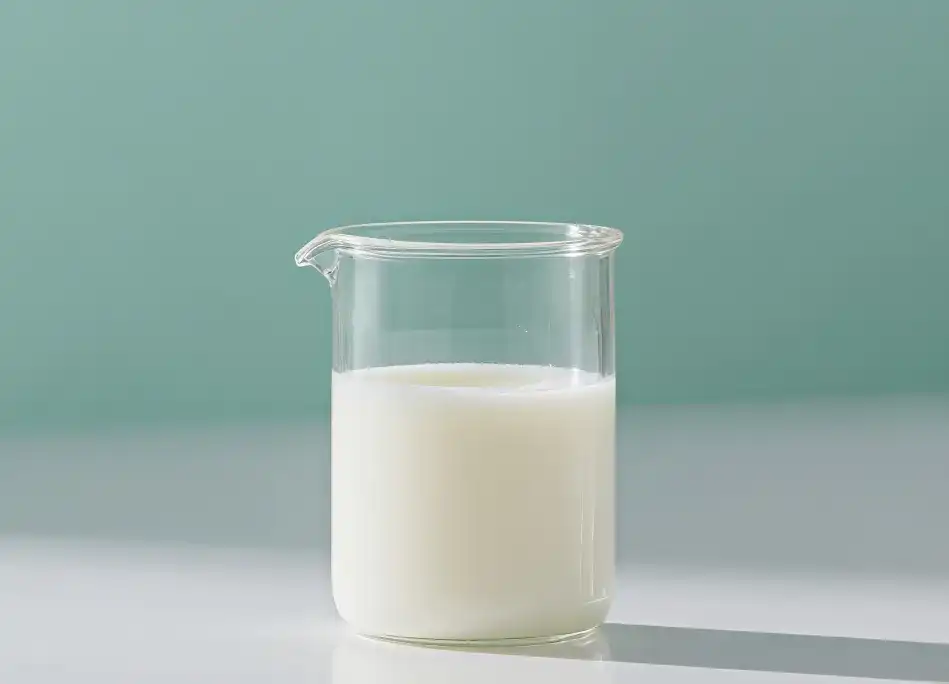
Over the years I have developed a short due diligence checklist that procurement engineers can use when comparing acrylamide solution manufacturers. It focuses on the few data points that reliably separate scaled producers from traders.
First, request a site visit report or, if a visit is impractical, a live video walkthrough of the acrylamide production line with the plant manager. A producer running at scale will have a dedicated acrylamide unit, not a multi-purpose batch reactor, and the control room logs will show continuous operation. Second, ask for a list of downstream product lines that consume the same monomer internally—such as polyacrylamide and superabsorbent polymer—and the annual input tonnage. This tells you whether the manufacturer’s quality system is tested on its own production outcomes. Third, review the transportation record for export shipments to your region over the past twelve months. A manufacturer that regularly moves acrylamide solution internationally understands documentation, customs clearance, and temperature management in a way that a first-time exporter does not.
These three checks—operational visibility, internal consumption, and logistics track record—form a practical reliability assessment that does not require a chemistry degree to interpret. If all three produce transparent, specific answers, the supplier is likely built for long-term partnership. If answers are vague or evasive, continue your search.
Common Questions About Acrylamide Solution Sourcing
What concentration should I choose for continuous polymerization?
It depends on your reactor design and initiator system. Most continuous polyacrylamide lines run well with 40% solution because it provides a good balance of monomer content and manageable viscosity at feed temperature. Plants using redox initiation may prefer 50% for faster kinetics, but this requires heated storage to prevent crystallization. If your facility is in a colder climate, 28–30% may be more practical because the freezing point is lower and bulk handling remains feasible without extensive tank heating. I recommend starting with a target concentration that matches your current process, then adjusting after baseline polymerization data is collected.
How do I compare quality between acrylamide solution suppliers when COAs look similar?
Do not compare a single COA. Request a moving-range control chart for conductivity and acrylonitrile content across at least twenty sequential batches, produced under routine operation. A manufacturer with a narrow range (low standard deviation) demonstrates process stability, while one with wide swings likely operates with less automated control. Two suppliers can both report acrylonitrile <0.1%, but if Supplier A averages 0.03% with a standard deviation of 0.01% and Supplier B averages 0.08% with a standard deviation of 0.05%, Supplier A is the safer choice for molecular-weight-sensitive applications. This is not visible on a single certificate.
Does sourcing from an integrated manufacturer actually lower my total cost?
In my experience, yes, but the savings appear in production consistency rather than invoice price. When your incoming monomer quality is stable, your polymerization initiator dosing, temperature control, and molecular weight targeting become repeatable. The result is fewer off-spec batches, less rework, and lower waste disposal costs. A $20-per-ton higher monomer price can easily be offset if your batch failure rate drops from 5% to under 1%. One polymer customer quantified this and found a net saving of 8% on total manufacturing cost after switching, even though the solution unit price was slightly higher. The cost of inconsistency is real but often invisible in procurement spreadsheets until it is measured.
How should I store acrylamide solution to maximize shelf life?
Store in a shaded, ventilated area away from direct sunlight and heat sources. The recommended temperature range is 15–25°C for standard stabilized grades. Tank material should be stainless steel 304 or 316, or HDPE with a UV-resistant outer layer. Ensure the tank is sealed with a nitrogen blanket if storage exceeds two weeks, as oxygen accelerates inhibitor consumption. Our technical team advises on tank sizing and inerting setup during the quotation process because storage conditions directly affect how the monomer performs in your polymerization system months later. If your on-site storage capacity is limited, we can also adjust inhibitor levels to match your turnover rate. Share your storage setup and expected consumption rate with us at en*****@***er.com or call +86-532-66712876, and we will recommend the right inhibitor level and tank configuration for your specific situation.
If you’re interested, check out these related articles:
Acrylamide Aqueous Solution: Factory Direct Purity & Supply
Nuoer Group donated 300,000 RMB to Rongzhuang Village to support hometown development.
Optimizing Acrylamide Aqueous Solution Strength for Industrial Efficiency


 English
 Russian
 Arabic
 Spanish