
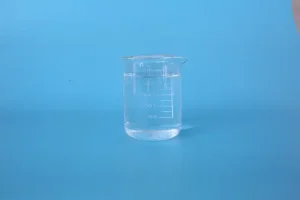
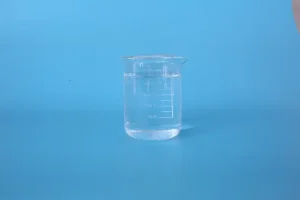
Comparing acrylamide aqueous solution pricing without checking concentration, residual acrylonitrile, conductivity, and inhibitor level creates a false cost picture. Two quotes at the same nominal price can differ by several percentage points in usable monomer after dilution or by production downtime if inhibitor content falls outside the workable range. I approach pricing as a specification problem first and a negotiation problem second. Buyers who shortlist by headline price alone often pay more per kilogram of polymerized monomer. The pricing levers below are what matter before an order is placed.
What Drives Acrylamide Aqueous Solution Pricing?
The quoted number reflects four main variables: active acrylamide content, the purity profile behind the content claim, the inhibitor package, and the delivered form. Active content determines how much usable monomer the buyer receives per wet ton. Purity determines how predictably that monomer enters the polymerization recipe. Inhibitor content determines how stable the material remains in transit and storage before it reaches the reactor. Packaging and logistics then convert the wet-ton price into a delivered dry-monomer cost.
I have seen buyers focus almost entirely on the concentration percentage and skip the conductivity line, which carries a real cost. Trace ions do not disappear at the tank farm. They carry into the reaction mass and can shift polymerization kinetics, broaden molecular weight distribution, or force a rework of initiator dosing. In our planning reviews, conductivity and the acrylonitrile limit are checked before a shipment is approved because both affect downstream product consistency more than small differences in headline price.
How Do Acrylamide Aqueous Solution Grades Change the Price?
Price moves with acrylamide concentration because freight moves with it. A 28–30% grade carries more water per ton of monomer than a 48–52% grade. That means the delivered cost per polymerizable kilogram matters more than the price per liquid ton. The same logic applies to storage: a lower concentration occupies more tank space for the same molar output.
| Cost driver | How it changes the quote | What to request from the supplier |
|---|---|---|
| Active acrylamide content | More monomer per wet ton raises nominal price but lowers freight per active kilogram | Grade-specific certificate of analysis |
| Conductivity range | Tighter ionic control requires additional purification and may carry a premium | The exact grade limit, not a generic range |
| Inhibitor package | Custom inhibitor levels affect storage and dosing windows | The inhibitor content that matches your polymerization controls |
| Packaging and logistics | IBC totes, drums, or tanker loads shift delivered unit cost | Fill weight, return logistics, and delivered terms |
The concentration alone does not tell a buyer whether the quote is fair. A 40% product with a loose inhibitor range can underperform a 30% product with tight purity control in a continuous process, and the production loss will exceed the apparent saving.
Which Grade Fits Your Polymerization Process?
The answer depends on three operating conditions: how the material is stored, how it is metered, and how much volume the line consumes each month. A continuous polymer plant with insulated storage and automated dosing is usually better served by the 38–42% or 48–52% grade because it reduces water handling and freight per active ton. A smaller batch operation or a research line may find the 28–30% grade easier to pump, store in totes, and use before the inhibitor window closes.
Temperature matters more than many buyers plan for. High-concentration acrylamide solution becomes more viscous as temperature drops. If the receiving area is not climate controlled, winter delivery of the 48–52% grade can slow discharge and add handling steps. That practical constraint can erase the freight saving.
If your polymerization line runs continuously and your storage area has a defined temperature range, confirm the maximum storage viscosity for the 48–52% grade before finalizing the bill of materials. Send your target concentration, monthly volume, and site temperature window to en*****@***er.com and we will match the grade to the operating conditions.
What Do Buyers Miss Before Accepting a Price?
The most common miss is comparing quotes that do not cover the same specification. One supplier may quote a 40% solution with conductivity below 5 µS/cm and an inhibitor level calibrated for long storage. Another may quote the same nominal concentration with conductivity up to 30 µS/cm and a minimal inhibitor package. The headline prices are not comparable because the first product is removing more variability from the buyer’s process.
A second miss is forgetting the delivered cost per active ton. A low FOB price on a 30% grade can become more expensive than a higher FOB price on a 50% grade once freight, tanker waiting time, and storage volume are counted. I have reviewed cost models where the apparent saving disappeared after the buyer converted the quotes into cost per polymerizable kilogram.
A third miss is capacity risk. A low price from a trading channel without consistent production allocation creates schedule risk on large orders. Buyers who polymerize continuously need more than a sample batch and a datasheet. They need a supplier that can repeat the same purity range across truckloads.
How Do You Compare Suppliers Without Losing Quality?
Start by freezing the specification before discussing price. Request the certificate of analysis with each quote and align the limits that matter to your reactor. For acrylamide aqueous solution, the checkpoints that matter remain acrylamide content within the agreed grade, acrylonitrile below 0.1%, acrylic acid below 0.3%, pH between 7.0 and 9.0, and the conductivity limit for that specific grade. The inhibitor content should be stated as a defined range, not left open.
Then compare source stability. A supplier with its own acrylamide production and a continuous manufacturing base can usually hold batch-to-batch consistency better than a reseller that pulls material from multiple origins. That matters when the buyer’s line cannot tolerate reformulation between orders.
Price differences often come down to whether the specification assumptions match. If one supplier quotes to 30 µS/cm and another to 5 µS/cm, the gap is not an apples-to-apples price difference. If you are comparing multiple suppliers and want a like-for-like basis, send your current certificate of analysis and monthly volume to en*****@***er.com or call +86-532-66712876. We will quote against the exact specification so the comparison holds.
What Do Buyers Ask About Acrylamide Aqueous Solution Pricing?
Can I use a lower concentration to reduce my price per ton?
In most cases no, because the apparent unit-price saving is offset by freight, storage, and handling on the extra water. The better comparison is delivered cost per kilogram of active acrylamide. A 30% solution may still be the right choice for a small batch line or a climate that restricts pumping, but the decision should come from the operating constraints. Otherwise the lower per-ton price hides a higher price per reacting monomer.
Is a higher conductivity limit ever acceptable?
Some buyers treat conductivity as a laboratory detail, but it is a process variable. Higher conductivity indicates more ionic impurities that enter with the monomer and can affect polymerization kinetics. It may be acceptable for less sensitive applications where the downstream product has wider tolerance. For tight molecular weight control or low-purity specification work, the lower conductivity grade is worth the premium because it removes a variable from the reaction.
Does inhibitor content change pricing enough to matter?
It depends on whether your polymerization controls are automated or manual. A defined inhibitor range can add production cost at the supplier and may appear as a small price difference. For buyers with long transit times or storage before use, that range matters more than the price gap because it prevents premature polymerization in the tank. For users who consume material quickly, a looser but still specified range can be the lower-cost option.
What should I request to compare quotes on the same basis?
When I review quotes, I ask buyers to fix four variables: exact grade and concentration range, conductivity limit, inhibitor range, and delivery terms. With that data, two suppliers can be compared on the same active-monomer basis. Share your target specification and monthly volume with en*****@***er.com and we will confirm pricing against the parameters that affect your process.
If you’re interested, check out these related articles:
Emulsion Polyacrylamide for Mining: Supplier Solutions
Water Flooding with Anionic Polyacrylamide: EOR Strategies
Acrylic Acid Suppliers: Quality Testing & Procurement Strategies


 English
 Russian
 Arabic
 Spanish