
Acrylamide crystal is the monomer foundation of industrial polyacrylamide production, and the choice of crystal quality directly shapes polymerization yield, molecular weight consistency, and long-term operating cost. In polymer manufacturing, even minor variations in purity, moisture, or inhibitor content can propagate into off-spec PAM batches, resulting in higher total cost than any raw material savings can offset. Drawing on more than fifteen years in large-scale acrylamide and polyacrylamide manufacturing, this guide narrows the procurement decision to the specifications, production technology, and supplier attributes that matter most when sourcing acrylamide crystal for continuous, reliable PAM output.
Why Acrylamide Crystal Quality Matters for PAM Production
In a polyacrylamide plant, acrylamide crystal is not a generic raw material; it is the building block that defines molecular weight, solubility, and flocculation performance. When a production manager sees a sudden drop in conversion rate or an unexplained shift in polymer properties, the monomer source is one of the first variables investigated.
We have observed across multiple production campaigns that crystal with elevated moisture, for instance, introduces uncontrolled water into the polymerization reactor, altering the effective monomer concentration and disturbing the reaction kinetics. Even small conductivity changes, often caused by trace ionic contaminants, can influence the ionic character of the final polymer and create batch-to-batch inconsistency that downstream customers notice. These quality problems are not academic. They translate directly into rework, off-spec product disposal, and delayed shipments, costs that far exceed the unit price difference between low-grade and high-consistency monomer.
A procurement decision that treats acrylamide crystal as a commodity ignores the real operating cost of poor polymerization. Our production planning data shows that the total cost of ownership, which includes yield loss, rework labor, and quality claims, consistently favors a crystal specification that provides tight control over moisture, pH, and inhibitor range.
Key Specifications to Evaluate When Buying Acrylamide Crystal
When comparing crystal suppliers, the certificate of analysis needs to be read as a polymerization compatibility document, not just a purity statement. The most important parameters and their practical impact are detailed below.
| Parameter | Specification (Typical) | Impact on Polymerization |
|---|---|---|
| Purity (GC) | ≥ 98.0% | Determines monomer content available for chain propagation; below 97.5%, inert material dilutes the reaction and may act as unintended chain transfer agents. |
| Moisture | ≤ 0.8% | Excess water reduces effective monomer concentration and can slow initiation rates in solution polymerization. |
| pH (10 g/L) | 6.5 – 7.5 | Influences initiator decomposition and polymer chain stability; outside this range, some initiator systems show erratic kinetics. |
| Inhibitor (MEHQ) | 3 – 10 × 10⁻⁶ | Required to prevent premature polymerization during storage and transport; too low risks gelling, too high quenches the reaction. |
| Conductivity | ≤ 20 µS/cm | Reflects soluble ionic impurities; higher values can affect ionic charge distribution in copolymers and increase residual monomer. |
| Iron (Fe) | ≤ 1 × 10⁻⁶ | Iron catalyzes side reactions and can discolor the polymer; especially critical for high-clarity applications. |
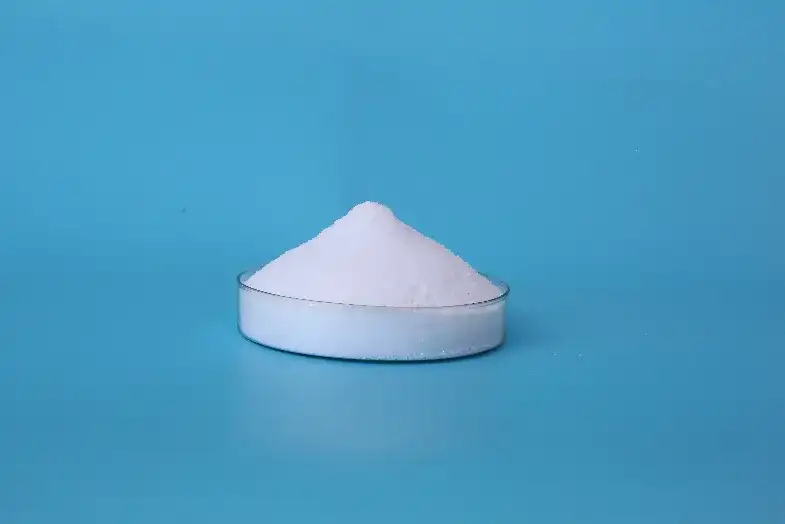
These numbers are not arbitrary. They represent the control band that microbial production technology achieves consistently across multi-ton batches. In our experience, buyers who focus only on the purity percentage often miss the combined effect of moisture and inhibitor balance. A crystal with 98.5% purity but 1.2% moisture may underperform a 98.0% crystal with 0.6% moisture because the latter delivers more predictable reaction behavior.
What Inhibitor and Moisture Levels Mean for Batch Control
Moisture and inhibitor act as opposing forces on polymerization. Moisture dilutes the monomer; inhibitor delays the reaction start. When both drift simultaneously, the operator cannot easily isolate the cause of a slow initiation or low conversion. That is why we recommend monitoring inhibitor content as part of incoming quality control, not just accepting the supplier’s range. For continuous polymerization lines, even a drift from 5 × 10⁻⁶ to 9 × 10⁻⁶ can alter initiation time by enough to disturb the process rhythm.
How Manufacturing Technology Influences Crystal Quality and Consistency
Conventional acrylamide crystal production routes, often based on copper-catalyzed hydration followed by crystallization, can leave trace metal residues and by-products that are difficult to remove without multiple purification steps. Advanced microbial technology, on the other hand, uses a biocatalytic conversion of acrylonitrile to acrylamide under mild conditions, producing a monomer stream with significantly lower inherent impurities before crystallization.
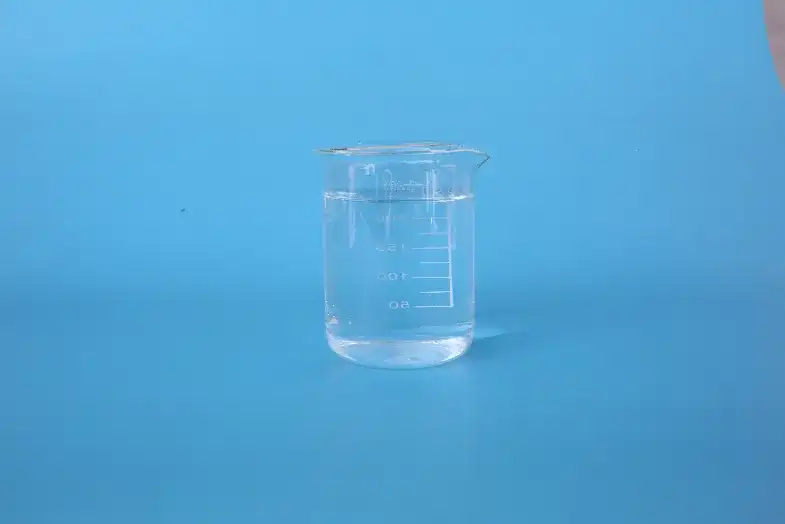
The result is visible in the conductivity and iron specifications. A microbial acrylamide crystal typically exhibits conductivity below 20 µS/cm and iron below 1 × 10⁻⁶, levels that are difficult to achieve consistently with traditional chemical hydration methods. For a PAM producer, this means less batch variation, fewer inhibitor adjustments, and a more predictable relationship between monomer input and polymer output.
Our production facilities have relied on microbial technology for over a decade, not because it is novel but because it provides the narrowest specification spread over thousands of tons of output. When a customer running a high-demand non-ionic PAM line for papermaking asks why their viscosity varies between lots, we can trace it back to the monomer quality, and the microbial route removes that variable from the outset.
If your PAM production involves high-demand applications like oil recovery or papermaking where batch consistency is non-negotiable, it is worth confirming how a supplier’s monomer quality control aligns with your polymerization process. Reach out to our technical team at en*****@***er.com to discuss specifications.
Crystal vs. Aqueous Solution: Making the Right Choice for Your Plant
Many PAM manufacturers face a practical choice between buying acrylamide in crystal form or as an aqueous solution. Both forms can produce high-quality polymer, but the decision involves logistics, storage, and process integration factors that vary by plant setup.
Acrylamide crystal offers clear advantages in storage stability. When kept cool and dark, the crystal product typically maintains specification for one to two years, giving the plant greater scheduling flexibility and reducing the risk of monomer degradation during supply chain disruptions. Crystal also ships at ambient temperature and does not require heated tanks, making it easier to handle in regions with limited infrastructure.
Aqueous solution, by contrast, eliminates the dissolving step at the polymerization facility and can simplify material handling for plants that consume large volumes continuously. However, solution products require temperature-controlled storage, have a shorter shelf life, and carry higher freight costs per unit of active monomer because water is being shipped.
In our experience supporting PAM producers across more than 60 countries, the crystal form tends to be the more robust choice for plants that run batch or semi-continuous processes and want to minimize monomer waste. The dissolving step adds some operator time, but the net economics usually favor crystal when freight, storage losses, and scheduling flexibility are included in the calculation.
Selecting a Reliable Acrylamide Crystal Supplier for Long-Term Production
Supplier selection goes beyond the initial certificate of analysis. Three areas deserve close evaluation: production capacity alignment, quality system transparency, and technical support depth.
A supplier who produces monomer at scale, with a consistent annual output of hundreds of thousands of tons, can offer supply security that smaller producers cannot match. When a PAM plant runs multiple reactors continuously, a monomer shortage stops the entire output, and the cost of downtime quickly dwarfs any price negotiation advantage.
Technical support matters equally. The best monomer suppliers are also polymer producers or have deep polymer expertise, because they understand how crystal specifications translate into PAM performance. They can help troubleshoot conversion issues, recommend inhibitor adjustments for specific initiator systems, and assist with dissolving and handling procedures that preserve monomer quality up to the moment of polymerization.
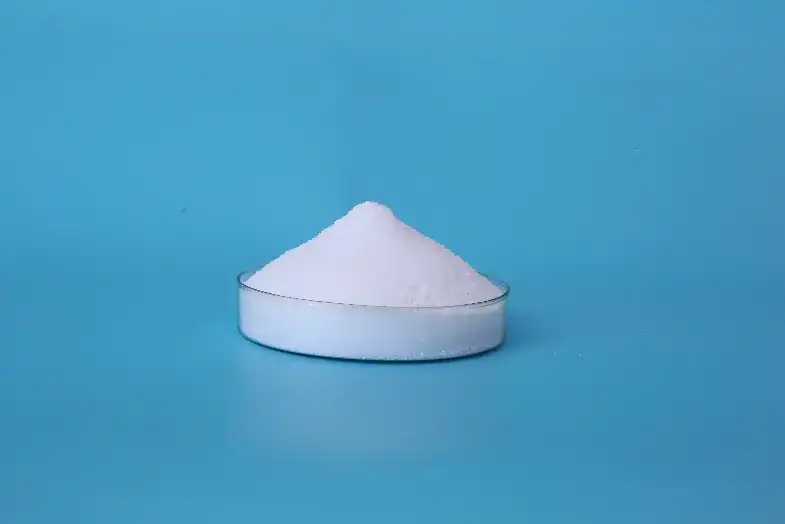
At Shandong Nuoer Biological Technology, our approach combines a production capacity of 300,000 tons of acrylamide annually with an in-house team of polymer specialists who see both sides of the monomer-polymer relationship. This dual perspective allows us to support customers not just as a raw material source but as a partner in production optimization. The global sales and after-sales network spans more than 60 countries, which means specification discussions, logistics planning, and technical inquiries happen in the customer’s time zone, with people who understand their local market requirements.
Moving from Evaluation to Supply
Sourcing acrylamide crystal is not a simple commodity purchase. The right monomer partner reduces polymerization risk and strengthens production economics over years of operation.
At Shandong Nuoer Biological Technology, we produce AM Crystal via proprietary microbial technology, delivering consistent purity above 98.0%, moisture below 0.8%, and conductivity under 20 µS/cm. Our global supply chain supports bulk deliveries to PAM manufacturers in over 60 countries, backed by technical service from polymer specialists who understand continuous and batch processes equally.
To discuss your specification requirements or request a current certificate of analysis, contact us at en*****@***er.com or call +86-532-66712876.
Common Questions About Acrylamide Crystal and PAM Production
What purity level do I need for general-purpose PAM production?
A purity of at least 98.0% is sufficient for most anionic and non-ionic polyacrylamide grades. In applications where polymer clarity, residual monomer content, or tight charge density control is critical, such as drinking water treatment polymers or high-end paper retention aids, a crystal with purity above 98.5% and low conductivity becomes more important. The practical decision often balances purity against total cost, but we recommend avoiding purity below 97.5% for any commercial PAM production because inert impurities dilute the reaction and can create chain irregularities.
Can I switch from acrylamide solution to crystal in my existing process?
Yes, and many plants do so to improve storage flexibility. The main adjustment is installing a dissolving vessel with adequate mixing and temperature control. Crystal dissolves readily in water, and the resulting solution can be fed into the polymerization reactor in the same manner as purchased aqueous acrylamide. The payback period on the dissolving equipment is often shorter than expected when reduced freight costs and lower monomer waste are calculated.
How should I store acrylamide crystal to maximize shelf life?
Store the crystal in a cool, dark environment, ideally below 25 °C, and keep containers sealed to prevent moisture absorption. Avoid exposure to direct sunlight and sources of heat, as both can accelerate inhibitor consumption. Under these conditions, a high-purity crystal product retains its specification for one to two years.
Is low iron content really important for my final product?
For many PAM applications, iron below 1 × 10⁻⁶ is not a hard specification. However, when the polymer is used in high-clarity water treatment, papermaking, or textile sizing where color is a quality parameter, even trace iron can cause noticeable yellowing. Additionally, iron can catalyze oxidative degradation of the polymer over time. If your end customers have visual appearance standards, specifying low-iron monomer is a simple way to remove a cross-link and discoloration risk.
What separates a reliable crystal supplier from a transactional one?
A reliable supplier demonstrates consistency across many lots, not just one certificate of analysis. They produce monomer at a scale that can cover your demand peaks, maintain open communication about specification trends, and offer technical support that extends beyond the purchase itself. A transactional supplier may meet a single price point but lacks the operational depth to support production troubleshooting. Over multiple years, the consistency and technical partnership deliver more value than short-term price advantage. Share your process parameters and we can help confirm the monomer form and specification that best fit your polymerization line.
If you’re interested, check out these related articles:
Emulsion Polyacrylamide Concentration Selection Guide
Trusted Anionic Polyacrylamide Manufacturer Global Solutions


 English
 Russian
 Arabic
 Spanish