
A pH swing across neutral is where most polymer programs fail. Amphoteric PAM in a wide pH range comparison usually focuses on product labels, but the real comparison is charge balance under process conditions. Single-charge polymers lose bridging strength as the stream moves away from their optimal pH, while amphoteric polyacrylamide carries both positive and negative groups along the same chain. That dual character changes selection, dosage, and dewatering behavior. I evaluate these materials from production planning and global supply experience at Shandong Nuoer Biological Technology Co., Ltd.
Why Does Amphoteric PAM Hold Up in a Wide pH Range?
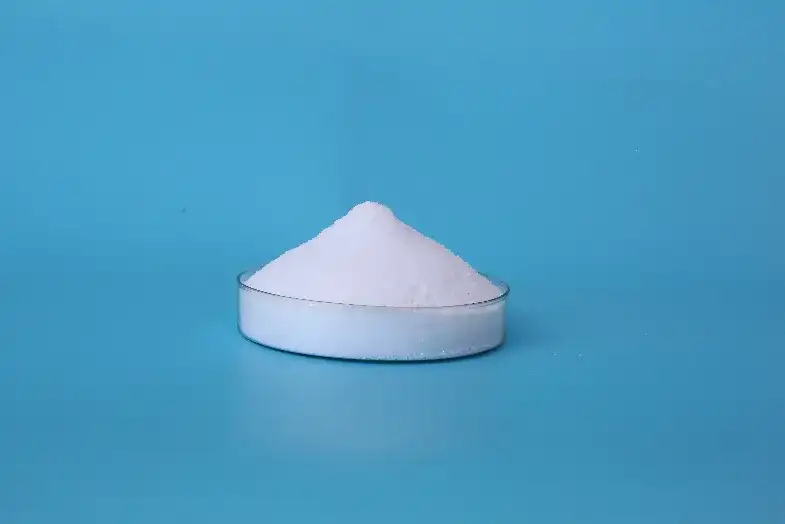
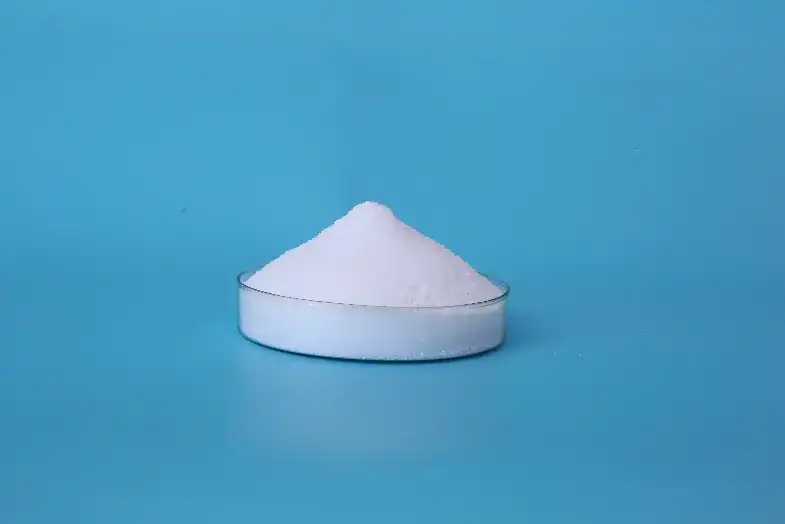
Amphoteric polyacrylamide is a ternary copolymer made from cationic monomers, acrylamide, and a hydrolyzing agent. Because the polymer chain carries both positive and negative charges, amphoteric PAM does not depend on a single ionic condition. In acidic water, the cationic ammonium groups continue to attract negatively charged particles. In alkaline water, the carboxylate groups remain active against positively charged colloids. A conventional anionic PAM loses its anionic charge strength at low pH, and a conventional cationic PAM can lose effectiveness as pH rises. The amphoteric structure gives the same chain a broader working window. This is why amphoteric PAM appears most often in mixed effluent, refinery desalter water, dye wastewater, and sludge dewatering where the feed changes within a single operating shift. Fast dissolution also matters in these applications. Our amphoteric PAM line is produced to shorten mixing time in plants that cannot wait for long aging steps.
How Does Charge Reversal Change Amphoteric PAM Performance?
Charge reversal is the main failure point that pH descriptions miss. A polymer that works at pH 7 can drop in floc size and settling rate at pH 5 because the surface charge on the solids has changed direction or density. Amphoteric PAM resists this because charge reversal on solids does not remove all binding sites from the polymer. The positive and negative groups on the chain can still find a usable path to bridge particles.
What Happens When pH Crosses the Isoelectric Point?
At the isoelectric point, the net charge on an amphoteric polymer moves toward zero, and flocculation force can weaken. This does not mean amphoteric PAM stops working, but a fixed dosage may no longer be right. I have evaluated samples where a jar test cleared at pH 7 but produced a loose floc at pH 4 because the anionic carboxylate groups were partially protonated. In those cases, a small dosage increase or a grade with a higher cationic charge fraction restored settling. The correction is specific to charge density and solids loading, not a generic pH formula.
Does Dosage Need to Change With pH Swings?
Dosage almost always needs a band, not a single setpoint. At acidic pH, more amphoteric PAM may be consumed by soluble organics or metal ions in the water. At alkaline pH, the same grade may reach a clear endpoint at a lower dose. A treatment program that locks one dosage across a shifting stream will drift between underdosing and overdosing. We run bench tests at pH 4, 7, and 10 when qualifying a new amphoteric PAM grade. The materials that only clear the neutral point are removed from evaluation before any pilot work. That screening step saves more time than a supplier specification sheet.
Where Does Amphoteric PAM Outperform Single-Charge Polymers?
| Polymer type | pH behavior | Main limitation |
|---|---|---|
| Amphoteric PAM | Maintains flocculation across acidic, neutral, and alkaline streams | Higher unit cost than specialized single-charge grades |
| Anionic PAM | Strongest in neutral to alkaline water | Weak under acidic conditions |
| Cationic PAM | Strongest in acidic to neutral water | Loses efficiency in high-pH water |
| Non-ionic PAM | Less affected by pH and salts | Fewer ionic binding sites for charged solids |
The table shows the practical trade-off. Amphoteric PAM earns its position when the same process line receives multiple waste streams, or when a neutralization step drifts. A metal finishing plant may run acid rinses in the morning and alkaline cleaners in the afternoon. A refinery desalter can swing from low-pH wash water to high-pH brine. In these cases, switching between anionic and cationic grades creates inventory and operator burden. Amphoteric PAM lets the plant keep one primary product in the program.
That said, a stable and simple stream does not always justify amphoteric PAM. If the pH consistently stays above 8, a high-molecular-weight anionic PAM may offer a better cost position. If the stream is consistently acidic and the solids are negatively charged, a dedicated cationic PAM may be the sharper choice. The amphoteric PAM advantage is specific: variable pH, mixed charges, or frequent feed changes.
If your plant runs a stream that moves across neutral and you are comparing amphoteric grades, it is worth confirming charge balance and molecular weight at both pH endpoints before fixing the BOM. Send your pH profile and current polymer consumption to en*****@***er.com.
What Should a Buyer Compare Before Selecting Amphoteric PAM?
Selection should move beyond the data sheet. Four factors separate a paper comparison from a field-ready specification: charge balance, molecular weight, form, and production consistency.
Charge Balance and Molecular Weight
Charge balance determines where amphoteric PAM remains soluble and active as pH moves. Molecular weight determines bridging reach and floc strength. High molecular weight gives the long chain needed to settle coarse solids; moderate molecular weight can tighten sludge in certain dewatering presses. I treat these two parameters together because a high charge density with low molecular weight may not deliver the settling distance a clarifier needs.
Powder Versus Emulsion Amphoteric PAM
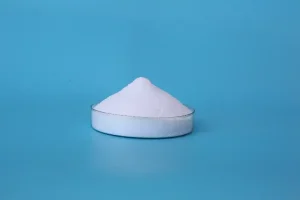
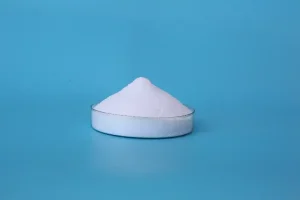
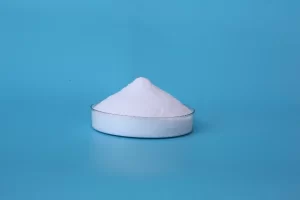
Powder grades store and ship efficiently for large programs. Emulsion grades dissolve in 5 to 15 minutes and are easier to meter where labor is limited, but they carry different storage and freezing requirements. If the site has good dry polymer preparation equipment, powder is usually the more economical route. If the site needs fast activation and low dust, emulsion is the stronger choice. The decision should follow plant logistics as much as water chemistry.
Production Consistency and Supply Stability
Amphoteric PAM is a specialty polymer, so charge balance can shift between suppliers if the copolymerization is not controlled. We control the cationic monomer supply internally, which gives us the ability to match a specification across repeat orders. Buyers should request a certificate of analysis that includes charge density, molecular weight, dissolution time, and residual monomer, then compare those values against the approved sample.
How Can We Confirm Your Amphoteric PAM Specification?
Selecting a polymer for variable pH is not a one-line decision. Charge balance, molecular weight, physical form, and dissolved solids interact, and a clay fraction or oil carryover can change settling behavior more than the pH reading alone. We can reduce that uncertainty. Send your water analysis, pH range, flow rate, and target solids, and we will recommend an amphoteric PAM grade and a dosage band. Email en*****@***er.com or call +86-532-66712876 with your stream profile. We will run the screening at pH 4, 7, and 10 before you commit to a full order.
What Do Buyers Ask About Amphoteric PAM in pH Shifting Streams?
Is Amphoteric PAM Always the Best Choice for Wide pH?
No. The best choice depends on how wide the pH range actually is and how often the stream shifts. If pH stays between 6.5 and 7.5, a single-charge polymer can work well and carry a lower cost. Amphoteric PAM becomes the stronger choice when the stream crosses pH 6 or 8 regularly, when the charge on the solids changes, or when the plant wants one primary product across mixed feeds. The right comparison is not a general label; it is jar testing at the plant’s actual pH endpoints.
Does Amphoteric PAM Work in Highly Saline Water?
Many buyers assume salinity cancels out polymer charge. That is not exactly what happens. High dissolved salts compress the electrical double layer around particles, which can reduce the repulsion that stabilizes suspended solids. In some saline streams this makes flocculation easier, but it can also change polymer solubility and require a higher molecular weight or a different charge balance. We test both pH and conductivity because an amphoteric PAM that clears fresh water may behave differently in a desalter brine or produced water. Jar tests with the actual salt background are the only reliable screen.
How Do I Know If My pH Probe Reading Is Enough?
A pH probe gives the current value, not the full range the clarifier sees. I ask for at least 48 hours of readings, including start-up, cleaning cycles, and shift changes. A once-a-day reading misses acid dumps and alkaline washes that move the stream far outside the average. If the data shows swings of more than one pH unit in either direction, the evaluation should include bench tests at the low, midpoint, and high values. That approach matches the actual operating envelope better than a single grab sample.
What Specification Should I Send for a Grade Recommendation?
From our evaluation work, the most useful submission includes five items: full pH profile, conductivity, suspended solids concentration, flow rate, and current polymer type with dosage. Without those, a supplier can only quote a general product. With them, we can match charge balance and molecular weight to the solid-liquid separation step you are running. If the stream carries oil, clay, or spent metal salts, note that too because those fractions shift flocculant demand. Share your requirements and we will confirm which amphoteric PAM specification fits before you commit to a trial.
If you’re interested, check out these related articles:
Amphoteric Polyacrylamide for Refineries: Advanced Treatment Solutions
Cationic Polyacrylamide Factory Direct Supply: Unrivaled Performance
Acrylamide Crystal Purity for Large-Scale Polymer Synthesis


 English
 Russian
 Arabic
 Spanish