
Emulsion polyacrylamide quality tests reveal whether a manufacturer can repeat the same high molecular weight, fast dissolving product after the sample batch is gone. Buyers who skip this step often approve a laboratory result and then receive production material that behaves differently in the field. I look at dissolution time, molecular weight distribution, and batch documentation as three early gates. A supplier that cannot produce this data is not ready for a serious purchase, regardless of the price it quotes.
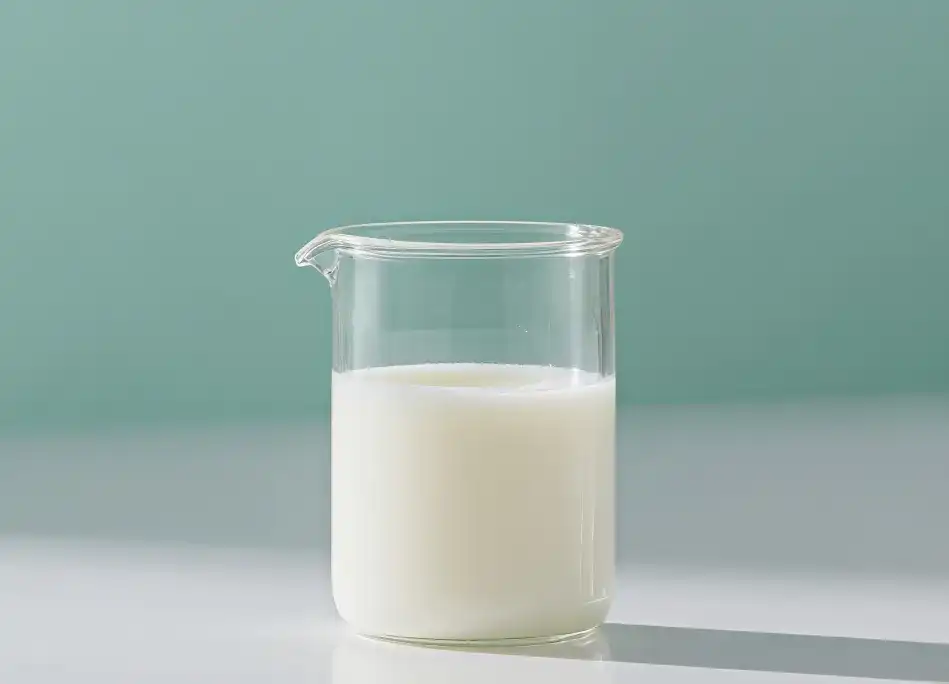
Which Raw Specifications Should Emulsion Polyacrylamide Quality Tests Verify?
Quality testing starts before any laboratory instrument is switched on. The manufacturer’s product data sheet should state the charge type, molecular weight target, active content, and dissolution window. For emulsion polyacrylamide, charge type determines whether the product will flocculate the suspended solids in your water or sludge. A cationic emulsion suited to municipal sludge can be the wrong choice for an acidic mining stream, and a mismatched charge type is usually visible only after the flocculation test fails. I treat unclear product data as a screening rejection. It is cheaper to stop at the specification stage than to run days of jar tests on a product that cannot match the application.
Which specifications should buyers request first?
Buyers should ask for three items before sampling begins: ionic charge and density stated as a measurable percentage, molecular weight range as the main driver of bridging flocculation, and dissolution requirement under defined mixing conditions. When one of these is missing, the rest of the test program loses its reference point.
| Test parameter | What it reveals | Red flag |
|---|---|---|
| Dissolution rate | Whether the polymer hydrates quickly in plant conditions | Incomplete dissolution after 30 minutes |
| Molecular weight distribution | Flocculation strength and drag reduction potential | Broad distribution with low retained viscosity |
| Residual monomer | Product safety and environmental compliance | High residual acrylamide without a batch certificate |
| Emulsion stability | Storage and transport reliability | Phase separation or settling inside the stated shelf life |
| Charge type and density | Match between product and solids stream | Test report does not match the product label |
| Field performance | Actual solids removal or water release | Laboratory result does not repeat in the plant |
Why Does Manufacturing Capacity Affect Emulsion Quality?
A single passing test tells you about one batch. The more useful question is whether the manufacturer can reproduce that result across thousands of tons. Production scale matters because emulsion polyacrylamide is sensitive to raw monomer quality, reactor control, and emulsifier stability. At our production base, annual capacity reaches 200,000 tons of polyacrylamide emulsion, and the surrounding acrylic acid and acrylamide capacity keeps the main raw materials under one quality system. That integration lowers the chance of batch to batch drift from outside monomer purchases. Buyers evaluating a manufacturer should not accept a laboratory result without asking how many tons of the same product the plant has delivered in the past year.
This link between scale and repeatability shows up in complaint histories. When I review a quality failure, the root cause is rarely one bad test. More often it is a raw material substitution that was not visible to the buyer, or a reactor campaign that pushed output before the emulsifier had stabilized. A manufacturer that runs continuous campaign production can isolate those problems because the process data stays under its control.
How Does Dissolution Rate Testing Separate Reliable Emulsion Polyacrylamide?
Dissolution rate is the first field test that exposes formulation quality. Emulsion polyacrylamide is made as a water in oil system, and it must invert quickly when it contacts dilution water. A reliable product should become ready to use within 5 to 15 minutes under normal mixing. I have seen plants reject good polymer not because the chemistry was wrong but because the operators added water too fast, flipped the emulsion order, or skipped the aging step. Before a buyer blames the product, the test procedure needs to match the manufacturer’s stated mixing conditions.
What does the 5 to 15 minute dissolution window actually verify?
It verifies that the emulsion inverts under controlled shear and releases the polymer into solution without leaving gel particles. A product that dissolves slowly can still flocculate in a laboratory beaker, but it will underdose in a plant where retention time is fixed. The test should therefore be run at the same shear rate, water temperature, and dilution ratio the plant will use.
How does molecular weight distribution affect field performance?
High molecular weight alone is not enough. A narrow distribution gives more predictable bridging between particles, while a broad distribution can leave short chains that compete for surface sites without building floc strength. When we compare production batches, I look at the retained viscosity after complete dissolution as a practical indicator. If two products have the same labeled molecular weight but one shows a much lower retained viscosity, the difference will appear later as higher dosage demand.
What Batch Documentation Proves Quality Tests Are Systematic?
Passing a quality test is different from proving that the manufacturer tests consistently. The batch record should exist for every lot, not just the qualification sample. A complete record includes the production date, reactor batch number, raw monomer lot, charge density, residual monomer, and dissolution check. Buyers often receive a glossy certificate that repeats the product name and a single viscosity number. That is not a quality test. It is a summary of one instrument reading.
What should a complete batch certificate include?
A useful batch certificate ties the product to the process. It should list the monomer batch, the reactor campaign, the measured charge, the residual acrylamide result, the dissolution time, and the storage stability condition. When one of those items is missing, the buyer cannot trace a future field problem back to a production variable. I treat the presence of a full batch record as the clearest signal that a manufacturer has a quality system rather than a quality slogan.
If your program involves variable feed solids or seasonal temperature swings, it is worth confirming the dissolution curve under your worst operating condition before finalizing the specification. Send your water analysis and target dosage to en*****@***er.com, and we will check which emulsion polyacrylamide grade holds its dissolution time in that window.
How Does Field Trial Planning Turn Emulsion Quality Data into Performance?
The laboratory results only become useful when they are connected to a plant trial plan. Start with one confirmed grade, then set three trial points around the expected dosage rather than testing many products at a single dose. Record sludge volume, supernatant clarity, and polymer consumption under normal plant flow. Emulsion polyacrylamide should be compared against the same charge type and similar molecular weight, not against a powder product with a different polymer architecture. A trial that mixes variables will not tell you whether the product failed.
A supplier that is serious about quality will also define the failure conditions before the trial starts. We do this with customers by agreeing on dosage, mixing energy, and retention time. If the product does not meet those conditions, we stop the trial and investigate rather than push for a larger order. That discipline protects the buyer from spending plant time on a product that only works in the laboratory.
For buyers ready to move from test data to a supply decision, the next step is to confirm the dissolution window, residual monomer, and batch traceability against your own incoming inspection plan. Share your target solids range and required dosage at en*****@***er.com or call +86 532 66712876, and we will confirm which emulsion polyacrylamide grade fits the application before a trial is scheduled.
What Questions Should Buyers Ask About Emulsion Polyacrylamide Quality Testing?
Why do some emulsion polyacrylamide products dissolve faster than others?
Dissolution speed depends on the emulsifier system and the polymer molecular weight distribution. A well formulated water in oil emulsion inverts quickly when it contacts dilution water, releasing the polymer without forming gel particles. Lower active content products sometimes appear to dissolve faster simply because there is less polymer to hydrate. The test should compare dissolution time at equal active content and under the same mixing energy; otherwise the comparison is misleading.
Is a laboratory flocculation test enough to approve a manufacturer?
A laboratory flocculation test alone can give a buyer false confidence. It confirms the charge type and basic flocculation performance, but it cannot reproduce plant shear, temperature change, or storage age. Batch documentation and production scale should sit alongside the jar test. A manufacturer that can only supply a single favorable laboratory result has not yet demonstrated repeatable quality for volume supply.
What residual monomer level should buyers accept?
The acceptable level depends on the end use and the receiving water limit. A responsible manufacturer should state residual acrylamide on the batch certificate and keep it low enough for the intended water or sludge contact conditions. If the data sheet lists the monomer content, compare it lot to lot during incoming inspection. A missing or rising residual monomer value is a stronger warning than a single number outside a marketing brochure.
How do we compare emulsion products from different manufacturers?
Compare by dry active polymer cost, not by price per drum. Emulsion products contain different active contents, so the cost calculation must convert each offer to the same dry active basis. Also compare charge type, molecular weight, dissolution time, and residual monomer lot by lot. Share your water conditions and required dosage, and we will confirm which grade can be compared on an equivalent delivered cost basis.
If you’re interested, check out these related articles:
Amphoteric Polyacrylamide: Powder vs Emulsion Performance
Nuoer Biotechnology was awarded the title of “Outstanding Taxpayer in Dongying City in 2025”
Glacial vs Technical Grade Acrylic Acid: Purity and Performance
Selecting a Reliable Acrylic Acid Manufacturer for Quality


 English
 Russian
 Arabic
 Spanish