
Acrylamide solution in continuous polymerization succeeds or fails on feed consistency, not monomer availability. We run continuous polyacrylamide lines where small drift in concentration, inhibitor level, or feed temperature changes polymer molecular weight before the quality lab catches it. The practical work is selecting a concentration grade that fits the reactor, controlling the composition at receiving and feed stages, and qualifying a supplier whose batch records hold up over repeated deliveries. Those three controls matter more than any single specification on a certificate of analysis.
What Makes Acrylamide Solution Suitable for Continuous Polymerization?
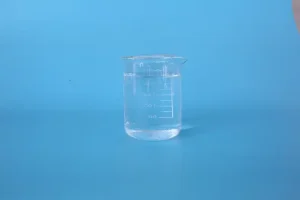
A continuous polymerization reactor does not forgive uneven monomer feed. Dry acrylamide crystal must be dissolved, filtered, and held at temperature before it can enter the feed train. That sequence adds time and creates opportunity for concentration error, fine undissolved particle carryover, and dust exposure. Aqueous acrylamide solution removes that preparation stage because it arrives as a liquid and can be metered directly into the reaction system. In our plants, that direct feed path is the main reason we use acrylamide solution for continuous polyacrylamide production rather than dry crystal.
Beyond physical form, the product has to be clean enough not to introduce variable reaction behavior. We look at conductivity, color, pH, and the levels of acrylonitrile and acrylic acid. A solution with a stable conductivity profile behaves predictably across shifts. A conductivity reading that drifts between deliveries is often the first sign that ionic contamination will move reaction kinetics before any other measurement changes.
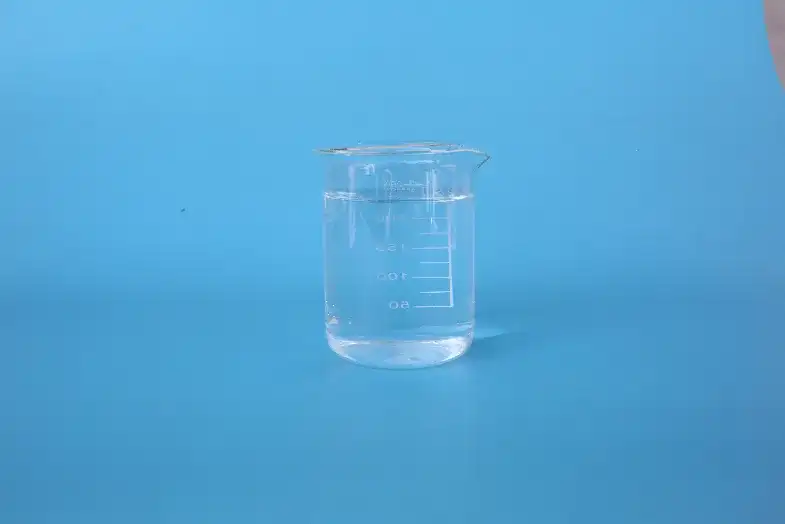
For continuous operation, the suitable product is not simply high purity. It is a solution with a narrow specification band and a production process that repeats that band. Typical commercial acrylamide solutions are supplied at 25 to 50 percent concentration, with acrylamide content commonly in ranges around 28 to 30 percent, 38 to 42 percent, or 48 to 52 percent depending on the grade. A producer that controls residual acrylonitrile, acrylic acid, pH, conductivity, and inhibitor level from batch to batch removes much of the variation that breaks a stable continuous line.
Which Acrylamide Solution Concentration Fits a Continuous Line?
The right concentration depends on heat removal capacity, downstream drying load, and the viscosity the feed system can handle in cold weather. Higher concentration reduces water in the recipe and lowers transport cost per tonne of active monomer. It also narrows the safe operating window because less water means less thermal buffering and a greater risk of localized temperature rise in the feed train.
| Concentration range | Operating advantage | Continuous line consideration |
|---|---|---|
| 28 to 30 percent | Lower viscosity and easier cold-weather pumping | More water in the recipe; may increase downstream drying load |
| 38 to 42 percent | Balanced monomer-to-water ratio and steady metering | Fits many continuous polyacrylamide reactors with standard heating and cooling |
| 48 to 52 percent | Lower water and freight per tonne of active monomer | Needs tighter inhibitor, pH, and temperature control to avoid feed-line gel formation |
In our production planning, we treat concentration as a process variable, not a purchasing preference. A plant with tight reactor cooling capacity may be better served by a 38 to 42 percent grade even if 50 percent looks cheaper per tonne. The lower heat release profile and wider temperature tolerance usually win back the added water removal cost if the alternative is feed-line upsets or off-spec molecular weight.
How Does Solution Composition Affect Polymerization Control?
Composition is the part buyers often compress to purity, but continuous polymerization responds to several separate parameters. pH changes the behavior of acrylate and amide species in aqueous medium. Conductivity reflects the total ionic load, which can shift reaction kinetics and final molecular weight. Residual acrylonitrile and acrylic acid are more than specification line items; they can act as chain-transfer or rate disturbances if their concentration moves outside the expected range.
We use the product specification as a control window, not a pass-fail stamp. Typical receiving checks on our acrylamide solution include an inhibitor range from 0 to 100 ppm, pH from 7.0 to 9.0, conductivity from 5 to 30 μS/cm depending on grade, acrylonitrile at or below 0.1 percent, and acrylic acid at or below 0.3 percent. No single value matters by itself. What matters is whether every delivery sits in the same narrow band. A supplier that alternates between the low and high end of an allowed range will eventually force the plant to adjust initiator or temperature settings against a moving target.
What happens when inhibitor level drifts in a continuous reactor?
Inhibitor controls the induction period and prevents premature polymerization. If inhibitor drifts high, initiation is delayed and the reaction may not complete in the designed reactor length, leaving elevated residual monomer. If inhibitor drifts low, polymerization can start in storage or feed piping before the monomer reaches the reactor. Both failure modes look different in the control room. The high-inhibitor failure shows up as low conversion and off-spec molecular weight. The low-inhibitor failure shows up as rising feed-line pressure, gel particles, or a blocked strainer. We track inhibitor level as a key handoff point because it is one of the few parameters that can stop a continuous line without any visible change in the delivered solution.
If your continuous line uses a low-initiator formulation or a tight residual monomer limit, the supplier’s inhibitor and conductivity profile sit upstream of every reactor adjustment. Confirm both before locking feed ratios: send your target concentration and process temperature to en*****@***er.com.
What Storage, Feed, and Supplier Controls Keep Continuous Lines Stable?
Storage and feed discipline matter as much as the certificate of analysis. Acrylamide solution should be stored away from heat and ultraviolet light. Tanks should be arranged to prevent dead zones where slow-moving liquid can sit long enough for inhibitor depletion and gel formation. We keep bulk storage under controlled temperature and recirculate or agitate the tank enough to avoid stratified concentration.
Feed control starts with mass flow rather than volume guessing. A calibrated mass flow meter gives a stable mass of monomer per minute, and a strainer upstream of the meter catches gel particles before they reach the dosing pump. We also sample each incoming batch for pH and conductivity before transferring it into the main feed tank. That receiving check takes less than an hour and prevents a bad batch from contaminating an entire continuous run.
Why do dead zones create gel particles in the feed line?
A dead zone is a section of tank or piping where flow is low enough to let heat build slowly. Over time, inhibitor depletes and free-radical polymerization can begin locally. The result is gel particles that break away and enter the feed stream. The original solution may still pass its certificate of analysis, but the plant now has a physical contaminant that no laboratory specification catches. We design feed lines with continuous flow, minimal branch piping, and regular cleaning cycles so there is no stagnant volume for gel to form.
Supplier controls close the loop. Request batch-level data for every delivery, not just a reference certificate. Confirm the inhibitor range, conductivity range, pH, and concentration are consistent with the grade you qualified. A supplier with a controlled acrylamide production process can hold those values tighter than a reseller who blends from multiple sources. We produce acrylamide with advanced microbial technology and supply the solution with grade-specific conductivity and inhibitor ranges. That consistency is what keeps a continuous line from chasing specification drift.
How Do You Move From Specification Review to a Trial Batch?
A trial batch is not about confirming the first sample. The real test is whether the tenth delivery carries the same concentration, inhibitor window, and conductivity profile as the first. We have seen buyers qualify a product on one clean shipment, then discover variation later when the supplier changed production lot or logistics. That is the failure most worth avoiding.
We supply acrylamide solution at customizable concentrations with batch-level quality data and an annual acrylamide production capacity of 300,000 tons. That capacity exists to keep repeat deliveries consistent when a continuous line cannot stop for long. Tell us your target concentration, inhibitor window, pH range, and expected monthly volume, and we can match a grade to your reactor rather than asking your process to absorb a generic product. Send the details to en*****@***er.com or call +86-532-66712876.
What Questions Do Continuous Polymerization Buyers Ask Most?
Should I choose ready-to-use acrylamide solution or crystal for a continuous line?
For most continuous polyacrylamide lines, aqueous solution is the lower-risk choice because it removes a dissolution step and reduces feed variation. Crystal can work if a plant already operates a dedicated dissolving and filtration train with good batch control, but that equipment and its operating labor carry their own cost and failure risk. A plant running a short-reactor or tight-specification process generally benefits more from receiving a liquid with a fixed concentration. The decision turns on whether your current operation can hold a steady monomer feed with dry crystal; if not, switch to solution.
My plant already buys 50 percent solution. Could a lower concentration be easier to run?
It depends on reactor heat removal, ambient temperature, and downstream drying capacity. A 28 to 30 percent or 38 to 42 percent grade adds water and reduces thermal risk in the feed train, but it also increases the water load that must be removed later. If your plant runs in a hot climate with limited cooling, a lower concentration can improve control. If your drying section is already tight, staying with a higher concentration may be the better choice. We usually evaluate this by comparing the cost of added drying energy against the cost of feed-line upsets.
What should I check on a certificate of analysis before accepting a delivery?
The first number many buyers check is concentration, but the more operationally useful checks are pH, conductivity, inhibitor content, and residual acrylic acid or acrylonitrile. Concentration tells you how much monomer is present; those other values tell you how the batch will behave in the reactor. If conductivity sits at the high end of the grade range and the previous delivery sat at the low end, the polymer unit may see a different reaction profile even though both deliveries meet specification. We recommend comparing each delivery against the last three batches, not only against the printed limit.
How much does supplier capacity matter for continuous operations?
In continuous operations, a supplier’s annual capacity is not a marketing number. It determines whether your scheduled delivery can absorb a production surge without switching to an unfamiliar batch. We run continuous lines that consume monomer at a steady rate, and a supply interruption forces either a slowdown or a shutdown. A producer with meaningful acrylamide capacity and stable production scheduling can reserve volume and hold grade consistency across deliveries. Share your monthly consumption and target concentrations, and we can confirm consistency documentation and delivery windows at en*****@***er.com.
If you’re interested, check out these related articles:
Acrylamide Crystal: Optimizing Polymerization for Industrial Success
Evaluating Acrylic Acid Manufacturers: Strategic Selection Criteria
Acrylamide Monomer: Tailoring Polymers Through Diverse Methods


 English
 Russian
 Arabic
 Spanish