
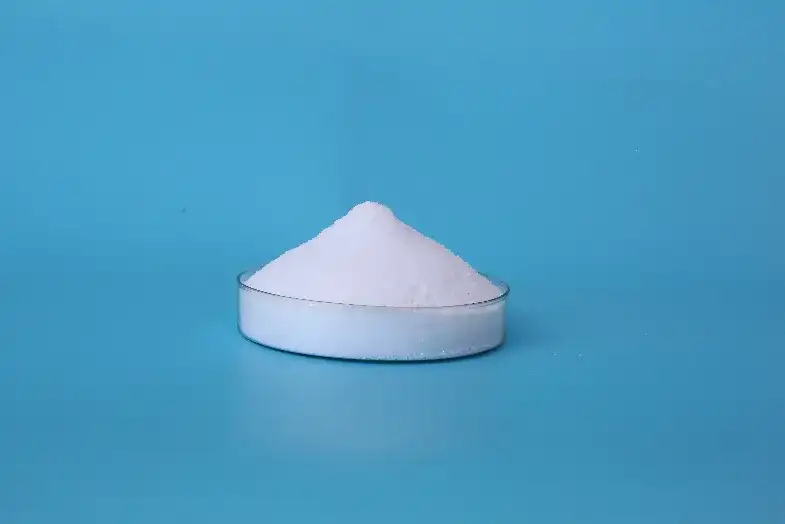
Choosing between partially and fully hydrolyzed anionic polyacrylamide is not a textbook exercise. It directly shapes polymer performance under reservoir shear, in high-salinity brines, or through repeated injection cycles. I have watched procurement teams rely on specification sheets while the factors that decide field success are largely operational: batch consistency, dissolution behavior, and long-term stability under process conditions. Over fifteen years in polyacrylamide manufacturing and global supply, I have come to the conclusion that reliable production process control and the ability to tailor hydrolysis degree to real-world conditions matter more than chasing a nominal percentage on a certificate. This guide examines how hydrolysis degree affects charge density and viscosity, and what industrial buyers should verify before committing to large volumes.
Why Hydrolysis Degree Shapes Anionic Polyacrylamide Performance
Anionic polyacrylamide is a copolymer of acrylamide and sodium acrylate. During hydrolysis, some amide groups are converted to carboxylate anions, giving the polymer its negative charge. The degree of hydrolysis (DH) measures the percentage of converted groups. Partially hydrolyzed grades typically have a DH between 10% and 35%; fully hydrolyzed products exceed 35%. This proportion determines how the polymer chain extends in solution, how it interacts with multivalent cations, and how much viscosity it generates.
Carboxylate charges cause electrostatic repulsion along the chain, leading to a stretched conformation and high viscosity in fresh water. However, in hard water containing calcium or magnesium, the same charges bind cations and collapse the chain, reducing thickening power. I have seen, in mineral processing operations, how even a 5% deviation in DH can shift settling rates enough to require re-optimizing the flocculant dose. In our production line, we manufacture anionic polyacrylamide with molecular weight exceeding 30 million and adjust the ionic character to match specific brine conditions, ensuring the polymer stays effective across a wide operating window.
Technical Differences Between Partial and Full Hydrolysis
The choice of DH changes key physical and chemical properties. The table below summarizes the contrasts.
| Parameter | Partially Hydrolyzed (DH 10-35%) | Fully Hydrolyzed (DH >35%) |
|---|---|---|
| Charge density | Moderate negative charge | High negative charge |
| Viscosity in fresh water | High, chain extension optimal | Very high, but sensitive |
| Brine tolerance | Better, less cation sensitivity | Lower, prone to coiling |
| Dissolution rate | Faster | Slightly slower |
| Typical molecular weight (10⁶) | 15-30 | 15-30+ |
| Primary use cases | EOR, mining tailings, paper retention | High-charge flocculation, sludge dewatering |
If your operation involves high-hardness produced water or strong shear in pumping, confirm the appropriate hydrolysis degree with a supplier who can provide batch-specific viscosity curves. Send your water analysis to en*****@***er.com and we will recommend a matching product.
Field Performance: Where Partial and Full Hydrolysis Excel
Partial hydrolysis dominates enhanced oil recovery because it strikes a balance between viscosity and brine tolerance. In polymer flooding, a DH of 25-30% often gives the best mobility control, especially in reservoirs with moderate salinity. I have observed that polymers with this range maintain viscosity longer in the presence of divalent ions than those pushed above 35%, because extra carboxylate groups accelerate thermal hydrolysis and chain scission under reservoir conditions.
Fully hydrolyzed grades, with higher charge, are more common in flocculation applications where rapid charge neutralization is critical. In neutral to alkaline mining slurries, the strong electrostatic bridging from fully hydrolyzed PAM accelerates fine particle settling. But in acidic leachates or high-hardness tailings water, the high charge can be neutralized, so a partially hydrolyzed or even non-ionic polymer may perform better. From several site comparisons, I have seen operations reduce flocculant consumption by 10-20% simply by switching from a high-DH product to a moderate one after a jar test.
How to Choose the Right Hydrolysis Degree for Your Application
Selecting the correct DH requires a systematic approach, not a guess based on experience from another site. Start with a full water analysis: pH, total dissolved solids, and calcium plus magnesium concentration. Then define your performance target: solution viscosity, settling rate, or cake dryness. Run a series of jar tests or core flood tests with two or three DH levels to compare dosage curves.
Once you have narrowed the range, evaluate suppliers who can deliver consistent DH batch after batch. At Nuoer, we produce anionic polyacrylamide with customizable hydrolysis degree and molecular weight, backed by an annual capacity of 500,000 tons. This scale allows us to maintain strict process control and supply large projects without grade drift, which I consider the single most important factor in long-term field performance.
Ensuring Predictable Performance at Scale
Variation in hydrolysis degree between shipments is a hidden cost. It forces operators to re-tune injection rates or flocculant dosage, increasing chemical consumption and labor. In my experience overseeing global supply, I have seen how integrated production, from acrylamide monomer to finished polymer, can cut this variability. When a manufacturer controls both feedstock quality and polymerization conditions, the chances of drift drop substantially.
For buyers facing fluctuating process conditions or tight performance windows, working with a supplier that offers technical support and rapid sample testing shortens the trial window and reduces risk. To discuss your specific hydrolysis degree and molecular weight requirements, send your application details to en*****@***er.com or call +86-532-66712876. We can arrange a sample for pilot testing and provide technical guidance on optimal product selection.
Common Questions About Hydrolysis Degree Selection
What is the optimal hydrolysis degree for polymer flooding in high-salinity reservoirs?
For salinities above 50,000 ppm TDS, partially hydrolyzed polyacrylamide with a DH of 20-28% generally gives the best balance of viscosity and shear stability. Higher hydrolysis increases charge density but makes the polymer more sensitive to hard brine, causing coil collapse. We recommend conducting bottle tests with your field water to confirm.
Can I use fully hydrolyzed anionic polyacrylamide for all mining applications?
Not always. Fully hydrolyzed grades work well for tailings with high pH and low hardness, but in acidic or high-hardness streams, the charge may be neutralized, reducing flocculation. In such cases, a partially hydrolyzed or even non-ionic PAM may perform better. I have seen operations switch and cut dosage by 15-20% after adjusting hydrolysis level.
How do I verify hydrolysis degree consistency from batch to batch?
Request a certificate of analysis including degree of hydrolysis by potentiometric titration and molecular weight by viscometry. Also ask for a track record of production stability. At Nuoer, our in-house acrylamide monomer supply and large-scale polymerization enable tight control; we provide batch-specific data with every shipment.
Does a higher degree of hydrolysis always mean better performance?
No. Above a certain threshold, additional carboxylate groups do not improve flocculation and can actually cause over-stabilization of suspended solids. The optimal DH depends on the particle surface charge and solution chemistry. Pilot testing is essential; I have never seen a specification sheet outperform a benchtop evaluation.
Is it worth paying more for fully hydrolyzed grades?
The cost difference per ton is usually modest, but the performance gap can be wide. I recommend starting with the grade that matches your water chemistry based on jar tests, then weight the total cost of use, including dosage and mixing energy. If you are evaluating anionic polyacrylamide grades and need hydrolysis degree recommendations, share your process conditions with us at en*****@***er.com and we will help you narrow the options.
If you’re interested, check out these related articles:
Acrylic Acid Suppliers: Quality Testing & Procurement Strategies
Acrylamide Monomer Suppliers for Polymer Production Excellence
Anionic Polyacrylamide Cost Analysis for Mining Profitability
Reliable Emulsion Polyacrylamide Manufacturer for Industrial Solutions


 English
 Russian
 Arabic
 Spanish