
Amphoteric PAM for variable industrial effluent is not a universal flocculant that solves every shifting stream by itself, but it is the most stable starting point when pH, conductivity, and contaminant mix change day to day. In polymer production and application work, I have seen plants lose more time switching between anionic and cationic products than they would spend qualifying one amphoteric polyacrylamide grade properly. The practical decision is to treat amphoteric PAM as a charge-tolerant backbone and prove its fit through bench screening before committing volume.
The Failure Mode of Single-Charge PAM on Variable Effluent
Single-charge polyacrylamide products work by attaching to particles with the opposite surface charge. An anionic grade bridges negatively charged suspended solids, while a cationic grade neutralizes and flocculates positively charged colloids. Variable industrial effluent rarely holds one charge condition long enough for either product to remain efficient. Refinery streams can shift from oil-in-water emulsion at low pH to alkaline desalter water within hours. Metal processing and mixed chemical wastewater can carry both cationic metal hydroxides and anionic emulsified oils in the same clarifier feed. Under these conditions, a single-charge PAM attached to like-charged particles may repel rather than bridge, and the plant responds by increasing dosage, which raises sludge volume without restoring clarity. Frequent product changeovers then destabilize the clarifier because residual polymer from the previous charge type interferes with the next dose. The practical failure is not always poor flocculation. It is the loss of steady-state operation when operators chase effluent changes with the wrong tool.
The Charge-Balancing Mechanism of Amphoteric PAM
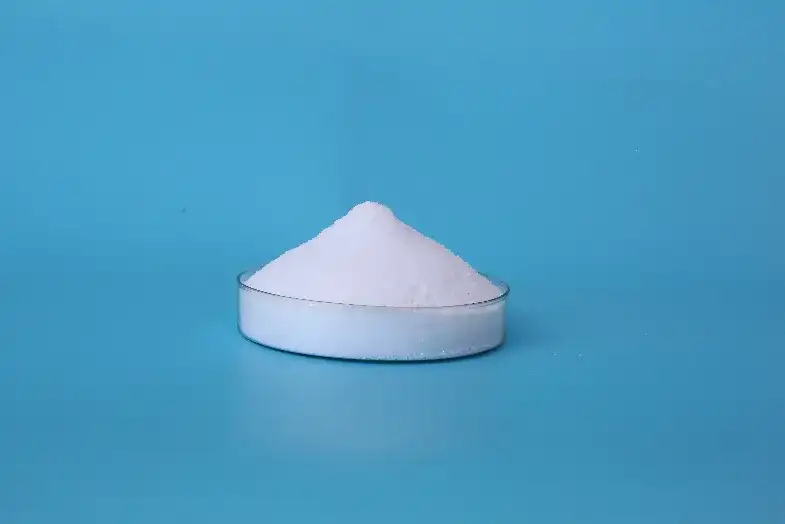
Amphoteric polyacrylamide is a ternary copolymer synthesized from cationic monomers, acrylamide, and a hydrolyzing agent. Its polymer chain carries both positive and negative charges, so it can approach particles with different surface charges without the same repulsion failure. The two charge groups do not cancel each other when the distribution is irregular along the chain. In mixed effluent, the cationic sites attach to negatively charged colloids while the anionic sites bridge metal hydroxides and other positively charged particles. This dual behavior is why amphoteric PAM maintains floc strength across a wider pH range and why it performs well in complex water treatment and sludge dewatering. Dissolution rate matters in these applications because operators must reach full chain extension before dosing. A product that dissolves slowly creates localized charge imbalance in the makeup tank and sends partially swollen polymer into the clarifier. We focus on fast dissolution and narrow molecular weight distribution in our amphoteric PAM production because both factors reduce the gap between laboratory performance and field results.
Why does pH destabilize single-charge PAM?
pH changes alter the surface charge of suspended particles and the degree of ionization of the polymer. An anionic PAM depends on carboxylate groups that become protonated at low pH, weakening its negative charge and reducing bridging. A cationic PAM can remain charged in acid water, but it loses effectiveness as the stream turns alkaline and particle surfaces become more negative. Amphoteric PAM retains both charge groups across this transition, so the same product can continue flocculating while the effluent moves through a wider range.
When does a mixed stream demand both charge types?
The clearest signal is a clarifier that performs well in the morning and poorly by the afternoon without any change in flow or polymer dose. If jar tests show good floc formation at pH 6 and weak pin floc at pH 9, the effluent contains both anionic and cationic contaminants. Rather than alternating products by shift, a plant can test one amphoteric grade and bracket the dose across the recorded pH range.
| Polymer Type | Charge Behavior | Best Operating Window | Limitation in Variable Effluent |
|---|---|---|---|
| Amphoteric PAM | Dual cationic and anionic sites | pH shifts and mixed contaminant loads | Requires charge ratio confirmation |
| Anionic PAM | Negative carboxylate groups | Alkaline, negatively charged solids | Loses bridging as pH drops |
| Cationic PAM | Positive quaternary or tertiary charge | Acidic or organic-rich streams | Overdoses when particle charge reverses |
Key Specifications for Amphoteric PAM in Mixed Streams
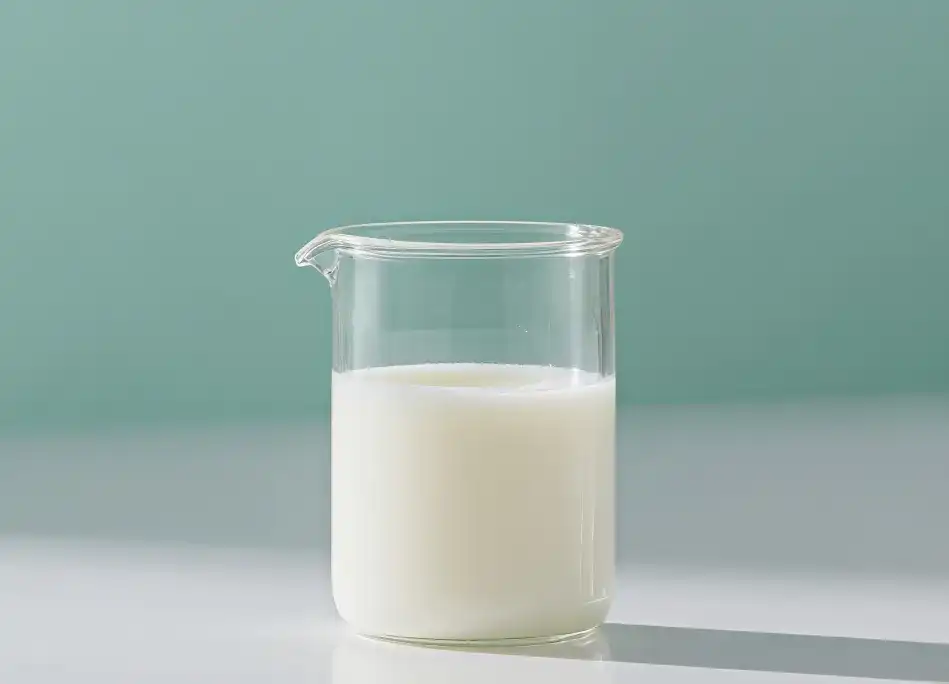
Before testing, request more than a data sheet. The buyer needs the charge ratio as anionicity and cationicity percentages, the molecular weight range, the residual monomer level, particle size for dry powder or solid content for emulsion, and the recommended dissolution time at the plant’s expected makeup water temperature. A lower residual monomer content matters when treated water discharges to a regulated receiving body. The specification for our amphoteric ionic polyacrylamide lists fast dissolution and customizable production, which means the charge balance can be adjusted to an effluent profile rather than sold as a fixed commodity grade. We produce polyacrylamide at an annual capacity of 500,000 tons and sell into more than 60 countries, but the selection value comes from matching the ternary copolymer to the specific charge demand of the stream, not from treating all variable effluents as one problem.
What specifications should a buyer confirm first?
Start with the charge ratio and molecular weight. The charge ratio determines whether the polymer can bridge both contaminant groups in the stream. Molecular weight controls floc size and settling rate. A very high molecular weight grade can form large, fast-settling floc, but it may also produce sticky sludge in high-solids effluent. Confirm both parameters against the jar test result before accepting a product sample.
How much residual monomer is acceptable?
This depends on discharge limits and local regulation. Acrylamide monomer is a regulated substance in drinking water and food-contact applications, so industrial effluent that reaches a public treatment works may still carry a low residual requirement. For most industrial wastewater, a residual monomer level below 0.05% in the dry polymer is a reasonable specification to request, and a producer with strong process control can document batch-level results instead of offering a typical value. If your permit has a specific acrylamide limit, ask for the test method and batch certificate before purchasing.
If your effluent moves between acid and alkaline conditions within one shift, confirm the charge distribution with us before finalizing your BOM at en*****@***er.com.
A Bench-Screening Protocol for Variable Effluent
Screen the polymer on the variability, not on one grab sample. Collect composite samples across a full shift and, where possible, a full week. Record pH, conductivity, temperature, suspended solids, and COD for each interval. Prepare the stock solution at the concentration recommended by the supplier, usually between 0.05% and 0.1% for powder grades, and age it long enough for complete dissolution. In the jar tester, run at least four doses that bracket the expected full-scale range. Judge each dose on floc size, settling speed, supernatant clarity, and sludge compaction after five minutes. Then stress the best dose by adjusting pH to the high and low values observed in the plant data. The grade that survives this bracketing with acceptable clarity is the one worth scaling up. Run a final sludge dewatering test, because good flocculation in a beaker does not always predict filter press release or centrate quality. One product can settle well and still produce a soft sludge that increases disposal weight and hauling cost.
Dosage and Cost Logic for Amphoteric PAM in Fluctuating Streams
Amphoteric PAM often carries a higher unit price than a standard anionic grade, but unit price is the wrong comparison when effluent composition changes daily. The relevant cost is polymer consumed per cubic meter of compliant discharge, plus sludge disposal, operator time, and process interruptions. A stable dose of amphoteric PAM at 3 to 8 ppm may replace a program that swings between 2 and 15 ppm of two different products. The lower-dosage claim is not universal; it comes from running the same jar test protocol across the recorded pH range and comparing the best dose that holds clarity at both extremes. Our amphoteric polyacrylamide can be customized to the desired charge distribution, and because we make our own cationic monomers, the cost structure accommodates grade adjustments without long product development delays. We operate a polyacrylamide production capacity of 500,000 tons per year, which gives us room to produce specialized grades alongside standard products. For most plants, the first buying decision should be to run a side-by-side trial of one amphoteric grade against the current treatment program across two weeks of normal variability, then compare total cost per treated cubic meter rather than price per kilogram.
If variable effluent conditions are already costing you in polymer waste, specification changes, or clarifier upsets, the fastest next step is to put the stream data into the hands of someone who can read the charge conditions and recommend a realistic trial design. Send your water analysis, flow range, and current dosage data to en*****@***er.com, or call +86-532-66712876, and we will confirm whether an amphoteric PAM grade is the right starting point for your effluent before you commit to a full-scale order.
Common Questions About Amphoteric PAM Selection
Does amphoteric PAM work across all pH ranges?
Amphoteric PAM does not work across all pH ranges, but it holds stable flocculation over a wider range than single-charge products. Most industrial formulations perform well between pH 4 and 10. Outside that range, extreme acid or alkaline conditions can still compress the polymer chain or hydrolyze functional groups. A refinery stream that drops to pH 2 during a cleaning event may need neutralization before flocculation, regardless of polymer chemistry. The value of amphoteric PAM is that the same grade can handle a stream moving between pH 5 and pH 9 without a product switch.
Is amphoteric PAM always more expensive to use than anionic PAM?
A common misunderstanding is that amphoteric PAM costs twice as much as anionic PAM across the board. The purchase price per kilogram is usually higher, but the treatment cost per cubic meter can be lower when a single grade stops the changeover cycle. If a plant currently uses two products and loses clarity during transitions, eliminating that failure may offset the premium. The economics become clear only when you compare delivered polymer, sludge disposal, and operating time over the same two-week period.
What starting dosage should a plant use for mixed effluent?
The right dose depends on suspended solids and charge demand, not on a fixed ppm value pulled from another plant. For a low-solids mixed stream, a starting dose of 3 to 5 ppm is reasonable. For high-turbidity metal processing effluent with fine colloidal load, the effective dose may be 6 to 10 ppm. Jar testing across the recorded pH range gives a better number than any table. One practical step is to run the best dose from the jar test at 80% and 120% of that value in a side-stream trial.
How do we compare competitive amphoteric PAM grades without wasting a trial?
In plant trials I have run, the fastest way to compare competitive amphoteric PAM grades is to standardize the solution preparation method before testing. Age each stock solution for the same time, use the same makeup water, and measure floc size and sludge release under the same mixing energy. Many apparent performance differences disappear when solution preparation is consistent. Then run the best candidate on composite effluent across two shift cycles. Share your water analysis and flow data with en*****@***er.com and we will confirm the grade, charge ratio, and trial plan most likely to hold under your variability.
If you’re interested, check out these related articles:
Emulsion Polyacrylamide for Mining: Supplier Solutions
Amphoteric Polyacrylamide: pH Adaptation for Optimal Performance
Acrylamide Aqueous Solution: Factory Direct Purity & Supply
Leading SAP Supplier for Feminine Hygiene Product Excellence





 English
 Russian
 Arabic
 Spanish