
Selecting an anionic polyacrylamide for an enhanced oil recovery program is not just a chemistry decision—it is a supply chain and production continuity decision. Over the past fifteen years, I have seen EOR projects where the right polymer boosted recovery by several percentage points, and projects where inconsistent product quality and supply gaps erased those gains. For operators evaluating polymer flooding, the most reliable path to incremental oil is an anionic PAM that matches the specific reservoir conditions, backed by a manufacturer with the production capacity and quality systems to deliver the same specification, shipment after shipment, across the life of the field.
How Anionic PAM Improves Oil Recovery
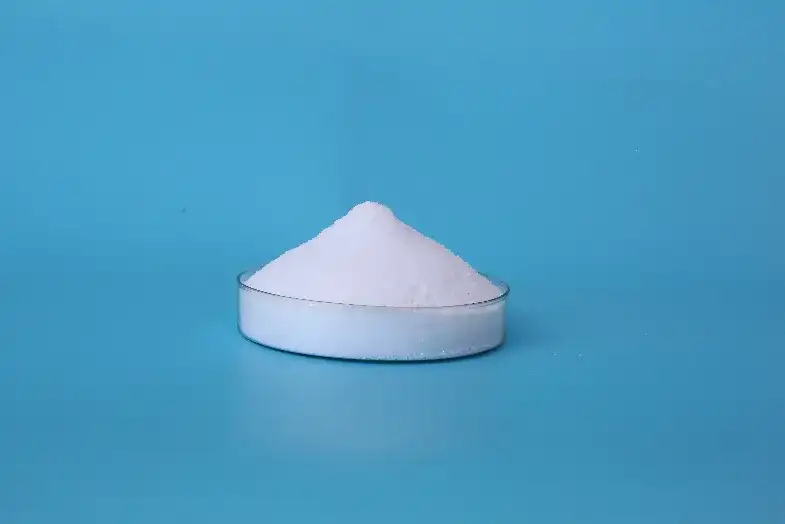
Anionic polyacrylamide is an ultra‑high molecular weight water‑soluble polymer, typically synthesised through copolymerisation of acrylamide and acrylate monomers. When injected into a reservoir as part of a water flooding or polymer flooding programme, the long‑chain molecules adsorb onto rock surfaces and bridge between pore throats, raising the viscosity of the displacing phase. This reduces the mobility ratio between the injected water and the oil bank, forcing the drive fluid to sweep through lower‑permeability zones that would otherwise remain unswept.
The net effect is improved volumetric sweep efficiency, not a reduction in residual oil saturation—anionic PAM does not act as a surfactant. In practical terms, a reservoir that would reach its economic limit at 40 % recovery with water alone might yield an additional 5 % to 15 % of the original oil in place when a properly matched anionic PAM programme is implemented. That incremental lift depends on the polymer’s ability to retain viscosity under reservoir temperature, salinity, and shear conditions, which is why generic product recommendations rarely deliver the best outcome.
Matching Molecular Weight and Hydrolysis Degree to Reservoir Conditions
Two product parameters determine whether an anionic PAM will perform in a given reservoir: molecular weight and the degree of hydrolysis. Molecular weight governs the intrinsic viscosity and the length of the polymer chain, controlling the level of mobility reduction achievable at a given concentration. Hydrolysis degree determines the charge density along the chain, which affects how the polymer interacts with formation water, clays, and divalent cations.
The table below summarises the starting‑point ranges that we have found useful when configuring anionic PAM for EOR projects. These are not rigid rules—bottle testing with actual formation brine and core samples is essential—but they prevent the common mistake of selecting a polymer that looks strong on paper and fails in the reservoir.
| Reservoir Parameter | Low Range | High Range |
|---|---|---|
| Permeability (mD) | <50 | >500 |
| Recommended MW (×10⁶) | 15–20 | 25–30+ |
| Formation water TDS (mg/L) | <30,000 | >100,000 |
| Typical hydrolysis degree (%) | 15–20 | 25–35 |
| Bottom‑hole temperature (°C) | <60 | >80 |
For high‑salinity brines rich in calcium and magnesium, selecting a hydrolysis degree above 30 % without testing can lead to polymer precipitation. Conversely, in low‑temperature, low‑salinity reservoirs, a hydrolysis degree below 20 % can leave the polymer under‑charged, reducing viscosity and sweep efficiency. Adjusting the copolymer composition at the manufacturing stage—rather than trying to compensate with higher dosage—is the more reliable approach, and it is one of the reasons we produce our own acrylate monomers in‑house to maintain tight control over the final charge density.
What hydrolysis degree is best for high‑salinity reservoirs?
The best hydrolysis degree for high‑salinity reservoirs is typically in the 25–35 % range, but the precise value must be confirmed through bottle testing with the actual formation brine. In brines exceeding 100,000 mg/L TDS and with significant divalent cation content, polymer chains with a very high anionic charge can collapse or precipitate. A moderately hydrolysed product offers a balance between viscosity build and brine tolerance. If the operator cannot adjust the injection water composition, we often recommend starting at a hydrolysis degree of 25–30 % and testing both a slightly higher and a slightly lower variant during the laboratory screening phase.
Why Consistency and Customization Matter for Field Operations
No two reservoirs are identical, and even within a single field, water chemistry and permeability can vary across sectors. This means that the anionic PAM specification that works for the pilot may need refinement before full‑field deployment. A manufacturer that can adjust molecular weight distribution, hydrolysis degree, and particle size without long lead times gives the operator a decisive advantage.
Consistency matters just as much as the initial specification. In a polymer flooding campaign that injects hundreds of tons of PAM per month, a shift in residual monomer content or dissolution rate can alter the injection pressure profile and upset the surface mixing equipment. We engineer our anionic PAM to dissolve quickly—usually within 60 minutes under standard field mixing conditions—and we hold residual monomer levels below internationally accepted limits, measured lot by lot. Because we control the full supply chain from acrylamide and acrylic acid upstream to the finished PAM downstream, the product that arrives on site today matches the product that was qualified during the evaluation phase.
Evaluating Supplier Reliability for Polymer Flooding Projects
The economics of EOR depend on sustained injection over months and years. A supplier that can deliver on time, at scale, and with documented quality control is therefore as important as the molecular weight printed on the certificate of analysis. When I speak with procurement teams and reservoir engineers, I encourage them to look beyond the immediately available sample and to assess the supplier’s installed capacity, raw material security, and logistics network.
With an annual polyacrylamide production capacity of 500,000 tons and a vertically integrated supply of acrylamide and acrylic acid, our operation is built for large‑volume, long‑term programmes. We hold comprehensive certifications that are recognised in more than 60 countries, and our after‑sales support includes on‑site technical visits to assist with mixing and injection system commissioning. For a polymer flooding project that will consume several thousand tons of PAM over its lifetime, choosing a supplier that has already demonstrated the ability to sustain this level of output removes a significant project risk.
How do I evaluate a supplier for a large EOR project?
Start by verifying the supplier’s annual production capacity and the source of their key monomers. If a supplier buys all its acrylamide and acrylic acid on the spot market, lead times and quality can fluctuate. Next, request batch‑level quality data for the specific product grade under consideration—not a generic brochure. Look at dissolution rate, residual monomer, and the actual molecular weight distribution, not just the average. Finally, ask for references from projects of comparable scale and duration. A manufacturer that can provide this information transparently is far more likely to deliver a consistent product over the five‑ to ten‑year horizon of a typical EOR campaign.
If your polymer flooding programme involves reservoirs with unusually high salinity or wide temperature swings, it is worth confirming both hydrolysis degree tolerance and thermal stability with the supplier’s technical team before locking in a specification. A short technical consultation at the pre‑qualification stage often prevents costly reformulation mid‑project. Reach our team at en*****@***er.com and we will run the initial compatibility assessment at no charge.
Cost‑Effectiveness Beyond Upfront Pricing
Procurement teams naturally focus on the dollar‑per‑ton price, but the real cost of an anionic PAM for EOR includes injection efficiency, polymer loss, and the overhead of managing an unreliable supply. A product that requires a higher dosage to achieve the target viscosity, or that takes twice as long to dissolve, can burn through the per‑ton savings in higher logistics, handling, and energy costs within the first year.
We have found that fast‑dissolving, high‑molecular‑weight anionic PAM with low variability often reduces the total cost per incremental barrel, even when the per‑ton price is slightly higher than a commodity alternative. The reason is straightforward: consistent viscosity build at a lower dosage means fewer chemical shipments, shorter mixing cycles, and less downtime for filter cleaning or pump maintenance. When operators calculate the full cost of ownership over the life of the flood, the product with the tighter specification and the stronger supply chain usually comes out ahead.
Common Questions About Anionic PAM for EOR Projects
What is the difference between anionic PAM and HPAM?
In the oil‑field context, HPAM (partially hydrolysed polyacrylamide) and anionic PAM are often used interchangeably, and for most EOR applications they refer to the same family of copolymers. The acrylate groups introduced through hydrolysis give the polymer its negative charge. Some suppliers use “anionic PAM” to describe the broader category and “HPAM” for products with a specific hydrolysis range. The key point is to confirm the actual hydrolysis degree and molecular weight rather than relying on the label.
How does anionic PAM perform in high‑temperature reservoirs?
Thermal stability becomes a concern above approximately 75°C, where the polymer backbone can begin to degrade over weeks and months, depending on the brine chemistry and the presence of oxygen. For reservoirs hotter than 80°C, operators should test the specific anionic PAM under anaerobic conditions at the expected residence time. In many cases, a carefully selected copolymer with a slightly lower hydrolysis degree and an oxygen scavenger programme can maintain adequate viscosity for multi‑month injection cycles.
Can I use powder anionic PAM for offshore platform injection?
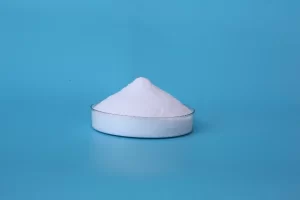
Yes, but it requires dedicated mixing and maturation equipment to ensure complete hydration without forming fisheyes. The space and weight constraints on a platform often make emulsion‑type PAM an attractive alternative, although emulsion products carry different storage and handling requirements. If powder is the chosen form, we recommend a dispersed dissolution system and a buffer tank that allows at least 60 minutes of maturation before injection to avoid partially dissolved polymer reaching the wellhead.
How do I verify a supplier’s quality before committing to a large purchase?
Request a production record for the specific EOR‑grade product that shows lot‑to‑lot variation in molecular weight, hydrolysis degree, and dissolution rate over at least twelve months of manufacturing. Ask whether the supplier uses inline process control during polymerisation and whether final inspection includes residual monomer and particle size distribution. A supplier that can provide this data confidently has the quality infrastructure to support a multi‑year EOR programme. If you would like to review our production and quality documentation for the anionic PAM grade you are considering, email your specification to en*****@***er.com and we will supply the relevant batch records.
Operators often find that the most instructive part of a supplier evaluation is not the initial sample, but the consistency of the material delivered over multiple production batches. If your EOR programme is moving from pilot to full‑scale and you need to validate long‑term supply reliability for a specific anionic PAM grade, contact us at en*****@***er.com or call +86‑532‑66712876. We can arrange a supply plan that matches your injection schedule and provide the quality documentation you need to satisfy your internal assurance requirements.
If you’re interested, check out these related articles:
50% vs 40% Acrylamide Solution Industrial Selection Guide
Acrylamide Solution Factory: Polymer Production Excellence
Resilience Through Innovation: NuoER Group Leads the Way at CIDPEX 2026
Amphoteric Polyacrylamide: Optimal Solution for Mixed Effluent Treatment


 English
 Russian
 Arabic
 Spanish