
The acrylic acid grade feeding your SAP reactor is not a commodity decision. Purity, inhibitor levels, and monomer consistency shape polymerization kinetics and determine whether the resulting superabsorbent polymer meets the absorbency-under-load, centrifuge retention, and residual monomer limits that hygiene manufacturers specify. We produce 100,000 metric tons of acrylic acid annually and run it directly into our own SAP production lines at 560,000 tons per year, so we learn exact cause-and-effect relationships that a supplier who only ships monomer never sees.
Why Acrylic Acid Quality Determines SAP Performance
SAP polymerization is a free-radical chain reaction. Acrylic acid participates both as the monomer backbone and, after sodium hydroxide neutralization, as the sodium acrylate salt that drives osmotic absorption. Impurities that interfere with radical propagation or neutralize unevenly affect everything from gel strength to absorption capacity.
Dimer content, water content, and inhibitor concentration are not minor footnotes on a certificate of analysis. They are direct process inputs. A batch of acid that carries a dimer fraction half a percent above the previous shipment can shift crosslinking density enough to push absorbency under load out of specification for premium diaper grades. We have seen this exact failure in our own production history, and it forced us to tighten both dimer and inhibitor thresholds beyond the typical commercial grade.
Acrylic acid also arrives inhibited with monomethyl ether hydroquinone (MEHQ), a stabilizer that must be accounted for in the initiator charge or removed by distillation. If the production line expects a certain inhibitor range and the actual value drifts, polymerization initiation timing shifts, altering molecular weight distribution and the balance between soluble fraction and gel fraction in the final SAP particle. The relationship is measurable and not subtle.
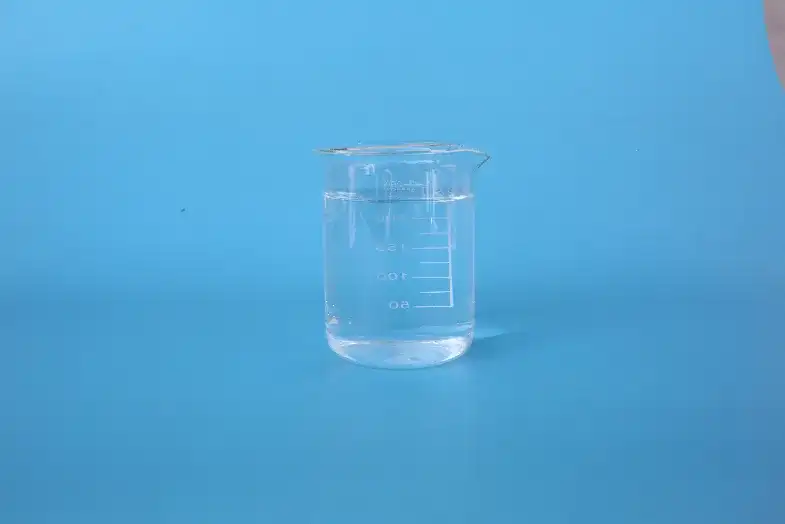
Key Acrylic Acid Specifications for SAP Production
Technical-grade acrylic acid can range from 98% to over 99.8% purity, but the headline number alone does not guarantee SAP performance. The specifications that matter most are the ones that affect polymerization reaction stability and final polymer properties.
| Specification | Typical Commercial Grade | Premium SAP-Grade Target | Impact if Out of Range |
|---|---|---|---|
| Purity (GC) | 99.0–99.5% | 99.7%+ | Lower purity elevates dimer and unknown impurities; gel fraction consistency suffers |
| Dimer (acrylic acid dimer) | 0.2–0.5% | ≤0.1% | Excess dimer creates unintended crosslinks; absorption under load drops |
| Water content | 0.1–0.2% | ≤0.1% | Water dilutes monomer concentration; neutralization stoichiometry shifts |
| MEHQ inhibitor | 180–220 ppm | 180–200 ppm (tight range) | Variable inhibitor disrupts initiator efficiency; molecular weight distribution broadens |
| Color (APHA) | ≤10 | ≤5 | High color often correlates with oxidation byproducts; affects polymerization repeatability |
We learned that dimer is the specification with the highest leverage. A dimer level above 0.15% begins to introduce a crosslinking effect that cannot be fully compensated by adjusting internal crosslinker dosage because it is non-uniform. That is why for our NR860 general-purpose SAP and NR760K high-permeability grades, we set the acrylic acid dimer ceiling at 0.1% and enforce it on every incoming shipment.
Balancing Purity and Cost in Large-Scale SAP Manufacturing
Higher purity acrylic acid carries a price premium. At the scale of a production line consuming tens of thousands of tons annually, a 2–3% difference in monomer cost per ton translates into significant margin pressure. The question is where the purity-cost curve flattens—where additional percentage points no longer produce measurable SAP performance gains.
For economy-tier adult incontinence products, a purity of 99.2% with consistent inhibitor and dimer ranges can yield acceptable absorption characteristics. The SAP does not need to pass the most demanding absorbency-under-load tests, and the hygiene manufacturer’s specification allows a broader operating window. In those applications, we have validated that moving from 99.2% to 99.7% did not create a performance premium that customers could detect in use.
For premium baby diaper SAP, the calculus reverses. Absorption speed, retention under pressure at 0.7 psi, and low rewet are all linked to polymer network uniformity, which depends on monomer purity. In these lines, using a 99.7% minimum purity monomer with dimer held below 0.1% reduced out-of-specification batches by a meaningful margin in our production history. The higher monomer cost was absorbed by lower rework rates and fewer customer returns.
If your SAP line produces multiple product grades, the most cost-effective strategy may be to qualify two acrylic acid specifications: a high-purity stream for premium grades and a standard-purity stream for economy grades. This requires segregated storage and dedicated feed lines, but the payback period can be short at full capacity.
Supplier Consistency and Quality Control for Acrylic Acid
A single specification is only as good as its consistency across shipments. We audit acrylic acid suppliers not on average purity but on shipment-to-shipment variance. Two suppliers may both report 99.5% purity; the one whose dimer content swings from 0.08% to 0.25% erodes production stability, while the supplier who maintains 0.10–0.12% every load keeps the line predictable.
We require that every bulk delivery come with a complete certificate of analysis that includes purity, dimer, water, MEHQ inhibitor, color, and acidity. Even then, we pull a sample from the tank before offloading and run a fast gas chromatography check on dimer and purity. The 30 minutes that test takes is cheaper than the day of production downtime if an off-spec load reaches the reactor.
Beyond analytical data, the supplier’s inhibitor management practice matters. Some producers use a uniform inhibitor dose regardless of storage or transport duration; others adjust inhibitor based on the expected time to consumption. In warm-weather shipping lanes to Southeast Asia or the Middle East, under-inhibited acid can begin to polymerize in transit. We have encountered this and now specify a minimum MEHQ of 190 ppm for all shipments destined for long-haul routes, with the flexibility to go higher upon request.
Making the Right Grade Selection for Your SAP Line
Grade selection starts with your end-product performance requirements and works backwards. Begin by defining the three most critical SAP attributes for your market: centrifuge retention, absorbency under load at a specific pressure, or absorption speed. Then trace the relationship between those attributes and polymer network architecture—crosslink density, molecular weight between crosslinks, and extractable fraction. From there, identify which acrylic acid specifications most directly control those network parameters.
For centrifuge retention, dimer content is the first variable to lock down. For absorbency under load, the combination of purity and inhibitor consistency drives the uniformity that translates into load-bearing gel strength. For absorption speed, surface crosslinking is the primary lever, but monomer impurity variation can still shift the baseline fast enough to cause problems.
Once the specification is set, lock it at the supply contract level. Do not accept a range of 99.0–99.5% without a minimum and a penalty clause. Define minimum purity, maximum dimer, target inhibitor window, and maximum color. Request that the supplier provide statistical process control data showing the mean and standard deviation for each parameter over the previous six months. If the supplier cannot or will not provide that data, their process is not controlled well enough for continuous SAP production.
We have found that the most reliable acrylic acid for SAP manufacturing is the grade we produce for our own consumption: glacial acrylic acid with purity ≥99.7%, dimer ≤0.1%, MEHQ 180–200 ppm, and water ≤0.1%. That is the specification that delivers consistent SAP performance across our NR611, NR760H, and NR860 series. It is not the cheapest monomer on the market, but it eliminates the largest source of batch-to-batch variability.
Practical Guidance for Acrylic Acid Buyers in SAP Production
Whether you are scaling up a new SAP line or refining the specifications for an existing one, the choices you make in acrylic acid specification will directly affect your product’s competitiveness. We work with hygiene manufacturers and SAP producers who face exactly these decisions, and the difference between an average monomer supply and a well-controlled one often determines whether the SAP qualifies for premium diapers or stays in the commodity tier.
Send your SAP performance targets and current monomer specifications to en*****@***er.com or call +86-532-66712876, and we will walk through a specification recommendation based on the grade you need to reach. We can also supply acrylic acid that meets the 99.7% purity, low dimer, and tight inhibitor window we use in our own SAP production.
Common Questions About Acrylic Acid Grade for SAP Manufacturing
What is the most important acrylic acid specification for SAP absorbency?
Dimer content, followed closely by inhibitor consistency. Excess dimer creates unintended crosslinks that directly reduce absorbency under load. We have measured a drop of 2–3 grams per gram in centrifuge retention when dimer rose from 0.10% to 0.25%, which is enough to fail a premium diaper specification. Inhibitor variation affects polymerization kinetics and therefore molecular weight distribution, which in turn impacts the balance between absorption capacity and gel strength.
Is glacial acrylic acid always necessary for SAP production?
Not always. For economy-grade SAP where the end-use performance threshold is lower, technical-grade acrylic acid at 99.0–99.2% with consistent dimer and inhibitor levels can produce acceptable material. The key is consistency, not the absolute purity number. If the supplier’s 99.2% product varies within a narrow band across shipments, it can perform better than a supplier whose 99.7% product swings significantly. However, for premium hygiene grades, glacial acrylic acid at 99.7% plus is the safer baseline.
How does acrylic acid dimer affect the polymerization process?
Acrylic acid dimer contains a double bond that participates in radical polymerization, effectively acting as an unintended crosslinking monomer. This creates additional junction points in the polymer network that the formulator did not design for. The result is increased crosslink density, reduced swelling capacity, and a shift in the absorption-under-load vs. centrifuge retention balance. Because dimer distribution is random, compensating with less crosslinker does not fully restore uniformity.
Can we reduce inhibitor before polymerization, and should we?
Some SAP producers pre-treat acrylic acid to strip MEHQ inhibitor, either by distillation or adsorption. This is feasible but adds capital and operating cost. Our preference is to manage the inhibitor through initiator adjustment rather than pre-treatment, because pre-treatment introduces a process variable that itself can drift. Specifying a tight inhibitor window from the supplier and calibrating the initiator charge to that window is more predictable at scale. If you are considering inhibitor stripping, compare the full equipment and operating cost against the cost of a higher-spec monomer that already meets your target.
What quality documentation should we require from an acrylic acid supplier?
At minimum, require a certificate of analysis with every shipment that includes purity, dimer, water, MEHQ inhibitor, color, and acidity. Ask for six months of statistical process control data showing mean and standard deviation for each parameter. If the supplier cannot provide that, their process lacks the control needed for continuous SAP manufacturing. We also recommend a pre-offloading QC check on bulk deliveries, testing purity and dimer by gas chromatography before the material enters your storage. If your product uses specific free swell or absorption-under-load targets that are sensitive to monomer quality, share those details and we can confirm which documentation you need to maintain lot-to-lot consistency.
If you’re interested, check out these related articles:
Emulsion PAM for Cold Weather: Selection and Performance
Cationic Polyacrylamide: A Comprehensive Price Comparison Guide
Amphoteric Polyacrylamide for Refineries: Advanced Treatment Solutions
Ready-to-Use vs. Concentrated Acrylamide: A Comparative Analysis


 English
 Russian
 Arabic
 Spanish