
Sourcing a flocculant that maintains performance across variable pH and mixed industrial streams is not a routine purchasing decision. Amphoteric polyacrylamide, with its unique dual‑charge structure, is designed to keep settling and dewatering effective when water chemistry shifts, but finding a supplier that delivers consistent results under real‑world conditions demands more than a spec sheet comparison. Over fifteen years managing polyacrylamide production and global market development, I have observed that the gap between a data sheet and field performance narrows when a supplier can customize charge balance and molecular weight to match a facility’s actual waste profile, not just offer a standard grade.
How Does Amphoteric Polyacrylamide Perform in Complex Water?
Amphoteric polyacrylamide is a ternary copolymer carrying both positive and negative charges along the polymer chain. This dual‑charge character allows the molecule to bridge suspended solids even when pH swings and ionic composition change during a production run. In a mixed stream that combines acidic metal‑finishing rinse water and alkaline cleaning effluent, for example, anionic flocculants can lose effectiveness on the low‑pH fraction and cationic products may overdose on the alkaline side. The amphoteric structure buffers against those extremes, maintaining floc strength across a wider operating window without requiring chemical pre‑adjustment of the stream.
The mechanism works because the ratio of cationic to anionic groups can be tuned during synthesis. A supplier that controls this ratio precisely, rather than relying on a fixed‑formula copolymer, can tailor the product to the dominant contaminants in a specific waste flow. This is especially relevant for refineries and petrochemical plants, where oil, solids, and dissolved metals create a constantly evolving treatment challenge. Amphoteric polyacrylamide for refineries has become a predictable solution only where the manufacturer can guarantee batch‑to‑batch consistency in that charge balance.
What Technical Criteria Should You Evaluate in Amphoteric Polyacrylamide Suppliers?
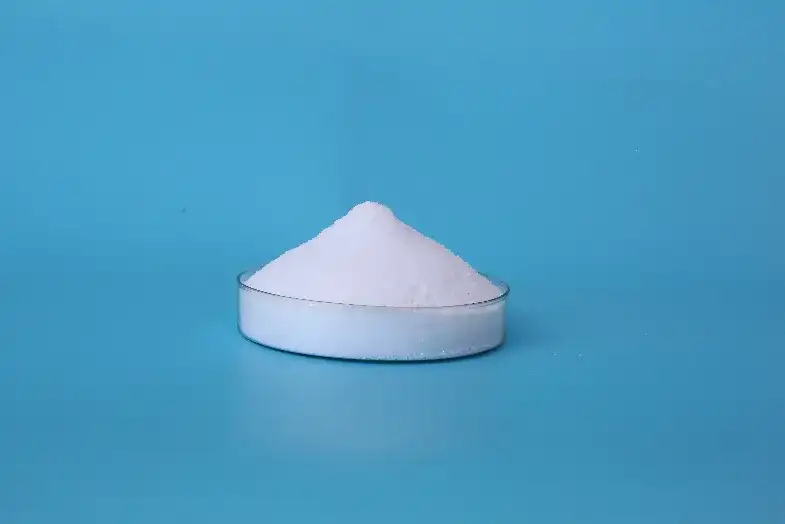
When I review a new supplier of amphoteric PAM, I look beyond the basic label of “amphoteric.” The critical specifications are charge density, the ratio of cationic to anionic monomer units, and the molecular weight distribution. A polymer with too low a molecular weight will not bridge fine particles effectively, while an excessively high molecular weight can create shear instability during pumping. The charge balance determines whether the polymer will work preferentially on negatively charged clays or on oily emulsions with a net positive charge. A capable supplier should provide a certificate of analysis that includes the actual mole percentage of each ionic group, not just a nominal range.
Equally important is the supplier’s ability to customize. Many wastewater streams come from multiple sources within a single facility: a chemical plant may produce an acidic organic stream, a neutral coolant blowdown, and an alkaline caustic wash, all reaching the same clarifier. A supplier that offers only two or three fixed grades will require the plant to compromise on dose rate or settling performance. At Shandong Nuoer, our production team routinely adjusts the cationic‑anionic balance for specific refinery or metal‑processing streams, because we synthesize the cationic monomer in‑house. If a supplier purchases raw monomers externally, their flexibility to adjust charge ratios without long lead times is inherently limited.
How Does a Supplier’s Production Scale Impact Amphoteric PAM Supply?
Supply reliability starts upstream. Amphoteric polyacrylamide depends on acrylamide, acrylic acid, and a specialized cationic monomer. A supplier that operates integrated monomer production, rather than sourcing these feedstocks from third parties, can control the purity and availability of the building blocks that determine polymer quality. In‑house acrylamide and acrylic acid capacity also insulates delivery schedules from spot‑market disruptions. Our manufacturing site runs at an annual scale of 300 000 tons of acrylamide and 500 000 tons of polyacrylamide, which means that a single‑product campaign for a specific customer’s amphoteric grade is operationally simple to schedule.
Scale also affects technical support. Large‑volume producers accumulate field data across hundreds of different water profiles, which feeds back into product refinement. When a buyer approaches us with a complex water analysis, our laboratory can draw on a library of prior formulations to reduce the number of iterative jar‑test rounds. A smaller blender that buys base polymer and repackages it cannot offer that same formulation‑history advantage.
How Should You Test Amphoteric PAM Performance for Your Wastewater?
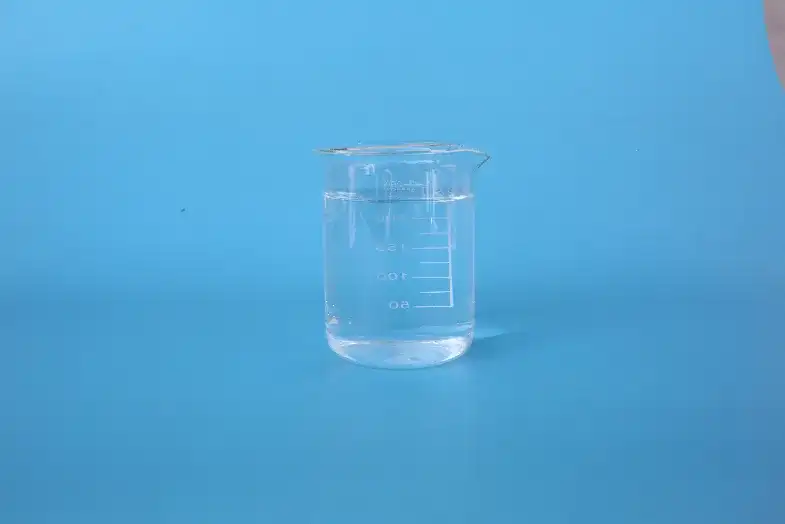
Laboratory evaluation must be done with the actual waste liquid, not a synthetic surrogate. Collect a representative composite sample over at least one production cycle that captures the range of pH, temperature, and solids loading the polymer will see. Then run a jar‑test protocol that varies dose rate and mixing energy while measuring supernatant clarity and settled sludge volume. Record not only the optimum dose but the width of the performance plateau: a product that works only within a 1 mg L‑¹ window introduces operational risk if flow conditions change mid‑shift.
The table below summarizes the key data points any supplier should provide, alongside the testing method you should request.
| Parameter | What the Supplier Should Report | Suggested Test Method |
|---|---|---|
| Charge density | Mole‑% cationic and anionic groups | Colloid titration (PES‑Na/PVSK) |
| Molecular weight | Weight‑average MW, dispersity index | Static light scattering or intrinsic viscosity |
| Dissolution time | Minutes to full viscosity at 25 °C, 0.1 % concentration | Brookfield viscometer, 0.1 % solution |
| pH working range | pH 3–11 with floc strength data | Jar test at pH endpoints, measure floc size retention |
| Residual monomer | Acrylamide ≤ 0.05 % | HPLC per GB 5009.204 or equivalent |
Request a pre‑shipment sample from the exact production lot that would be dispatched to you. A lab sample drawn from a small pilot batch may not reflect the consistency of full‑scale production. A supplier that runs continuous polymerization with automated process control can reproduce the lab performance on the plant floor far more reliably than one that relies on batch‑kettle polymerization.
How Do You Balance Cost and Performance When Sourcing Amphoteric PAM?
Unit price alone is a misleading metric for amphoteric polyacrylamide used in complex water. Because the polymer’s charge structure can reduce the required dose by 10 %–20 % compared with a single‑ionic product, the effective treatment cost per cubic meter of water often favors the amphoteric grade, even when its per‑ton cost is higher. This becomes especially clear when comparing dual‑product dosing strategies—separate cationic and anionic polymer additions—that increase chemical handling, storage, and pump complexity.
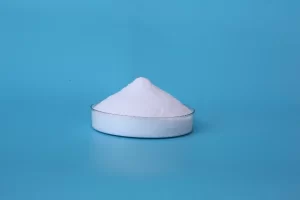
Another cost dimension is form: powder grades offer the lowest freight cost per active kilogram, while emulsion types dissolve in minutes without dust and can be fed directly into existing liquid polymer systems. Remote sites that lack dry‑make‑down equipment may find that the operational simplicity of an emulsion product outweighs a modest premium. Emulsion polyacrylamide for remote operations has been a practical choice in several of our overseas supply programs. Evaluate the total installed and operating cost of the dosing system, not just the raw material invoice price.

Addressing complex water rarely succeeds with a catalog product alone. Operating conditions change, and a supplier that stays engaged after the first delivery is the one that will help tune the program when upstream processes shift. At Shandong Nuoer Biological Technology Co., we offer formulation matching based on your water analysis and ongoing technical support from our polymer applications laboratory. To discuss a grade designed for your specific waste profile, send your process description and a recent water report to en*****@***er.com or call +86-532-66712876.
Common Questions About Sourcing Amphoteric Polyacrylamide
What makes amphoteric PAM different from cationic or anionic?
Cationic and anionic polyacrylamides carry a single charge and work best when the suspended solids carry the opposite charge. Amphoteric PAM carries both charges on the same polymer backbone, so it can bridge across mixed solids and maintain floc structure even when the water’s ionic balance shifts during a single treatment cycle—something single‑ion polymers cannot do without chemical correction.
How do I know if my wastewater requires an amphoteric polymer?
If your stream shows a pH variation larger than ±1.5 units during normal operation, or if you are blending multiple waste origins with different dominant charges, an amphoteric product is likely to reduce overall polymer consumption. A practical step is to run a comparative jar test: dose your current single‑charge polymer at its optimum, then test an amphoteric candidate at the same dose and compare supernatant turbidity after five minutes of settling. If the amphoteric gives a clearer supernatant with a tighter floc, the stream benefits from dual‑charge treatment.
Can amphoteric PAM be customized for my plant’s specific pH range?
Yes, and that customization is the primary advantage of working with an integrated manufacturer. At Shandong Nuoer, we adjust the ratio of cationic to anionic monomer during copolymerization to shift the isoelectric point—the pH at which the polymer’s net charge is zero—closer to your typical operating pH. This maximises bridging efficiency at that pH.
What should I look for in a supplier’s quality certification?
The most relevant certification is an ISO 9001 quality management system that covers the polymer manufacturing processes specifically, not just the trading company. For export, confirm that the supplier has a valid REACH registration if you are shipping to Europe, and that their residual monomer testing follows a recognised method such as GB 5009.204 or equivalent. Request the certificate of analysis for the previous three production batches of the grade you are buying, not just a sample.
How quickly can I receive and test a sample for complex water?
An established manufacturer can dispatch a representative production‑lot sample within one week for most standard amphoteric grades; customised formulations may require two to three weeks. Plan your jar‑test protocol before the sample arrives so you can complete the evaluation within the shelf life of the prepared solution. If your influent composition varies seasonally, share that data so the supplier can provide a grade optimised for the most challenging period.
If you’re interested, check out these related articles:
Selecting a Reliable Acrylic Acid Manufacturer for Quality
Acrylic Acid Cost Analysis for Superabsorbent Polymer Production
Acrylamide Crystal Dissolution: Optimizing Polymerization Efficiency




 English
 Russian
 Arabic
 Spanish