
Amphoteric PAM in complex wastewater performs best when treatment chemistry has to manage competing charges at once. A stream with emulsified oil, dissolved organics, and metal salts rarely responds to one charge type across the full pH range. The amphoteric polymer carries both anionic and cationic groups, so it can bridge particles that a single-charge polymer would repel or ignore. The question for engineers is not simply which grade to buy, but whether the dosage window and charge balance match the actual water chemistry.
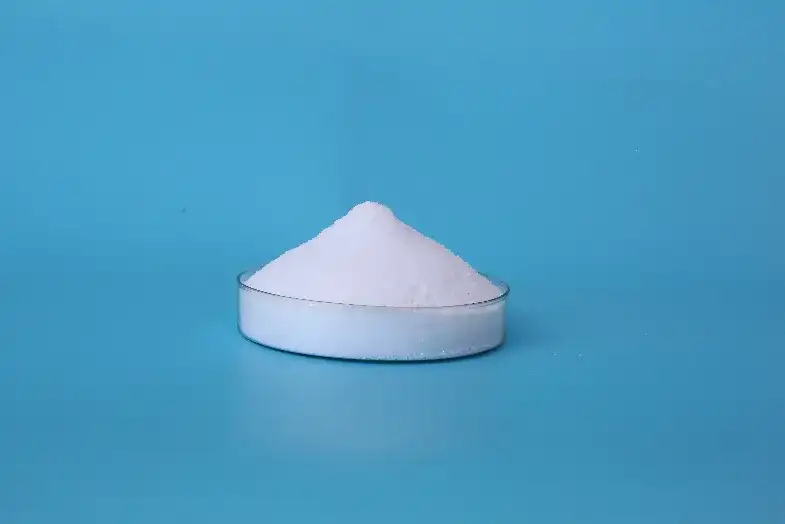
Charge Balance Drives Amphoteric PAM Performance in Mixed Effluent
Amphoteric PAM is a ternary copolymer synthesized from cationic monomers, acrylamide, and a hydrolyzing agent. The polymer chain carries both positive and negative sites, which changes how it behaves in water that contains more than one type of contaminant. A conventional anionic PAM relies on bridging between negatively charged colloids and adsorbed metal ions. A conventional cationic PAM neutralizes negative particles. Amphoteric PAM performs both functions in the same chain, and that dual character matters when pH or contaminant mix shifts during a production day.
In our production and application support work, I have seen amphoteric PAM recover clarification in streams where cationic alone overdosed within minutes and anionic never formed stable floc. The reason is charge distribution. At low pH, carboxylate groups on the amphoteric chain become protonated and the cationic sites dominate, so the polymer still neutralizes negatively charged organic colloids. At higher pH, the anionic groups expand and assist bridging through multivalent metal ions. This pH adaptive behavior is not a marketing abstraction; it shows up as smaller floc that still settles cleanly when the influent swings.
What Happens to the Two Charge Groups When pH Shifts?
Under acidic conditions, the anionic carboxylate groups lose charge and the polymer behaves closer to a cationic flocculant. Under alkaline conditions, the anionic character increases while cationic sites remain available for negatively charged particles. In mixed effluent, this means amphoteric PAM retains some affinity for both charge surfaces across a broader range than a single-charge product.
How Does Dual Charge Improve Settling in Mixed Effluent?
Dual charge promotes both charge neutralization and interparticle bridging. The first step reduces electrostatic repulsion between fine solids. The second step connects microflocs into larger, faster-settling aggregates. In streams with emulsified oil and metal hydroxides, both mechanisms are usually needed, because oil droplets are not removed by bridging alone and metal flocs are not stable without some charge neutralization. In amphoteric PAM, both mechanisms can operate in the same treatment cell.
Complex Wastewater Conditions Expose Single-Charge Polymer Limits
A single-charge polymer is predictable until the water chemistry moves against it. Anionic PAM in acidic wastewater loses much of its negative charge because carboxyl groups protonate. The chain can become less extended and the bridging effect weakens. The visible result is fine pin floc and high residual turbidity. In the same acidic stream, ordinary cationic PAM can over-neutralize particles. Excess positive charge restabilizes the suspension, and the treated water turns hazy again after an initially clear jar. Amphoteric PAM avoids this single-point failure only when its charge balance matches the water, but it gives the operator a broader starting point.
I have seen this pattern in textile effluent with high dye and surfactant loading. As cationic dosage increased, the clarified water first improved, then degraded into a milky haze. The surfactant layer acted as a secondary charge surface and the polymer adsorbed too strongly. Amphoteric PAM in this case does not eliminate the risk of overdosing, but its dual charge widens the range between underdose and restabilization. That extra working band is what makes amphoteric PAM practical for streams with variable influent.
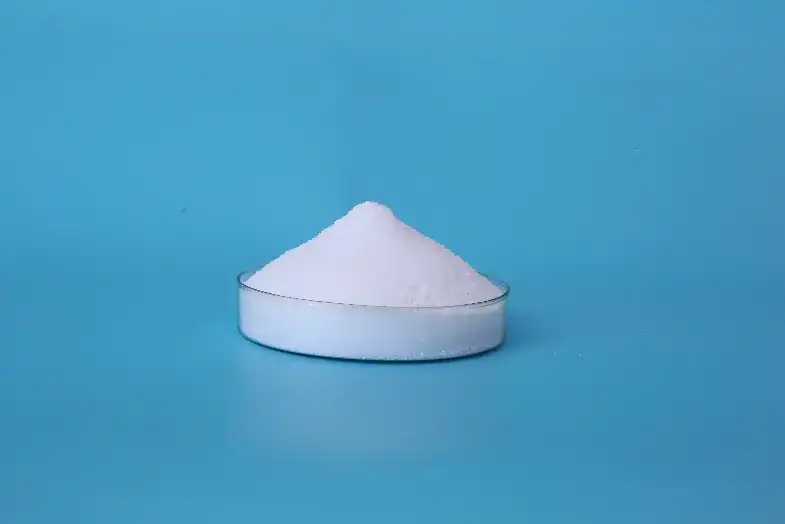
Dosage Curves for Amphoteric PAM Follow a Narrow Working Window
Amphoteric PAM dosage response is not linear. Both charge groups compete for limited surface sites, so the optimum band can be narrower than a conventional polymer in some streams. In complex wastewater, underdosing leaves dispersed fines because there are not enough bridging sites to connect all particles. Overdosing creates the opposite problem: the polymer saturates the particle surface and restabilizes the suspension through charge reversal. The best jar test series for amphoteric PAM will therefore cover at least five dosage points, not a single trial.
| Dosage Condition | Floc Appearance | Supernatant | Interpretation |
|---|---|---|---|
| Underdosed | Small, weak pin floc | Hazy with fines | Raise dosage in small increments |
| Working window | Compact, fast settling floc | Clear with good separation | Record dosage and energy input |
| Slight overdose | Large, slow floc with surface sheen | Slight haze returns | Stop increasing dosage |
| Clear overdose | Dispersed fines, no stable floc | Milky or cloudy | Reduce dosage and re-run settling test |
The amphoteric product data we work with highlights fast dissolution and effective sludge dewatering in complex water, but the field result still depends on mixing energy and order of addition. In our production planning, we treat mixing energy as part of the dosage decision. High shear breaks floc and shortens the working window. Low shear leaves unmixed polymer strands. For amphoteric PAM, a two-stage mixing profile usually works better: rapid initial dispersion to distribute the polymer, then gentle flocculation to grow settleable solids. If the influent contains high dissolved organics, pre-dilution and post-dilution tests matter before the polymer reaches the clarifier.
If your stream includes emulsified oil, dissolved organics, and metal salts, it is worth confirming charge demand and dosage window before finalizing your polymer specification. Send a recent water analysis to en*****@***er.com and our technical team will review the starting grade and jar test plan.
Specification Checks Separate Workable Amphoteric PAM Grades
A product data sheet alone will not confirm amphoteric PAM fit. For complex wastewater, I look at the charge balance first. The ratio of cationic groups to anionic groups determines whether the polymer behaves more like a cationic flocculant, a balanced amphoteric, or an anionic-leaning product. The correct ratio depends on the dominant contaminant charge and the pH range of the influent. A balanced grade is not automatically the best choice; many streams perform better with a slight charge bias.
Molecular weight matters next. Higher molecular weight improves bridging but can increase floc fragility and mixing sensitivity. If the clarifier uses high energy mixing or long retention times, a mid-range molecular weight often gives more stable clarification with amphoteric PAM. Dissolution behavior should also be confirmed. The amphoteric PAM product we produce is designed for fast dissolution, but field preparation conditions still influence the result. A polymer that does not fully dissolve becomes wasted dosage and may form visible gel particles in the treated water.
Which Specification Parameters Matter for Complex Wastewater?
Prioritize pH range, conductivity, and contaminant charge before molecular weight. If the stream has alternating acidic and alkaline discharges, ask the supplier for a grade with a wider pH stability window. For streams with high salt content, confirm that the polymer remains soluble at the working conductivity. These conditions affect chain extension more than the nominal charge density printed on the data sheet.
The form choice is separate from charge balance. Powder grades suit operations with reliable dosing equipment and longer mixing time. Emulsion-type amphoteric PAM can be used where rapid dissolution and smaller footprint matter. We produce both forms in our manufacturing system. However product form should be chosen after the mechanism decision, not before it. A unit price comparison between powder and emulsion without jar test data usually misleads the procurement process.
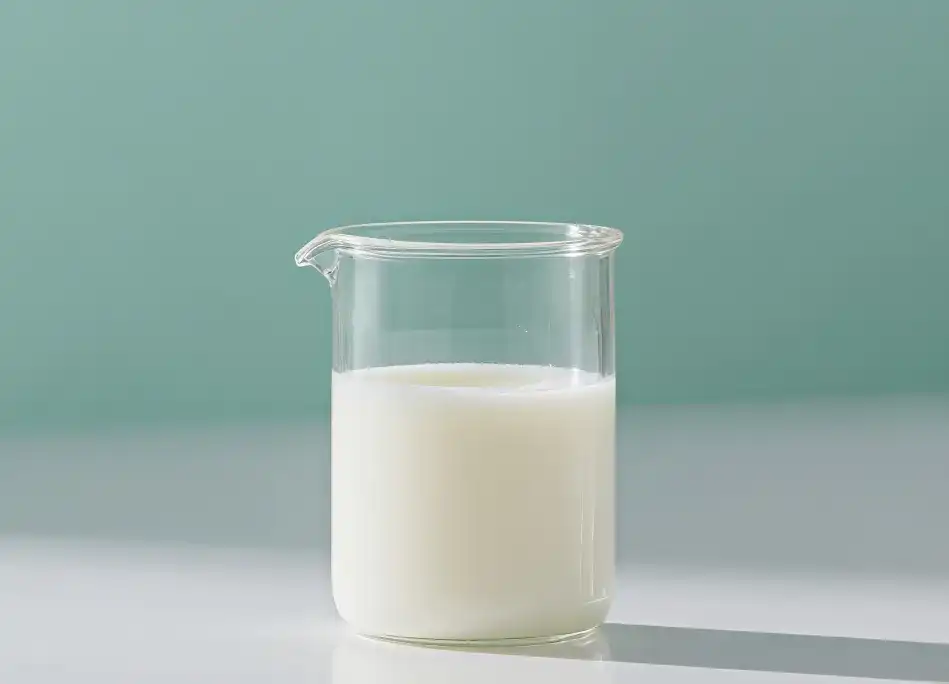
A Water Analysis Confirms Amphoteric PAM Fit Before Purchase
At Shandong Nuoer Biological Technology, we produce amphoteric PAM at scale and test grade fit against the charge balance in each stream. Complex wastewater rarely responds to one polymer grade across every season, shift, and process upset. The decision usually comes down to whether the supplier can adjust charge balance and molecular structure to fit the measured water chemistry. A grade that works in one refinery may destabilize in another because the organic acid profile and salt load are different.
If you are replacing a single-charge polymer or running a mixed stream for the first time, send six months of influent pH, conductivity, COD, and solids data to en*****@***er.com, or call +86-532-66712876. Include your target sludge dryness and current settling performance. We will recommend a starting amphoteric PAM grade and a jar test protocol based on the charge mix in your stream.
Buyers Ask These Questions Before Specifying Amphoteric PAM
How do I know if my wastewater is complex enough to require amphoteric PAM?
Start with pH variability and contaminant charge mix. If the stream stays within a narrow range and has one dominant charge, a single-charge polymer usually costs less and is easier to control. Amphoteric PAM becomes the stronger option when the influent carries anionic surfactants, metal salts, and dissolved organics that shift the charge balance across shifts. Review six months of influent pH and turbidity data first. If jar tests show that cationic and anionic products each fail at different pH points, a dual-charge grade is worth sampling.
Does amphoteric PAM replace cationic or anionic polymer in every process?
The common assumption is that dual charge makes a universal flocculant. It does not. Amphoteric chemistry is a tool for mixed charge conditions, not a permanent replacement for a well-designed single-charge program. If the stream is consistently acidic with high organic load, a cationic PAM may still be more cost effective. If the stream is consistently alkaline with mineral solids, an anionic PAM may settle better. Amphoteric PAM earns space when the process cannot maintain a consistent charge condition and the operator needs one polymer to cover a wider band.
What happens if I overdose amphoteric PAM?
It depends on which charge group becomes dominant. In high organic load streams, the cationic sites tend to restabilize particles if dosage climbs too far. In metal-rich streams, excess anionic character can weaken bridging and produce slow settling. The symptom is usually the same: the supernatant goes from clear to hazy while floc size stays large. A five-point jar test will expose the upper edge of the working window before the dose reaches that failure.
How should I run a jar test to confirm the right grade?
In our application support work, I prefer a two-stage test. The first stage screens three charge balance variants at a fixed mixing intensity to see which one clears the water fastest. The second stage varies dosage across five points to map the working window. Keep mixing speed, temperature, and dilution water constant across all jars. If any of these change between tests, the comparison tells you little about the polymer. Send your water analysis and settleability target to en*****@***er.com and we will confirm the starting grade and test protocol.
If you’re interested, check out these related articles:
Trusted Anionic Polyacrylamide Manufacturer Global Solutions
High vs Low Molecular Weight Non Ionic PAM: Selection Guide
Cationic PAM Dosage: Elevating Wastewater Treatment Efficiency
Nuoer Impressively Showcased at the 32nd China International Paper Technology Exhibition 2025
Acrylic Acid for Industrial Polymer Production: A Monomer’s Critical Role






 English
 Russian
 Arabic
 Spanish