
Engineers and procurement managers evaluating non-ionic polyacrylamide often face a practical decision between dry powder and liquid emulsion, each offering distinct advantages in handling, dissolution speed, and total cost of ownership. While the polymer’s flocculation chemistry remains unchanged, the physical form determines dosing accuracy, storage footprint, and operator safety. Many technical resources repeat chemical properties without examining the operational realities that shape daily performance. Drawing on over fifteen years in polyacrylamide manufacturing and global supply, this article compares powder and liquid non-ionic polyacrylamide across six operational factors to help you select the form that matches your plant’s actual workflow, not just a specification sheet.
What Are the Powder and Liquid Forms of Non-Ionic Polyacrylamide?
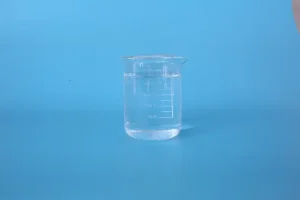
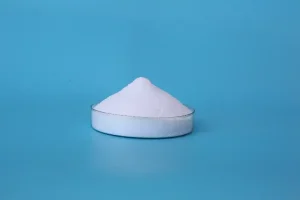
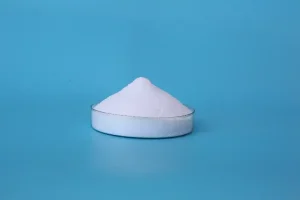
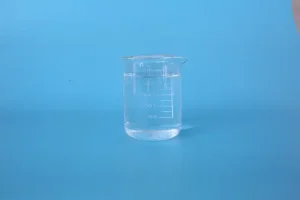
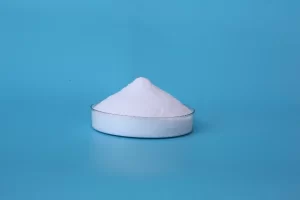
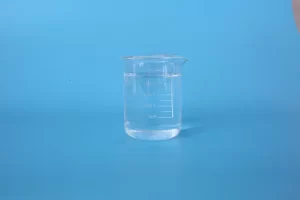
Non-ionic polyacrylamide is a high-purity homopolymer of acrylamide, available in two distinct physical forms. Dry powder is a white granular solid with nearly 100% active polymer content, requiring mechanical mixing and aging tanks for dissolution. The liquid form is a water-in-oil emulsion containing 30% to 50% active polymer suspended in a hydrocarbon carrier with surfactants, designed to invert and release the polymer instantly upon contact with water.
In our manufacturing facilities, we produce both forms under controlled polymerization conditions to achieve high molecular weight and low residual monomer. The dry powder offers unlimited shelf life under dry, cool storage, while the emulsion version provides rapid make-down within five to fifteen minutes and eliminates the dust exposure and lumping issues common with granular powder. The same non-ionic chemistry underpins both forms, meaning the flocculation mechanism, pH tolerance, and shear stability remain comparable. The decision therefore rests on infrastructure, safety requirements, and how quickly the polymer must be available at the point of injection.
Why does physical form matter more than many buyers expect?
Form selection affects far more than dissolution speed. A powder system requires a make-down unit, aging tank, and accurate screw feeder, while an emulsion can be dosed directly from a tote or drum using a simple metering pump. Operator training, housekeeping, and cross-contamination risk all shift with the physical form. Ignoring these downstream costs can turn a lower active-material price into a higher total operating expense.
Operational Handling and Storage: A Direct Comparison
The table below summarizes the primary operational differences between powder and liquid emulsion non-ionic polyacrylamide based on our production data and field reports from global customers.
| Parameter | Powder Form | Liquid Emulsion Form |
|---|---|---|
| Active polymer content | ≥ 88% | 30%–50% |
| Dissolution time | 30–60 minutes under agitation | 5–15 minutes |
| Required equipment | Make-down unit, eductor, aging tank | Metering pump, static mixer |
| Storage conditions | Cool, dry, sealed bags | 5°C–35°C, avoid freezing |
| Shelf life | 12–24 months | 6–12 months |
| Dust and handling risk | Moderate (respirable dust) | Low (pumpable liquid) |
| Typical packaging | 25 kg bags or 750 kg supersacks | 1,000 L IBC totes or 200 L drums |
Powder remains the preferred choice when freight cost per kilogram of active polymer is a dominant factor, because shipping water in the emulsion adds transport weight and volume. However, for sites with limited floor space and no existing powder make-down line, the liquid emulsion often reduces capital expenditure and speeds up commissioning. We have worked with mining operations in remote locations that switched from powder to emulsion solely to eliminate the need for skilled labor to operate the make-down system, achieving cleaner dosing lines and fewer process interruptions.
If your application involves both high-volume continuous dosing and seasonal temperature swings below 10°C, the choice between powder and liquid emulsion becomes more nuanced. The dissolution kinetics and storage temperature tolerance of each form can shift operating cost significantly. Discuss your specific site constraints with our technical team at en*****@***er.com.
Which Applications Favor Powder, and Where Does Liquid Excel?
Selection between powder and liquid non-ionic polyacrylamide often aligns with the characteristics of the target process.
Powder is strongly preferred in papermaking retention and drainage systems because the high active content allows precise control over the addition rate without introducing extra water into the stock circuit. Mills typically run dedicated make-down systems that amortize equipment cost over years of continuous operation. The powder form also dominates in construction-grade applications, where the polymer is blended dry into gypsum-based or cementitious products and later hydration activates the flocculant function.
Liquid emulsion shows clear advantages under acidic conditions, such as metal finishing wastewater or acid mine drainage treatment, where rapid dispersion and uniform mixing are critical. Because the emulsion has already been inverted into a water-swollen state within the oil carrier, it disperses across the full treatment volume faster than dry granules, reducing the risk of localized under-dosing. In temporary or mobile water treatment units, the compact footprint and low operator-skill requirement of emulsion systems often become the deciding factor.
Across both sets of applications, the polymer’s inherent insensitivity to pH and salt content keeps flocculation performance stable, so the form choice ultimately solves a logistics and operational control problem, not a chemistry deficit.
Cost and Logistics: The Total Ownership Equation
Evaluating form choice on purchase price per kilogram of active polymer alone misses the larger cost drivers. A dry powder shipment delivers more polymer per container, lowering inbound freight costs per metric ton of active material. At our production scale, we see customers in Europe and South America routinely prefer powder for ocean freight efficiency.
Yet the same powder demands on-site warehousing that protects against moisture ingress, plus a make-down system whose operating cost, maintenance downtime, and energy consumption accumulate over years. Liquid emulsion carries a freight penalty because roughly half the shipment weight is carrier oil and water, but it arrives ready to pump, eliminating the dissolution step entirely. For plants where labor availability or safety protocols restrict powder handling, the operational savings on emulsion can outweigh the higher freight component across a twelve-month cycle.
We advise procurement teams to model not only the delivered cost per dry ton of active polymer, but also the internal handling cost, system availability, and any compliance overhead tied to dust exposure limits. A one-month side-by-side trial with both forms provides the only reliable cost baseline.
Planning a Trial and Selecting a Reliable Supplier
Switching from one physical form to another or evaluating a supplier for the first time should follow a structured trial plan. First, request representative samples of both powder and emulsion from the same production batch. Measure dissolution time and viscosity yield in your actual process water, not laboratory deionized water, because dissolved salts and temperature alter make-down kinetics. Second, run a continuous dosing trial over at least three operating shifts to observe any pump fouling, air entrainment, or shear degradation that only materializes under sustained flow.
Document the make-ready time, cleaning frequency, and operator feedback, because subjective acceptance of a new form often determines long-term adherence. Third, confirm that the supplier can provide a consistent commercial product, not a specially prepared laboratory sample. Ask for recent third-party quality certificates, residual monomer data, and batch-to-batch viscosity logs. For global supply, verify the packaging can withstand tropical humidity or container freeze-thaw cycles depending on the destination.
Shandong Nuoer produces both dry powder and emulsion-type non-ionic polyacrylamide at industrial scale, with dedicated production lines that allow us to ship either form from a single source, simplifying documentation and logistics. To arrange a trial shipment with technical support, contact our team at en*****@***er.com or call +86-532-66712876.
Common Questions About Selecting Non-Ionic PAM Forms
Does liquid non-ionic PAM work the same as powder in acidic wastewater?
Yes. The polymer chemistry is identical, so pH tolerance and flocculation performance remain consistent regardless of physical form. What changes is the speed at which the polymer becomes fully active in the treatment stream. In acidic wastewater such as pickling rinse water, the fast dispersion of an emulsion often yields slightly better contaminant capture during short-residence-time clarification because there is no delay for granule hydration.
Which form dissolves faster?
Liquid emulsion dissolves considerably faster, typically reaching full activity in five to fifteen minutes after injection into water. Dry powder requires thirty to sixty minutes under proper agitation and may need additional aging time to fully uncoil the polymer chains. If your process has a short make-down window or you dose inline without a holding tank, the speed advantage of emulsion can be decisive.
How do I store and handle liquid emulsion in cold weather?
Store the emulsion above 5°C and below 35°C. If the product freezes, the emulsion can break and the polymer may separate irreversibly, so IBC totes must be kept in a heated area or insulated during winter transport. We have supplied emulsion with tailored surfactant packages that improve freeze-thaw recovery for customers in northern China and Canada, though reheating must be gradual and without direct steam.
Is liquid more expensive than powder per ton of active polymer?
On a pure active-material basis, powder is less expensive because you are not paying to ship carrier oil and water. However, when you add the capital and operating cost of a powder make-down system, the operator labor, and any downtime from incomplete dissolution, the total cost per ton of treated water can favor emulsion for many medium-duty applications.
Can I switch from powder to liquid without upgrading my equipment?
Switching often requires replacing the dry feeder and mixing tank with a metering pump and a static mixer or in-line injection point. The conversion can be simple if your dosing point already has a water supply line and room for an IBC tote. We recommend a short trial with a rented pump skid before committing to a permanent installation, because pipe diameter and flow velocity must be matched to achieve good initial dispersion. If you are considering a transition, share your current equipment layout with our team and we can outline the typical modification steps.
If you’re interested, check out these related articles:
Industrial Acrylamide Aqueous Solution: Applications & Purity
50% vs 40% Acrylamide Solution Industrial Selection Guide
Acrylic Acid Purity Grades: Selecting Optimal Performance


 English
 Russian
 Arabic
 Spanish