
Acrylamide crystal storage stability is not merely a warehouse concern but a decisive factor in polymerization performance. A batch of crystal with degraded inhibitor due to heat or humidity can initiate unintended polymerization, damaging downstream polyacrylamide production. In our global manufacturing operations, we have seen how the choice of crystal source, particularly those produced via microbial technology with ultra-low impurities, directly extends storage life and preserves batch-to-batch consistency. This guide outlines the storage protocols that protect crystal integrity, beginning with production quality and extending through container selection and inhibitor monitoring.
Production Purity Determines Storage Stability Potential
The stability of acrylamide crystal during storage begins long before it enters your warehouse. In our production planning at Nuoer, we have consistently observed that the initial purity and inhibitor level are the two most significant factors predicting shelf life. Crystal produced via conventional chemical routes often carries trace iron, acrylic acid residues, and moisture, all of which can catalyze inhibitor degradation over time. Our AM Crystal manufacturing uses a microbial technology pathway that inherently limits these impurities: iron content is controlled below 1 ppm, conductivity below 20 μS/cm, and the inhibitor concentration is tightly regulated within a narrow window of 3–10 ppm. This consistency means that even under extended storage of 18 to 24 months, the inhibitor remains effective, and the crystal does not spontaneously polymerize.
When we compared storage outcomes between batches with iron above 5 ppm and those below 1 ppm, we found that the lower-iron crystal maintained polymerization activity for nearly a full two years without any sign of gelation, while the higher-impurity batch began to show conductivity increases after 12 months. This difference is not academic; in a continuous polyacrylamide production line, a single degraded batch can cause polymer quality inconsistency across multiple runs. Residual acrylic acid from incomplete reaction also accelerates inhibitor consumption, so a purity of at least 98% with minimal acidic residues is vital for long-term stability. For plant operators who manage large inventories, selecting a high-purity grade at the outset reduces the risk of batch failure and simplifies storage monitoring. The first step in a sound storage strategy is to audit the supplier’s purity specifications and request a certificate of analysis that includes trace metals and inhibitor content.
The Critical Role of Temperature and Light Control
Once high-purity acrylamide crystal arrives on site, the primary environmental threats are temperature and light. Acrylamide monomer is inherently sensitive to heat; even at moderately elevated temperatures around 35°C, the radical inhibitor can slowly be consumed. If the inhibitor is exhausted, spontaneous exothermic polymerization can occur, potentially damaging containers and releasing hazardous substances. In our warehouses, we maintain ambient temperature strictly below 25°C and use a first-in-first-out system to minimize long-term storage at ambient conditions. For facilities in tropical climates, active cooling or air-conditioned storage is a must.
Managing Temperature Spikes During Shipping and Storage
Temperature spikes are often overlooked in shipping. A container left on a dock in summer can experience internal temperatures exceeding 45°C within hours, enough to degrade inhibitor significantly. We recommend specifying climate-controlled transport for full truckload shipments. For less-than-load shipments, insulated packaging with temperature data loggers should be used to verify that the cold chain was not broken. If a temperature excursion is suspected, a simple conductivity test of the crystal solution can indicate whether degradation has begun.
The Link Between UV Exposure and Inhibitor Breakdown
Ultraviolet light, particularly the UV-A spectrum, can cleave inhibitor molecules and generate free radicals that initiate polymerization. Acrylamide crystal should always be stored in opaque containers or dark areas. Clear glass jars, while chemically resistant, offer no UV protection and should be avoided unless wrapped in aluminum foil. Our packaging uses multi-layer polyethylene bags that block UV and provide a secondary moisture barrier.
Choosing Storage Containers That Minimize Degradation
Even under ideal temperature and light conditions, the wrong container material can compromise acrylamide crystal stability by allowing moisture ingress or chemical interaction. Moisture absorption promotes crystal caking and accelerates inhibitor hydrolysis, while container materials that leach ions or react with the monomer can introduce impurities that seed polymerization. The table below compares common storage container materials for their suitability.
| Container Material | Moisture Barrier | Chemical Compatibility | UV Protection | Notes |
|---|---|---|---|---|
| Stainless Steel (304/316) | Excellent | Excellent | Opaque | Best for bulk silos; higher initial cost |
| High-Density Polyethylene (HDPE) | Good | Good | Opaque if pigmented | Standard for bagged crystal; double-layered recommended |
| Glass (amber or wrapped) | Excellent | Excellent | None unless wrapped | Breakable; only for lab quantities |
| Polypropylene (PP) | Moderate | Good | Opaque if pigmented | Suitable for smaller containers with secondary liner |
| Carbon Steel (coated) | Good | Potential contamination | Opaque | Not recommended unless lining is verified |
For large-scale inventory, stainless steel silos with nitrogen blanketing provide the optimum environment by excluding moisture and oxygen, both of which can shorten inhibitor life. Bagged crystal stored on pallets should be kept off the floor and away from walls to avoid condensation. Regardless of container type, seals must be checked regularly; a failed seal can negate all other precautions.
If your operation involves long-term bulk storage of acrylamide crystal, confirming the container specification from your supplier can prevent costly inventory write-offs. Our technical team can review your storage setup and recommend appropriate packaging. Reach us at en*****@***er.com.
Shelf Life Reality: Inhibitor Depletion and Monitoring
Under optimal storage (cool, dry, dark, sealed), acrylamide crystal with an initial inhibitor concentration of 5–10 ppm can remain stable for up to two years. However, inhibitor depletion follows a decay curve that accelerates toward the end of life. At Nuoer, we produce crystal with inhibitor tightly controlled at 5–10 ppm, and our experience shows that crystal stored below 20°C and in original sealed packaging often retains functional inhibitor beyond 24 months. Still, relying solely on nominal expiry dates is risky; instead, we recommend a spot-check protocol.
Testing for Inhibitor Depletion in Stored Crystal
A simple conductivity measurement can serve as an early warning. Freshly dissolved acrylamide crystal from our production typically yields a solution conductivity below 20 μS/cm. If repeated tests over time show a steady increase above 30 μS/cm, it may indicate ongoing monomer polymerization or inhibitor breakdown. For a more direct check, dissolve a small sample and add a radical initiator under controlled conditions; if the induction time is significantly shorter than a fresh sample, the inhibitor is likely depleted. We recommend testing quarterly for inventory older than 18 months.
Extending Shelf Life Past the Two-Year Mark: Is It Possible?
Some operations store crystal for extended periods, especially large-scale polymer plants that buy in bulk to secure pricing. While we do not endorse indefinite storage, our production data suggests that crystal with iron content below 1 ppm and inhibitor at the upper end of our range (8–10 ppm) can remain stable for 30 months or more in ideal conditions. However, inhibitor depletion may not be uniform across all containers; some may degrade faster due to minor temperature gradients. Therefore, any use beyond 24 months should be preceded by quality verification of each container lot. In some cases, re-inhibition by controlled addition may be possible under lab supervision before use in production.
How Storage Conditions Affect Downstream Polymerization
Storage stability is not an isolated quality parameter; it directly influences the polymerization behavior of acrylamide monomer when it is finally used to produce polyacrylamide. A crystal that has partially self-polymerized during storage will contain polymerized particles and crosslinked domains that can reduce the effective monomer concentration and introduce gel specks into the final product. This is especially critical in high-molecular-weight anionic polyacrylamide production for oil recovery, where any inconsistency can affect injection performance. In our technical service experience, many polymer plants that report batch variability trace the root cause back to inconsistent acrylamide monomer quality, often due to improper storage. By choosing a crystal with proven long-term stability and by adhering to strict storage protocols, manufacturers can eliminate this variable and achieve more predictable polymer properties. The initial investment in high-purity microbial-grade crystal pays for itself by reducing waste and rework costs downstream.
Ensuring your polyacrylamide production runs smoothly starts with the right acrylamide crystal. If you are evaluating suppliers or need to confirm that your current crystal will meet your storage demands, our team can provide stability data, inhibitor analyses, and guidance on storage conditions. Contact us at en*****@***er.com or call +86-532-66712876 to discuss your requirements and receive a sample for testing.
Common Questions About Acrylamide Crystal Storage and Stability
What is the maximum storage life of acrylamide crystal under ideal conditions?
Under ideal conditions, stable temperature below 20°C, darkness, and sealed moisture-proof containers, acrylamide crystal from a high-purity microbial production can remain stable for up to two years, and sometimes longer with periodic quality checks. The inhibitor slows decay but does not halt it entirely; after 24 months, the risk of unintended polymerization rises. If you need to store beyond two years, implementing a quarterly sampling protocol is necessary.
Can I store acrylamide crystal in a standard warehouse without air conditioning?
It depends on your geographic location and seasonal temperature swings. In temperate climates with average indoor temperatures below 25°C, a well-ventilated warehouse may suffice, provided the crystal is shielded from direct sunlight and the packaging is intact. However, in warmer or humid regions, active cooling is necessary because even brief temperature excursions above 30°C can accelerate inhibitor depletion. Monitoring internal pallet temperatures with data loggers can help you decide if additional climate control is warranted.
Does the crystal form, flake versus powder, affect storage stability?
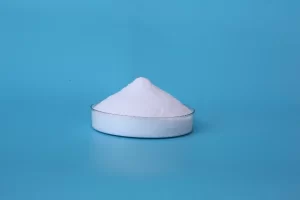
Contrary to a common assumption, the physical form does not significantly alter storage stability. The chemical degradation pathways that consume inhibitor and trigger polymerization are dependent on purity, temperature, and moisture rather than particle size. However, finer powders have a larger surface area, which can accelerate moisture absorption if packaging is compromised. For this reason, double-layer sealed bags are recommended for powdered crystal to maintain dryness.
How do I know if my stored acrylamide crystal has degraded?
The most reliable early indicator is an increase in solution conductivity, as partial polymerization produces ionic species that raise conductivity beyond the fresh-product baseline of 20 μS/cm. Other signs include a color shift toward yellowing, caking, or a faint ammonia-like odor. Any of these should trigger immediate retesting. If conductivity exceeds 35 μS/cm, the batch may be unsuitable for high-value polymer production without further evaluation.
What should I do if inhibitor is depleted and polymerization risks increase?
In our experience, if inhibitor depletion is detected early, it may be possible to re-inhibit the crystal by controlled addition of a suitable inhibitor compound under laboratory conditions. This must be validated by small-scale polymerization trials to confirm the desired kinetics are restored before full-scale use. If degradation is advanced or gel particles are present, the batch should be discarded. When in doubt about a stored batch’s viability, contact our team at en*****@***er.com; we can help assess the material and recommend next steps.
If you’re interested, check out these related articles:
Cationic PAM: Cost-Benefit Analysis for Industrial Plants
Nuoer Impressively Showcased at the 32nd China International Paper Technology Exhibition 2025
Acrylamide Monomer: Your Reliable Global Manufacturing Partner
SAP Particle Size: A Guide to Optimal Selection for Performance
Anionic Polyacrylamide vs HPAM: Performance and Application


 English
 Russian
 Arabic
 Spanish