
Industrial wastewater rarely presents a uniform challenge. A single facility’s effluent can swing from acidic to alkaline within a shift, carrying suspended solids, dissolved organics, and emulsified oils. Under these conditions, a standard single-charge flocculant often underperforms. Amphoteric polyacrylamide, with both cationic and anionic groups on the same polymer chain, adapts to varying surface charges, improving floc formation and sludge dewatering even when water chemistry fluctuates. Selecting the right grade, however, depends on more than just the polymer’s dual-charge capability. The decision sits at the intersection of wastewater composition, plant operations, and supply reliability.
What Your Wastewater’s Charge Reveals About the Right PAM
A thorough characterization of the waste stream is the starting point. pH values alone are not enough; the true driver of polymer performance is the net surface charge of the particles you need to separate. In mixed industrial effluents from metal finishing, food processing, or textile dyeing, that charge can shift as production recipes change. An amphoteric polymer’s structure, containing both positive and negative sites, allows it to bridge between particles with dissimilar surface charges. It maintains flocculation efficiency over a wider pH range than a cationic or an anionic polymer used alone. For a plant manager, this means fewer chemical adjustments during production changes. For a closer look at how amphoteric PAM handles extreme conditions, refer to our article Amphoteric Polyacrylamide: Optimizing Petrochemical Processes.
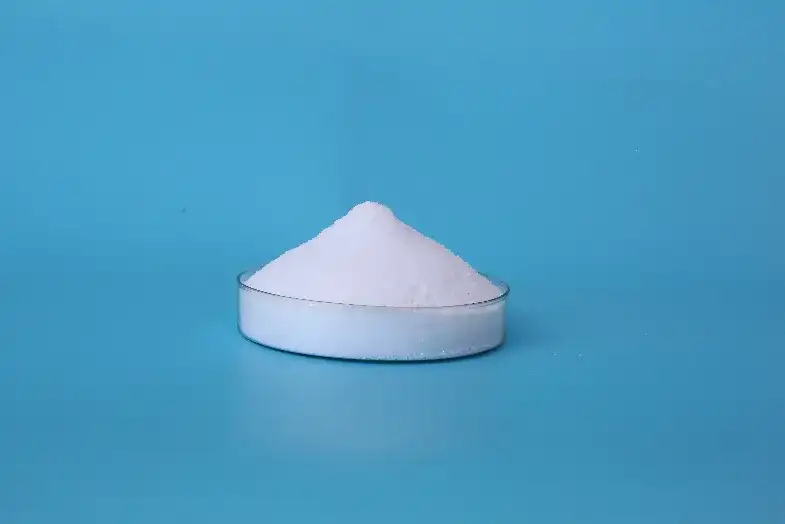
Key Performance Properties of Amphoteric Polyacrylamide
Beyond charge adaptability, three properties dictate how well a specific grade will work in your process. Molecular weight determines the floc size and settling rate; higher molecular weight generally produces larger, faster-settling flocs. Charge density, the proportion of ionic groups on the chain, influences the polymer’s interaction strength with particle surfaces. Too high a density can cause overdosing and re-stabilization. Dissolution speed affects how quickly the polymer becomes active after dry powder is mixed into water. In plants with limited aging tanks, a faster-dissolving product reduces the risk of partially hydrated polymer entering the pipe network.
Our team has observed that some buyers treat molecular weight as the sole selection criterion, but for amphoteric polymers, the balance between cationic and anionic ratios matters more than total molecular weight when the wastewater contains both negatively charged colloids and positively charged metal hydroxides. Testing a grade with a slightly higher anionicity can improve clarification when iron or aluminum salts are used as primary coagulants.
Production Quality and Customization: What to Look for in a Supplier
Amphoteric polyacrylamide is not a commodity chemical. The polymerization process requires precise control of monomer ratios, hydrolysis conditions, and cross-linking inhibitor levels to deliver consistent charge distribution across batches. Suppliers that synthesize their own cationic monomers, rather than purchasing them, have more control over the final polymer architecture. This upstream integration translates into tighter batch-to-batch repeatability, which is critical for wastewater treatment plants that operate under discharge permits with narrow turbidity limits.
Shandong Nuoer, for example, operates integrated production lines from acrylic acid and acrylamide monomers through to finished polyacrylamide, enabling the company to adjust amphoteric polymer formulations to a customer’s specific pH envelope and particle size distribution. With an annual polyacrylamide capacity of 500,000 tons, including emulsion and powder lines, the company can support both pilot-scale trials and full-scale supply without switching source plants mid-contract. For industrial users, that stability can be as valuable as the polymer’s technical specs.
If your wastewater includes both heavy metals and emulsified oils, it is worth confirming the optimal anionicity ratio with your supplier before locking in a bulk order. Our applications team at en*****@***er.com can run a charge demand analysis to narrow the selection.
Powder Versus Emulsion: Choosing the Right Physical Form
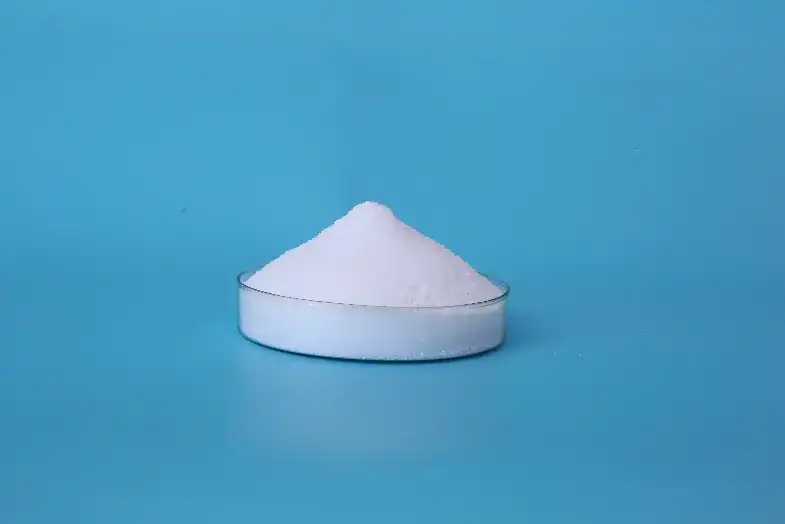
Amphoteric polyacrylamide is predominantly supplied as a dry powder, but emulsion forms, while less common for this polymer type, are available for some application configurations. The form you select affects storage, handling, and make-down equipment design.
| Parameter | Dry Powder | Emulsion |
|---|---|---|
| Active content | 88–92% | 30–50% |
| Dissolution time (full hydration) | 30–60 minutes | 5–15 minutes |
| Storage temperature range | 0–40°C (dry, ventilated) | 5–35°C (protect from freeze) |
| Equipment requirements | Powder dosing system, aging tank | Liquid metering pump, in-line mixer |
If your plant has reliable water supply and adequate aging tanks, powder offers lower freight cost per active kilogram. In remote or mobile treatment units, or where rapid startup is required, an emulsion product’s fast dissolution and simpler dosing hardware can justify the higher delivered cost. Discuss your site’s utilities and space constraints with the supplier early, because retrofitting a make-down system after product selection is more expensive than choosing the right form upfront.

Long-Term Value: Supply Security and Technical Support
Selecting an amphoteric PAM is not a one-time laboratory decision. The real test comes months into operation, when a change in raw materials or production volume shifts the wastewater profile, and you need a rapid reformulation. A supplier’s ability to provide on-site jar testing, real-time troubleshooting, and consistent product availability from a single manufacturing site determines whether the polymer performs reliably over years. Large-scale, backward-integrated manufacturers with a documented quality system and global logistics infrastructure reduce the risk of supply interruption and hidden formulation drift.
When we work with a new facility, we emphasize starting with a detailed water analysis and a defined set of performance targets. Without that baseline, even the most advanced polymer cannot be optimized. We also recommend requesting retained samples and batch test reports for each delivery, so that any performance deviation can be traced to a concrete change, either in the polymer or the wastewater.
Taking the Next Step for Your Wastewater Program
Choosing an amphoteric polyacrylamide is a technical decision that benefits from data rather than guesswork. If you have been managing fluctuating effluent quality with frequent chemical adjustments and still see high sludge disposal costs, a tailored polymer selection can stabilize your process. Share your most recent water analysis and your target discharge parameters with our engineering team. We will recommend a specific amphoteric PAM formulation matched to your pH range and contaminant profile, and can arrange a pilot test if needed. Contact en*****@***er.com or call +86-532-66712876 to start a technical review.
Common Questions About Amphoteric Polyacrylamide for Wastewater
Does amphoteric PAM replace the need for pH adjustment completely?
In most cases, it reduces the frequency and magnitude of pH corrections, but does not eliminate them. An amphoteric polymer maintains flocculation across a broader pH range than single-charge polymers, but extreme pH values below 3 or above 11 will still degrade the polymer backbone or alter the charge distribution. It is more accurate to view it as a way to handle process variability without an immediate plant upset, rather than a universal substitute for pH control.
Can I blend an anionic and a cationic PAM to get the same effect as one amphoteric grade?
Blending two separate polymers can sometimes match the performance of an amphoteric product in a stable, well-characterized waste stream, but the dual-polymer approach introduces points of failure: each polymer requires its own dosing line, and the blend ratio must be held constant. When the wastewater composition shifts, you must adjust two dosing rates instead of one. Amphoteric polyacrylamide simplifies the dosing train and reduces chemical inventory, which matters when operator training levels are limited or the plant is unattended for long periods.
How do I know if my wastewater is complex enough to justify the higher cost of amphoteric PAM?
If your TSS removal efficiency varies by more than 15% from one batch to the next using a single-charge flocculant, or if you routinely dose both a coagulant and a flocculant and still see pin floc carryover, it is worth trialing an amphoteric grade. The incremental polymer cost is often offset by reduced sludge volume, lower coagulant consumption, and fewer out-of-spec discharge events. Many plants find that the operational stability alone pays back the price difference within a few months.
What documentation should I request from a potential amphoteric PAM supplier?
For any supplier, request the certificate of analysis for the specific batch, with values for molecular weight, charge density, residual monomer content, and dissolution time. For plants that operate under ISO 14001 or similar standards, ask for a copy of the supplier’s quality management system certification and evidence of third-party testing for environmental compliance. A supplier that pushes back on providing batch-level data is one you should evaluate carefully.
For a tailored recommendation based on your wastewater’s composition and plant setup, send your water analysis and daily flow rate to en*****@***er.com or call +86-532-66712876. We can provide a product match and arrange a pilot trial if required.
If you’re interested, check out these related articles:
Ready-to-Use vs. Concentrated Acrylamide: A Comparative Analysis
Emulsion Polyacrylamide for Mining: Supplier Solutions
Nuoer Made Its Appearance at the 25th China International Petroleum & Petrochemical Technology and Equipment Exhibition, Showcasing Green Innovation Strength
Acrylamide Solution Factory: Polymer Production Excellence







 English
 Russian
 Arabic
 Spanish