
Emulsion polyacrylamide has become the practical choice for treatment and processing teams that need polymer ready in minutes rather than hours. A well formulated water in oil (W/O) emulsion carries high molecular weight polymer in a form that inverts and activates in 5 to 15 minutes under proper mixing. The buying decision, however, should not rest on a data sheet alone. The best field result comes from verifying how the product behaves with actual water chemistry, mixer design, and storage conditions. The selection points that follow come from emulsion production and application experience, not from generic product claims.
Why Does Emulsion Polyacrylamide Dissolve Faster Than Dry Powder?
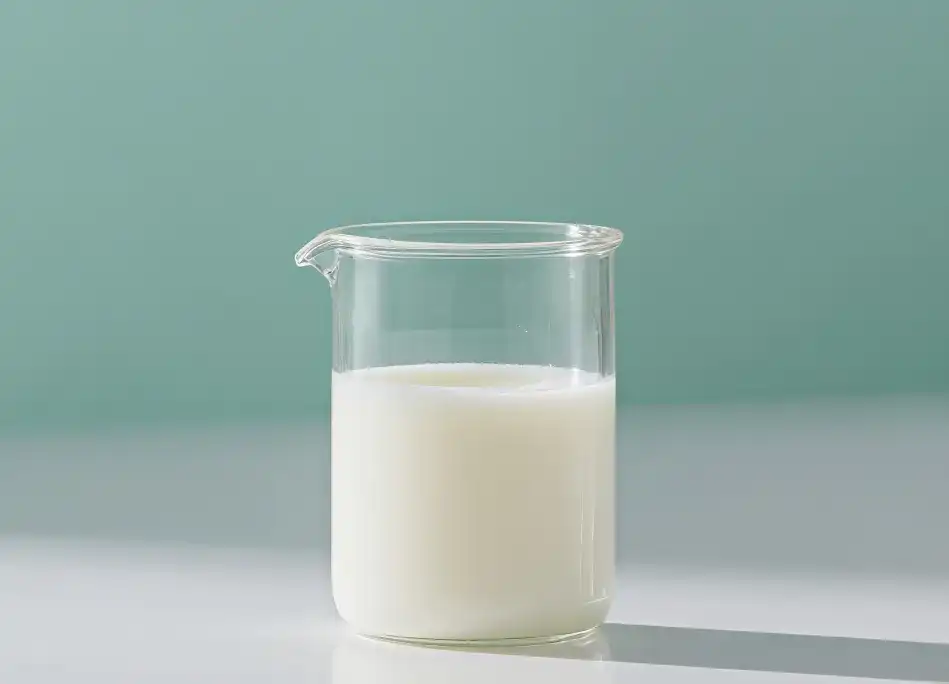
A dry powder product has to wet each particle, swell the polymer chain, and then release it into the bulk water under agitation. When mixing energy is low or dosing is too fast, particles clump and form fisheyes that can sit for hours. Emulsion polyacrylamide skips the wetting and swelling bottleneck because the polymer is already present in a fine water in oil dispersion. When the emulsion meets a high volume water stream, the oil film breaks, the polymer inverts, and the chain hydrates rapidly.
The production route matters here. Water in oil emulsion technology produces a high conversion rate and high molecular weight with uniform distribution. That combination is what gives the 5 to 15 minute ready to use window listed for our emulsion type product line. Uniformity separates an emulsion that disperses quickly from one that leaves localized gel pockets.
In production planning, we treat dissolution performance as more than a bench test. A grade that meets the 5 to 15 minute window at 20 degrees Celsius can stretch beyond 20 minutes in cold raw water if the oil phase is too heavy or the emulsifier package is not matched to field conditions. For that reason, we ask customers to test with their own water rather than relying on standard laboratory water.
| Factor | Dry Powder PAM | Emulsion Polyacrylamide |
| Preparation | Wetting plus aging; can take 60 minutes or more | Ready to use in 5 to 15 minutes under proper mixing |
| Risk of fisheyes | Higher with fast dosing or low shear | Lower because polymer is pre dispersed in oil phase |
| Mixing demand | Continuous high energy input during makeup | Initial in line energy, then gentle distribution |
| Field fit | Works where aging tanks and time exist | Fits mobile, remote, and rapid start up systems |
What Should You Check in an Emulsion Polyacrylamide Specification?
Three properties determine whether an emulsion product will perform as a fast dissolving flocculant: ionic charge, molecular weight and distribution, and inversion behavior. Buyers sometimes stop at the charge type and ignore the other two, then find the product activates too slowly in plant water.
Charge type should match the solid separation task. Cationic grades are used for sludge dewatering and organic rich streams, anionic grades for mineral tailings and oilfield water, and nonionic grades where pH or salinity swings would reduce charge performance. Confirming only the product series without the charge density can leave a treatment program underdosed.
Molecular weight distribution influences both floc strength and mixing response. A product with high molecular weight but poor uniformity may show fast initial hydration and then leave stringy or uneven flocs. Emulsion type polyacrylamide from a controlled synthesis process gives a narrow enough distribution to produce consistent inversion. The specification should therefore state both molecular weight and the inversion time under a defined test condition.
Inversion behavior is the practical rank of quick dissolution. Ask the supplier to state the time to full viscosity development in water at your expected temperature and conductivity. If the supplier cannot quote that condition, test it before committing to a bulk order.
Which Mixing and Storage Conditions Keep Activation Fast?
Even a well made emulsion polyacrylamide will activate slowly if the mixing system works against it. The product needs enough initial shear to invert the oil film, followed by lower shear so the hydrated polymer chains are not broken. A common mistake is running the same high speed mixer after inversion; that cuts molecular weight and weakens flocculation without making dissolution faster.
Water quality also sets the practical activation window. Cold water slows inversion, high salt water can compress the polymer chain, and variable pH changes the surface charge behavior of ionic grades. In the plants we operate, the first field check is not the product specification but the dilution water temperature and conductivity during the target shift.
Storage keeps that performance from drifting before the product reaches the dosing skid. Emulsion polyacrylamide should be kept in a closed container, protected from direct sunlight and from resting temperatures that approach freezing. A freeze thaw cycle can break the emulsion and produce an oily layer that will not invert cleanly. At the other end, long exposure to high heat can destabilize the oil phase and reduce the ready to use window.
If your site operates with cold raw water, high conductivity brine, or intermittent dosing, it is worth confirming inversion performance under those conditions before finalizing the bill of materials. Share your water quality data with en*****@***er.com and the supplier can run the appropriate bench test.
Where Does Quick Dissolution Emulsion PAM Deliver the Most Value?
Rapid activation changes the equipment decision as much as the chemical decision. When a dry powder system needs separate aging tanks, dust control, and extended labor coverage, an emulsion system can fit a smaller footprint with in line dosing and shorter startup times. That difference shows up most in temporary treatment units, mining camp water plants, and field service operations where the operator cannot wait for a shift length batch.
The value is not only convenience. A product that reaches working viscosity in 5 to 15 minutes lets a site respond to sudden solids loading without holding excess mixed polymer. In sludge dewatering, a consistent rapid inversion can reduce polymer carryover and keep belt press or centrifuge settings stable across a run. In remote operations, shorter mixing time also reduces electrical load and operator attention, both of which are limited resources.
Across global sales we have observed the same pattern in more than 60 countries and regions: the emulsion grades selected most often are those that tolerate simplified handling rather than those with the highest laboratory viscosity. A product that dissolves quickly under real operating limits tends to be used correctly. A more demanding product gets bypassed or overmixed under schedule pressure.
What Should Buyers Confirm With an Emulsion PAM Supplier Before Ordering?
A sourcing decision usually fails quietly. The product certificate may list a fast dissolution range, but the material arrives and behaves differently at the customer’s water temperature, shear rate, or dosing interval. That is the point where a low price per ton becomes a slower treatment program and additional field calls.
Working with a manufacturer that controls the acrylamide chain and produces emulsion polyacrylamide on a consistent industrial scale removes much of that variability. Shandong Nuoer Biological Technology Co., Ltd. produces 200,000 tons of polyacrylamide emulsion annually and supplies more than 60 countries and regions through a global sales and after sales service system. That production base matters because quick dissolution depends on reproducible emulsion synthesis, not on a distributor’s ability to repackage material.
Send your target water quality data, required dissolution time, charge type, and monthly or project volume to en*****@***er.com or call +86-532-66712876. A meaningful inquiry should also state the mixing equipment and the coldest expected operating temperature so the recommended grade can be matched to the actual site rather than to a generic datasheet.
What Else Do Buyers Ask About Emulsion Polyacrylamide Dissolution?
How fast is fast enough for an emulsion polyacrylamide?
For most field systems, a product that reaches full viscosity in 5 to 15 minutes under the site’s actual mixing energy is fast enough. Lab numbers generated in distilled water at 25 degrees Celsius will not always match winter plant water. We recommend testing the product at your lowest expected temperature and with your existing dilution water. If the grade cannot meet the mixing window you need, changing the product may be less expensive than adding heat or a larger aging tank.
Why does the same emulsion polyacrylamide dissolve differently in winter and summer?
The common assumption is that the product has changed, but the more likely cause is water temperature. Cold water slows the inversion step and delays chain hydration, so the same grade may need longer mixing or a higher initial shear. High conductivity water can produce a similar delay for ionic products. Before switching suppliers, record the dilution water temperature and conductivity at the moment dosing occurs, then ask the supplier whether the grade is formulated for that range.
Is quick dissolution mainly a matter of mixing equipment or product formulation?
It depends on which part of the process is limiting. If the emulsion has a wide droplet size distribution or a weak emulsifier package, no mixer will fully correct the problem. If the product is well formulated but the dosing point lacks initial shear, the product will underperform even with a fast dissolution claim. We treat the two together: confirm the inversion behavior on the product side, then verify that the site can deliver enough mixing energy at the injection point and no more after inversion.
What should we prepare before asking a supplier for a quick dissolution product sample?
In the sample programs we run, the most useful requests include the dilution water analysis, the target dose range, the existing mixer type and speed, and the coldest and hottest operating temperatures. That set lets the supplier select a charge type and molecular weight range that fits the real application. It also avoids wasting time on grades that look fast in a catalog but perform poorly at your site. Share those details with en*****@***er.com to start a bench test.
If you’re interested, check out these related articles:
Anionic PAM Factory Direct for Water Flooding: Maximize Oil Recovery
Optimal SAP Grades for Ultra-Thin Baby Diapers: Performance Deep Dive
Acrylamide Crystal Quality Specifications for Industrial Purity
Cationic PAM: Cost-Benefit Analysis for Industrial Plants
Acrylamide Solution Concentration: Optimizing Plant Performance


 English
 Russian
 Arabic
 Spanish